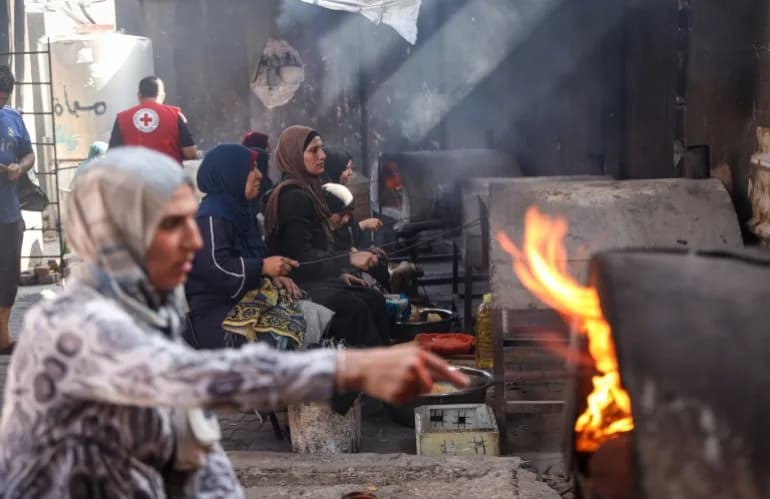
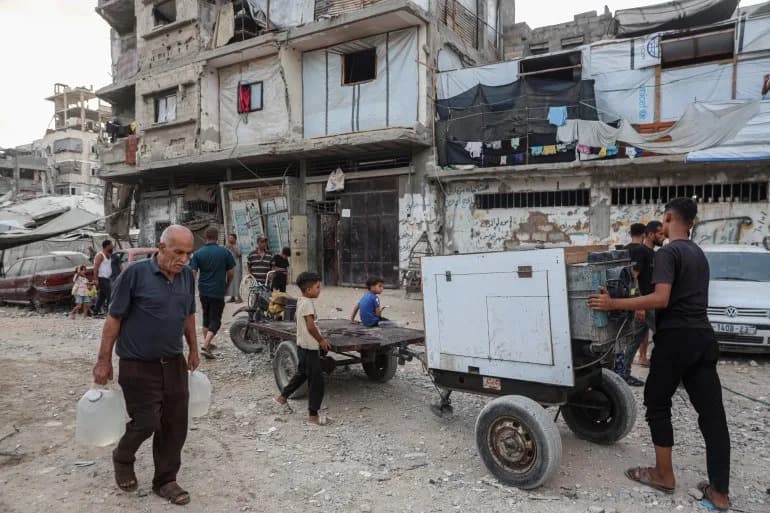
The prolonged shortage of cooking gas and fuel in Gaza has forced many families to cook over open fires fueled by wood, scrap and plastic, exposing them to toxic smoke and worsening respiratory illnesses. UN OCHA says gas deliveries cover under 3% of needs, while UN data show about 54.5% of households use firewood and roughly 43% burn waste or plastic. Gaza’s General Petroleum Authority reports an estimated 70% shortfall and urges urgent international action as Ramadan deepens daily hardships.
“Lives Covered in Soot”: Gaza Families Resort to Wood and Waste as Gas Supplies Run Out
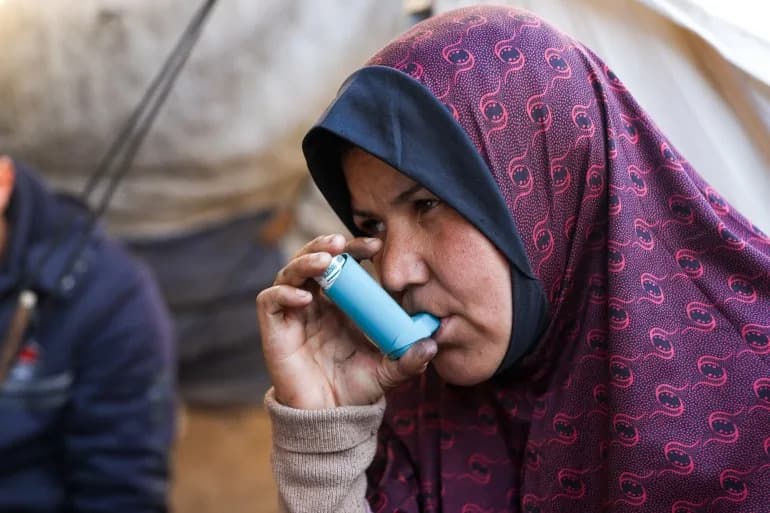
Islam Dardouna suffers from respiratory problems that have worsened significantly due to constant exposure to wood smoke, and relies regularly on asthma inhalers [Abdelhakim Abu Riash/ Al Jazeera]
Shortly before the sunset prayer in Gaza City, Islam Dardouna reaches toward a pot balanced on a makeshift stove fashioned from a battered metal can, feeding the flames beneath it with scraps of paper and pieces of wood. A thin film of soot shades her face and her clothes still carry the smell of smoke. In one hand she clutches an asthma inhaler as she prepares food for her three children.
Cooking Over Open Fires
With cooking gas and fuel scarce since the start of the war in October 2023, many displaced families across Gaza have been forced to prepare meals on open fires. Dardouna, displaced from Jabalia and now living with her husband and children in Sheikh Ajleen camp on Gaza City's western edge, says daily life has become a struggle to find wood and other combustible materials. "There is no cooking gas and no cylinders. We lost all of that during displacement," she says.
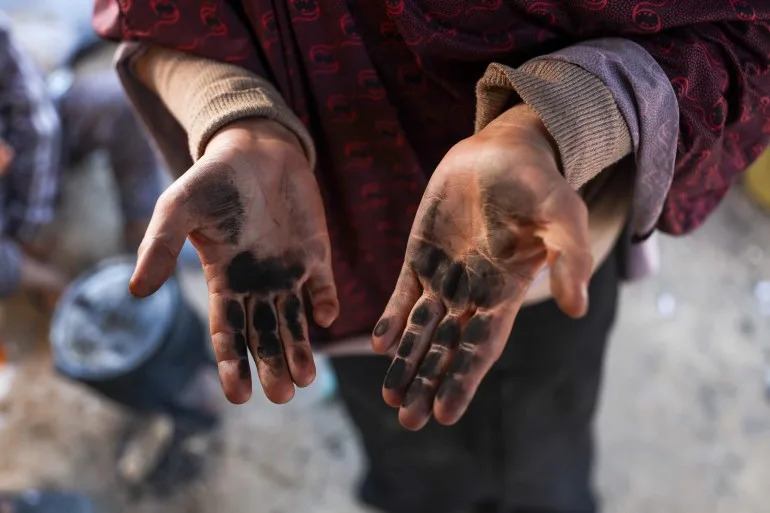
Soot and smoke stains left by wood fires cover the hands of Islam Dardouna and many other women forced to cook over open fires since the war on Gaza began in October 2023 [Abdelhakim Abu Riash/ Al Jazeera]
Health Impacts
Dardouna suffers from asthma and chronic chest allergies she traces back to inhaling smoke from a phosphorus bomb in 2008. Her condition has deteriorated: in January she was hospitalized for six days for oxygen shortage and was prescribed an oxygen cylinder she cannot afford. Families report worsening respiratory problems, headaches and other ailments linked to prolonged exposure to smoke, including the toxic fumes produced when plastic and waste are burned.
“Our lives are covered in soot,” says her husband Muath, describing blackened clothes and constant breathing difficulties. “We are living on the edge of nothing.”
Scale of the Shortage
United Nations agencies and Gaza officials report that supplies of cooking gas and fuel entering the territory remain far below needs. The UN Office for the Coordination of Humanitarian Affairs (OCHA) says cooking gas availability is "critically constrained," with deliveries covering less than 3% of requirements. UN data indicate about 54.5% of households now rely on firewood for cooking, some 43% burn waste or plastic, and only around 1.5% are able to use gas.
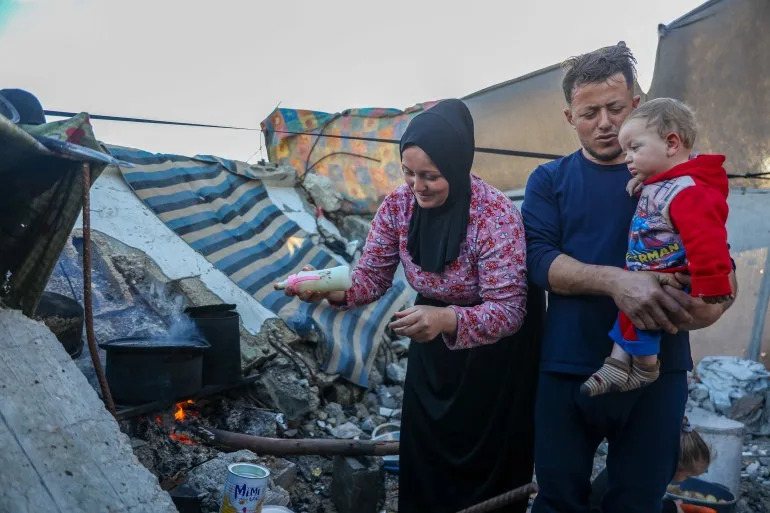
At times, Amani Aed al-Bashleqi says she cannot boil water for her baby’s milk because lighting the fire is difficult and not always possible [Abdelhakim Abu Riash/ Al Jazeera]
Gaza’s General Petroleum Authority warns of a roughly 70% shortfall in gas compared with the quantities that entered after a temporary ceasefire, and says a continued halt to supplies risks a disaster that threatens food and health security for more than two million residents.
Everyday Hardships, Intensified by Ramadan
The shortage has intensified during Ramadan, when families must prepare suhoor (pre-dawn) and iftar (post-sunset) meals. Firewood has become expensive and lighting stoves before dawn is often impossible due to weather, darkness or lack of fuel, forcing some families to skip suhoor. Ready-made food distributions help but cannot solve the problem: recipients still need fuel and safe means to heat meals.
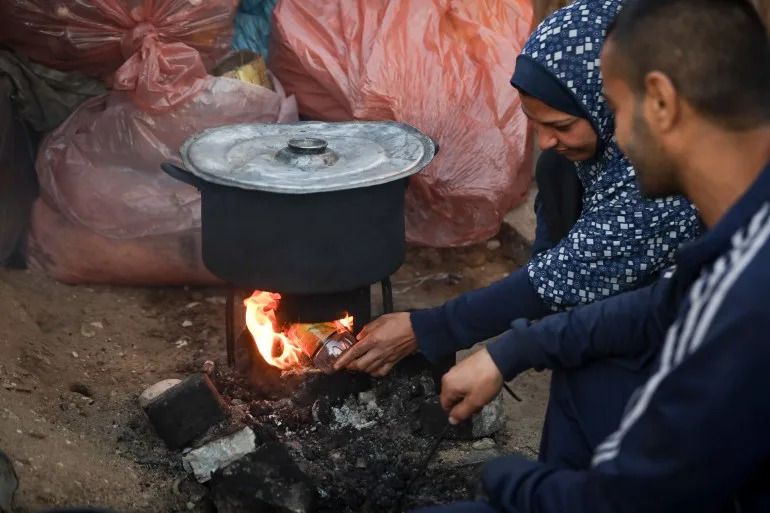
Iman Junaid and her husband Jihad rely on empty plastic bottles to fuel their cooking fire because they cannot afford the rising price of firewood [Abdelhakim Abu Riash/Al Jazeera]
Unsafe Coping Strategies
Humanitarian groups warn that burning plastic and other waste is especially hazardous, releasing toxic fumes that harm respiratory and other health outcomes and damage the environment. Many families — including mothers with infants and people with chronic respiratory conditions — say they feel they have no safe alternatives.
Calls for Urgent Action
Residents and authorities are calling on mediators and the international community to restore a steady flow of cooking gas and basic goods at reasonable prices. As Dardouna puts it, "Let gas enter. Let goods enter at reasonable prices. Let there be basic necessities for a normal life." Until then, families continue to cook over open flames, risking their health to feed their children.
Help us improve.