Summary: Polling and recent economic data undercut President Trump’s State of the Union claims. Only 33% approve of his handling of the cost of living (net -35), employment has softened since January 2025, stock gains have faded and inflation and gas prices remain problematic. Several negative shifts are linked to the administration’s tariff policy and military action, raising political risks for Republicans ahead of elections.
Trump’s Economic Boasts Clash With Reality — Voters Growing Skeptical
Analysis of data from Fox News.Philip Bump / MS NOW
President Donald Trump used his Feb. 24 State of the Union to paint a picture of a booming economy. But multiple polls and recent economic data since that speech show growing public doubt about his handling of costs, jobs and markets — and many of the successes he touted have already weakened.
Analysis of data from YouGov.Philip Bump / MS NOW
Polling Shows Widespread Doubt
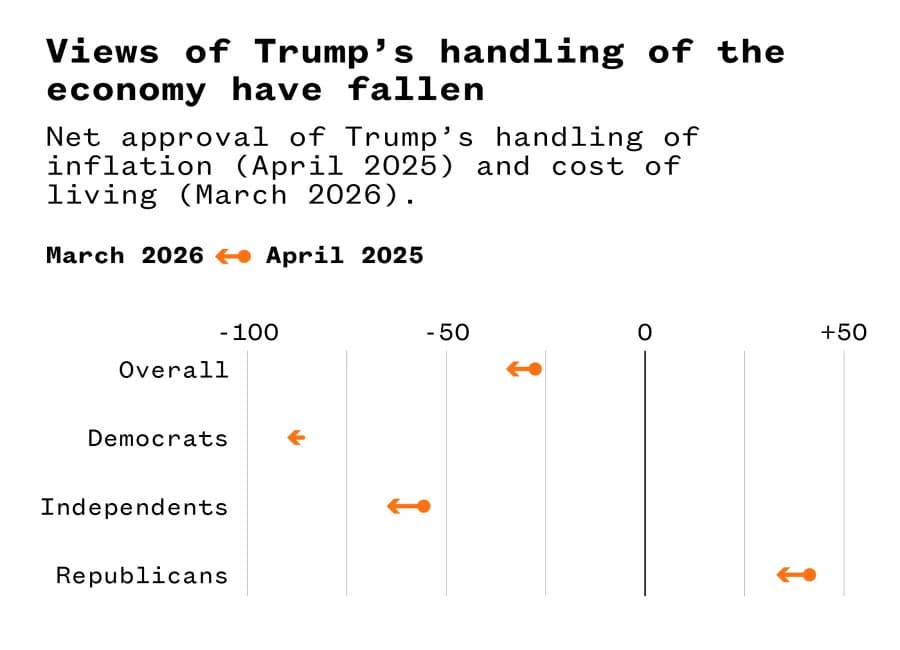
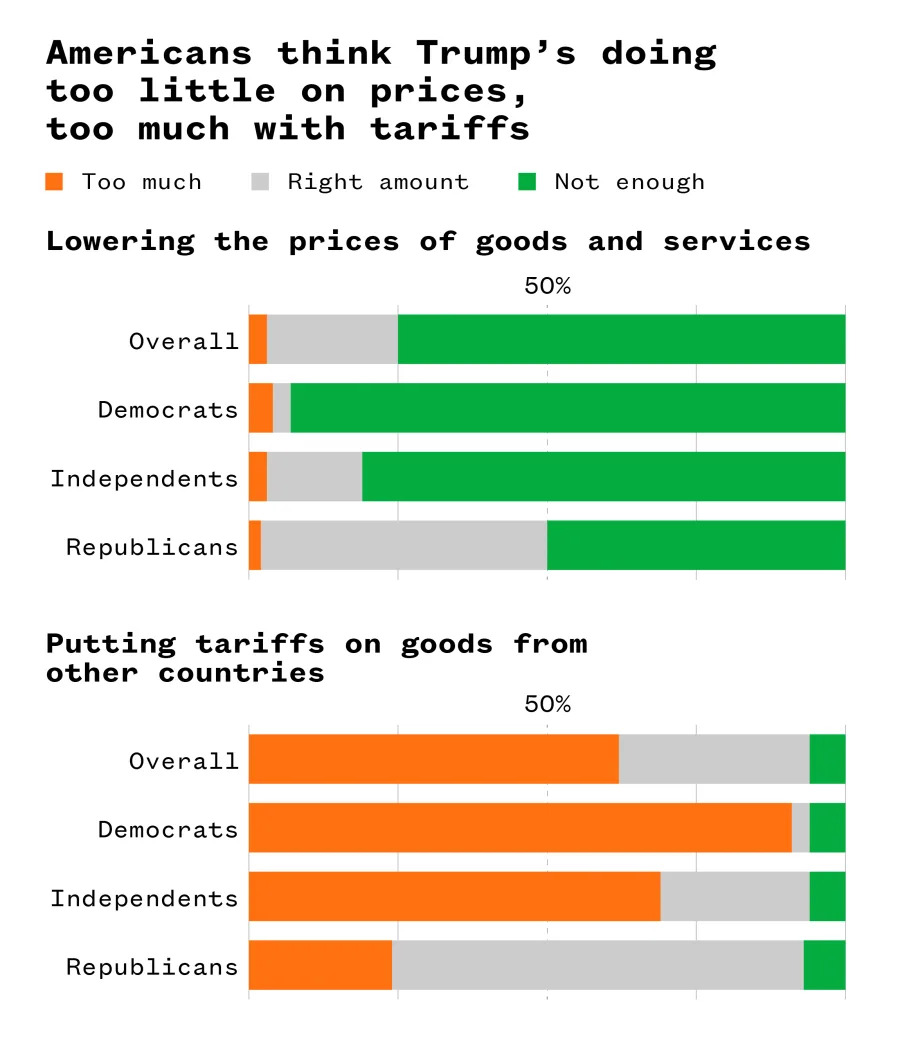
New Fox News polling finds just 33% of Americans approve of Mr. Trump’s handling of the cost of living, with roughly two-thirds disapproving (a net rating of -35). That is a deterioration from a net -26 last April, when questions focused more broadly on inflation. Even within his own party, the share of Republicans who disapprove has risen — from about 25% last April to roughly a third today. CBS News/YouGov polling echoes this skepticism: about three-quarters of Americans say he is not doing enough to lower prices, including half of Republican respondents, and roughly 62% say he has imposed too many tariffs.
Analysis of data from the Bureau of Labor Statistics.Philip Bump / MS NOW
Jobs: A Peak That Has Eroded
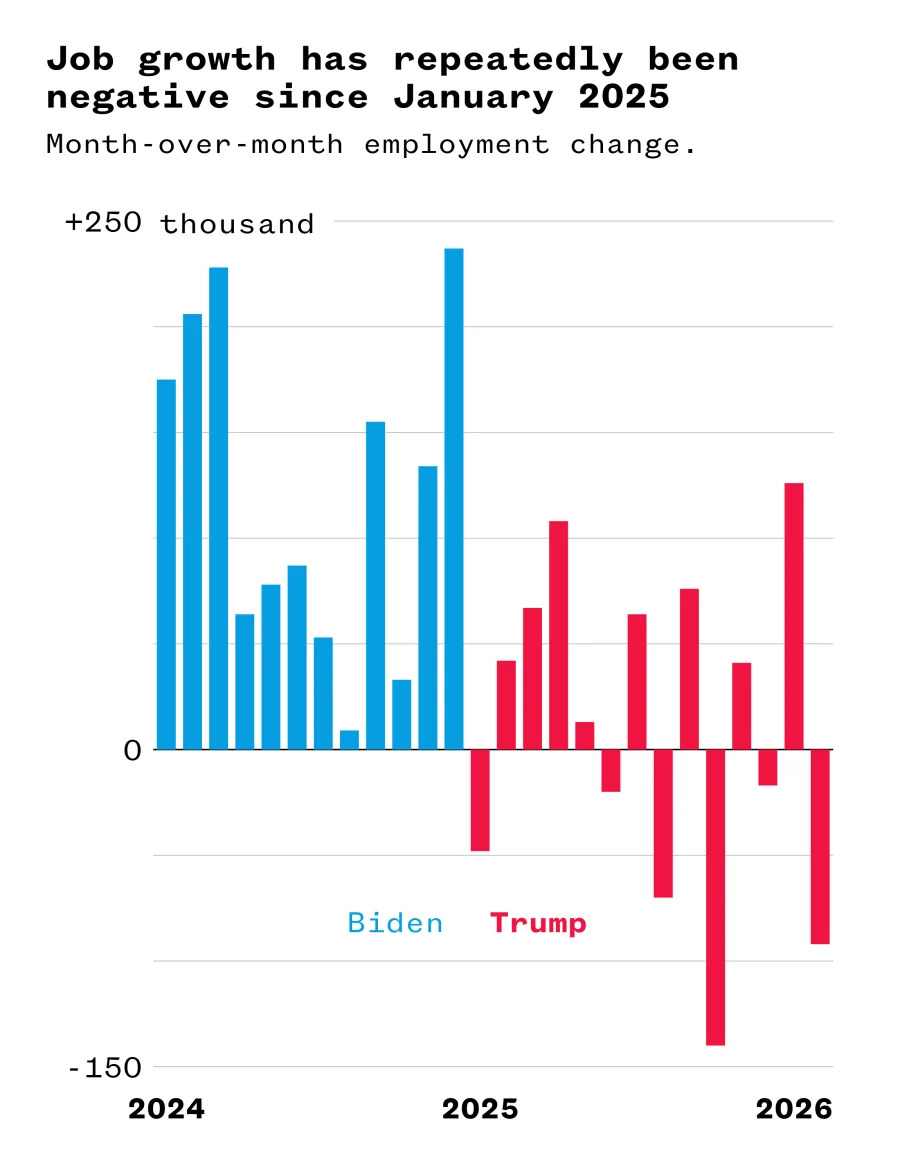
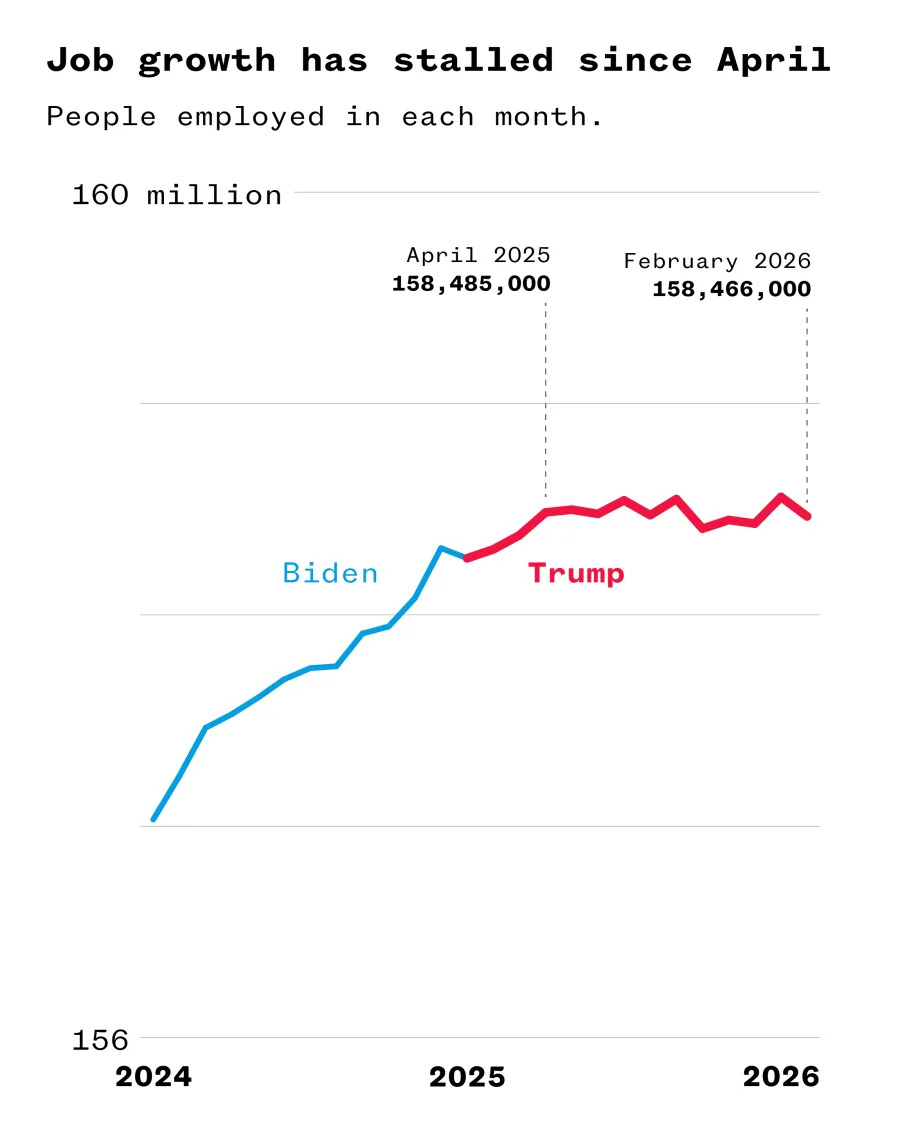
At the time of the address, nonfarm payrolls were estimated at a seasonally adjusted 158,558,000 — a record high on paper. As population and workforce size grow, headline payroll peaks can be misleading, and the jobs picture has dimmed since. Employment has declined month-to-month several times since Mr. Trump took office in January 2025, and current administration data show fewer people employed today than in April 2025 — the month of Mr. Trump’s broad tariff announcement.
Analysis of data from the Bureau of Labor Statistics.Philip Bump / MS NOW
Markets: Claims Versus Reality
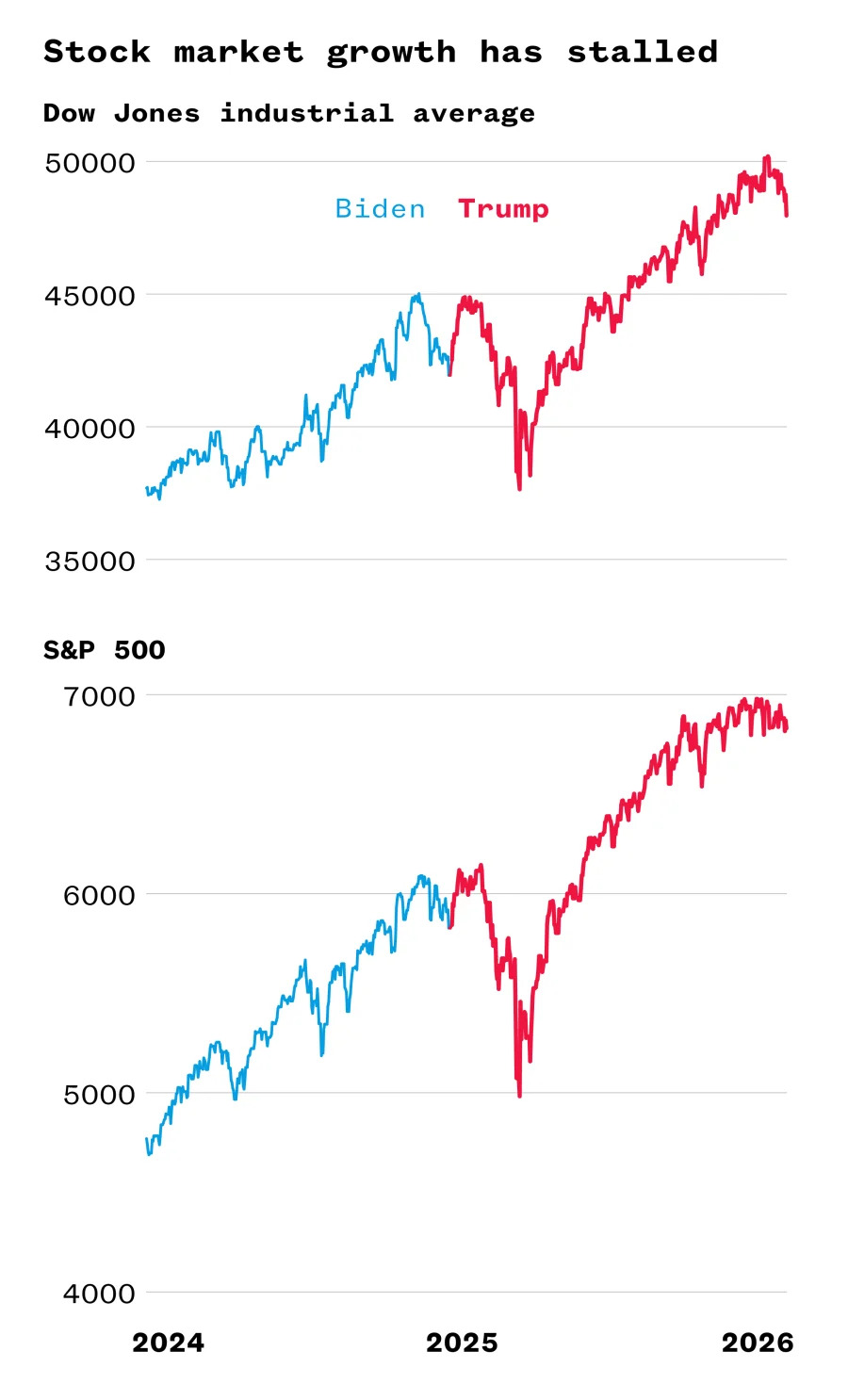
“The stock market has set 53 all-time record highs since the election,” Mr. Trump said, adding that the Dow had broken 50,000 and the S&P 500 had hit 7,000.
By the time of his speech the Dow had already retreated from its peak (it peaked on Feb. 10) and has fallen more than 4% since that high. The S&P 500 never closed at 7,000, and equities experienced another notable dip in April concurrent with tariff-related market stress.
Analysis of data from Stooq.Philip Bump / MS NOW
Inflation And Prices
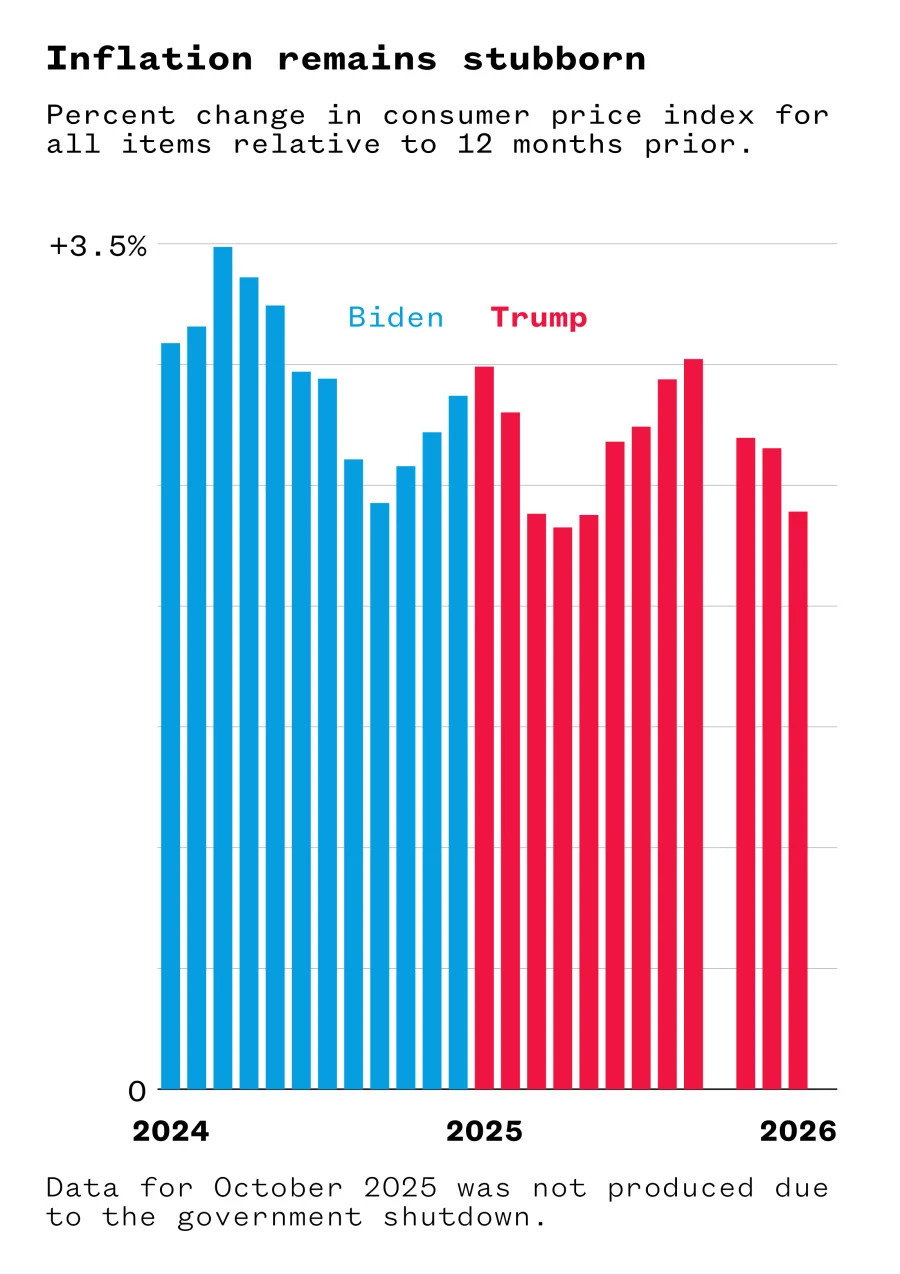
Mr. Trump highlighted declines in particular items — like eggs — and said core inflation had fallen to a five-year low and to about 1.7% in the final three months of 2025. Overall inflation remains higher: in January year-over-year inflation was about 2.4%. Some price moves he praised (eggs, for example) reflected sector-specific factors such as an earlier bird-flu-driven spike, not direct White House policy wins.
Analysis of data from Bureau of Labor Statistics.Philip Bump / MS NOW
Gasoline And Geopolitical Shocks
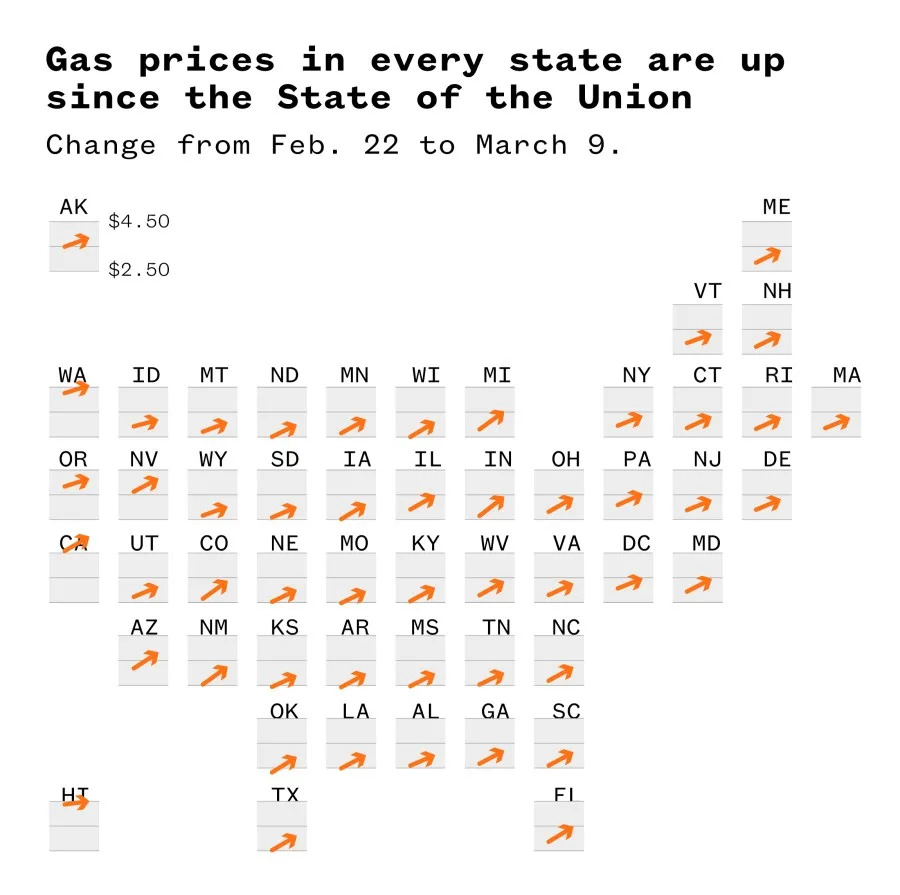
Mr. Trump touted gas prices under $2.30 a gallon in many states at the time of the speech. That has changed: following U.S. strikes on Iran and ensuing market reactions, global oil prices rose and state-level pump prices are up in every state since the address — with larger increases in some states that supported him in 2024.
Analysis of data from AAA.Philip Bump / MS NOW
Who’s Responsible?
Observers disagree about how much effect presidential policy can have on short-term economic trends. In this case, several of the negative shifts — tariffs, market volatility and the fallout from military action — are directly tied to decisions by the current administration, and they complicate the narrative the White House is advancing.
Bottom Line
So far Mr. Trump’s core supporters largely continue to back him, but broader public confidence in his economic stewardship has weakened. That shift matters politically: Republicans in Congress who will face voters later this year may find it harder to defend their record if jobs, prices and markets do not stabilize.
Help us improve.