Japan has started deploying its first domestically produced long‑range Type‑12 missiles, with launchers arriving at Camp Kengun in Kumamoto ahead of full deployment by the end of March. The upgraded Mitsubishi‑built system extends range to about 1,000 km, up from roughly 200 km, broadening Japan’s strike reach. The covert arrival drew local protests and complaints from officials about a lack of notification. Tokyo accelerated the rollout amid rising tensions around Taiwan and is pursuing broader defense‑policy changes, including easing lethal arms export rules.
Japan Begins Deploying First Domestic Long‑Range Type‑12 Missiles Amid Rising Regional Tensions
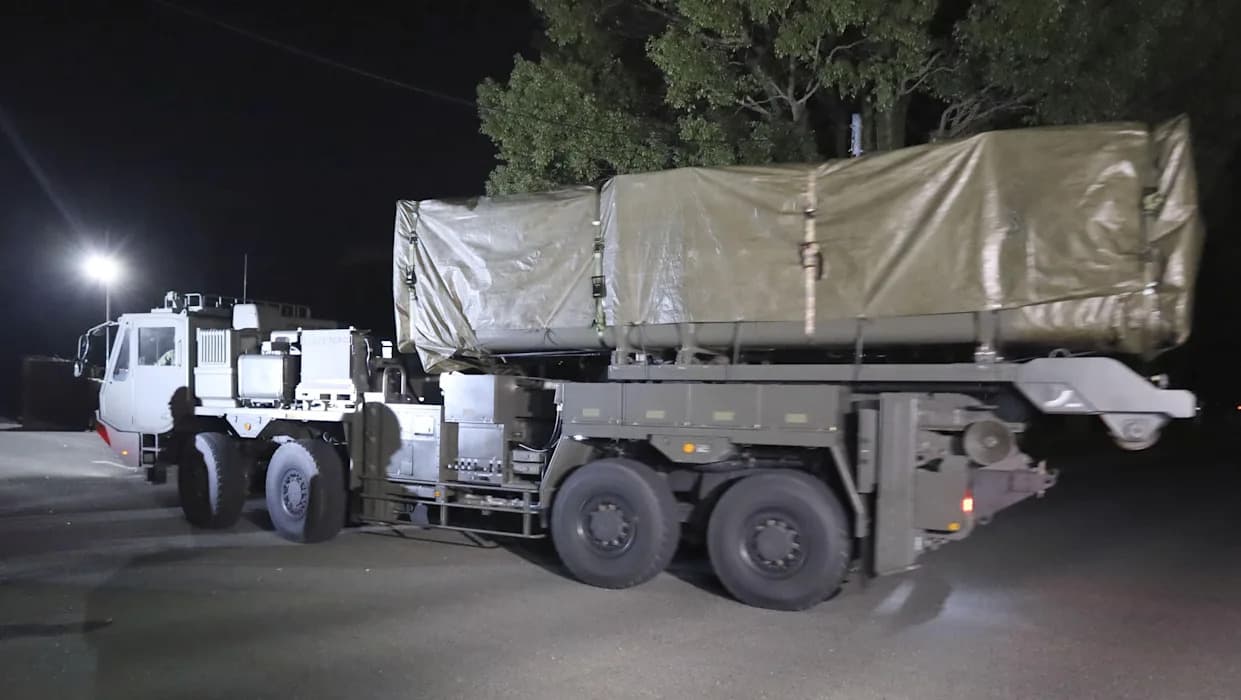
A vehicle carrying the first batch of domestically developed long-range missiles, arrives at Camp Kengun in Kumamoto, southwestern Japan, early Monday, March 9, 2026. (Kyodo News via AP)(ASSOCIATED PRESS)
Japan has begun deploying the first battery of domestically developed long‑range Type‑12 missiles, with launchers arriving at Camp Kengun in Kumamoto in a largely discreet operation as Tokyo accelerates its defensive and offensive capabilities.
Deployment Details and Local Reaction
Chief Cabinet Secretary Minoru Kihara said the upgraded Type‑12 land‑to‑ship missiles will be stationed at Camp Kengun by the end of March, completing the initial deployment phase. Army vehicles carrying launchers and related equipment arrived after midnight in what officials described as a highly discreet mission. Dozens of local residents gathered outside the camp, chanting “Stop long‑range missile deployment!” and holding banners protesting the lack of consultation.
Concerns Over Transparency
Kumamoto Governor Takashi Kimura said prefectural officials were not notified in advance and expressed frustration at learning of the arrival from media reports. Opponents of the deployment have warned it could escalate regional tensions and make military facilities potential targets.
Capability And Strategic Context
The upgraded Type‑12, developed and manufactured by Mitsubishi Heavy Industries, extends the system’s range to about 1,000 kilometers (620 miles), a marked increase from the original roughly 200 kilometers (125 miles). That range would allow the missiles to reach parts of mainland China, reflecting Tokyo’s efforts to strengthen deterrence as tensions around Taiwan and in the East China Sea have grown.
Officials said the system will next be deployed to Camp Fuji in Shizuoka later this year. Japan has also bolstered its southwestern island defenses with PAC‑3 interceptors and medium‑range surface‑to‑air missiles on islands including Okinawa, Ishigaki and Miyako. Defense Minister Shinjiro Koizumi announced plans to station medium‑range SAMs on Yonaguni — Japan’s westernmost island near Taiwan — by March 2031.
Policy Shifts
Prime Minister Sanae Takaichi has signaled a shift toward a more assertive security posture, saying Chinese military action against Taiwan could, in some circumstances, justify a Japanese response. Her government plans to revise security and defense policy by year’s end, expand investments in unmanned combat systems and long‑range strike capabilities, and lift restrictions on lethal arms exports in the coming weeks to bolster Japan’s defense industry and international cooperation.
Bottom Line: The deployment marks the first fielding of a domestically produced long‑range strike system in Japan, reflecting a significant step in Tokyo’s regional defense posture and prompting local protests over transparency.
Help us improve.