
The partial DHS funding lapse has left roughly 50,000 TSA screeners working without pay, contributing to multi-hour security waits at several major U.S. airports during peak spring-break travel. Houston Hobby reported averages up to 3.5 hours, and similar delays were reported at Houston Intercontinental, Charlotte Douglas and Atlanta. DHS warned of missed flights and major delays, while airlines expect about 171 million spring travelers; the situation may worsen after March 13 when many TSA employees miss their first full paycheck.
TSA Shortages Cause Up to 3.5-Hour Security Lines at Major U.S. Airports
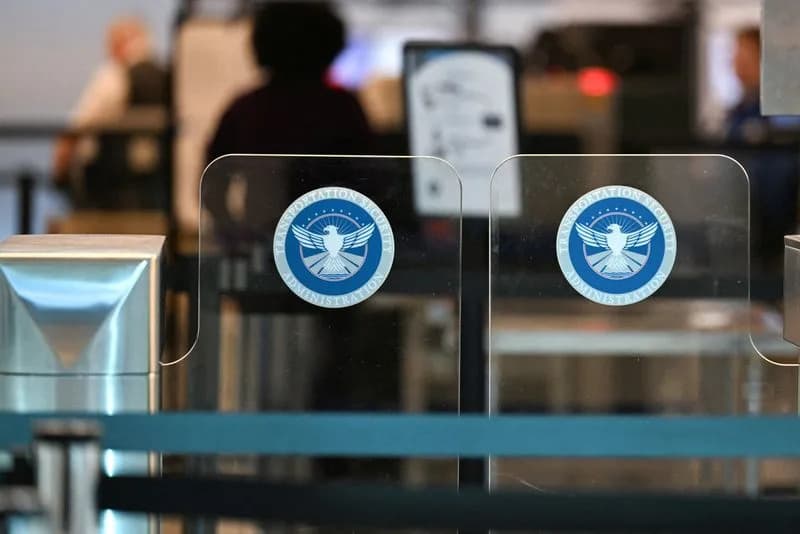
FILE PHOTO: A Transportation Security Administration (TSA) gate at Ronald Reagan Washington National Airport in Arlington, Virginia, U.S., February 14, 2026. REUTERS/Annabelle Gordon/File Photo
March 8 (Reuters) - Security-screening waits at several major U.S. airports stretched to as much as 3.5 hours on Sunday as absences among Transportation Security Administration (TSA) staff rose amid a partial Department of Homeland Security (DHS) funding lapse and heavier spring-break travel.
Houston Hobby Airport reported that lines averaged about 3.5 hours at one point and were running about three hours on average by 4 p.m. EDT. Louis Armstrong New Orleans International Airport warned passengers to arrive at least three hours before departure, saying the TSA is experiencing a staffing shortage at the checkpoint that is causing longer-than-average lines.
The TSA also reported unusually long waits at George Bush Intercontinental Airport (Houston), Charlotte Douglas International Airport (North Carolina) and Hartsfield-Jackson Atlanta International Airport.
Funding for the Department of Homeland Security lapsed on Feb. 13 after Congress failed to reach an agreement on immigration enforcement measures. The lapse halted operational funding for several federal agencies, leaving roughly 50,000 TSA airport security screeners working without pay.
FILE PHOTO: The air traffic control tower is seen behind a plane as it takes off at Hartsfield-Jackson Atlanta International Airport in Atlanta, Georgia, U.S. February 1, 2025. REUTERS/Megan Varner/File Photo
"Travelers are facing TSA lines of up to nearly 3 hours long at some major airports, causing missed flights and massive delays during peak travel," DHS said, adding that missed paychecks have led to financial hardship, absences and staffing shortages.
Industry groups warned last week that the shutdown could disrupt spring-break travel. Airlines for America expects a record spring travel period, with about 171 million passengers projected to fly — roughly 4% higher than the same two-month span last year.
Chris Sununu, CEO of Airlines for America: "The fear is that, once again, they're not going to act until something really desperate happens, until we get long lines."
Sununu added that congestion could worsen after March 13, when many TSA staff will miss their first full paycheck. TSA Administrator Ha Nguyen McNeill told Congress that about 1,110 transportation security officers left the agency in October and November 2025 following a 43-day shutdown — an exit level more than 25% higher than the same period in 2024.
What Travelers Should Do
Plan ahead: Arrive at the airport at least three hours before domestic departures and follow airport and airline guidance. Consider alternate flights or travel times if possible, and check airport websites or airline notifications for real-time updates.
Authorities and carriers said they are monitoring lines and taking steps where possible, but they warned that peak travel delays could continue while staffing and funding issues remain unresolved.
Help us improve.





















