Colombians are voting to elect a new Congress and to choose presidential candidates in primary-style "inter-party consultations" that will help shape the field for the May 31 presidential election. The vote comes amid concerns about political violence in rural areas and renewed scrutiny of election software after a contested 2022 count. More than 3,000 candidates compete for 285 legislative seats, with roughly 41.2 million eligible voters and 126,000 security personnel expected on duty.
Colombia Heads to the Polls: New Congress And Presidential Primaries Set Stage For May Vote
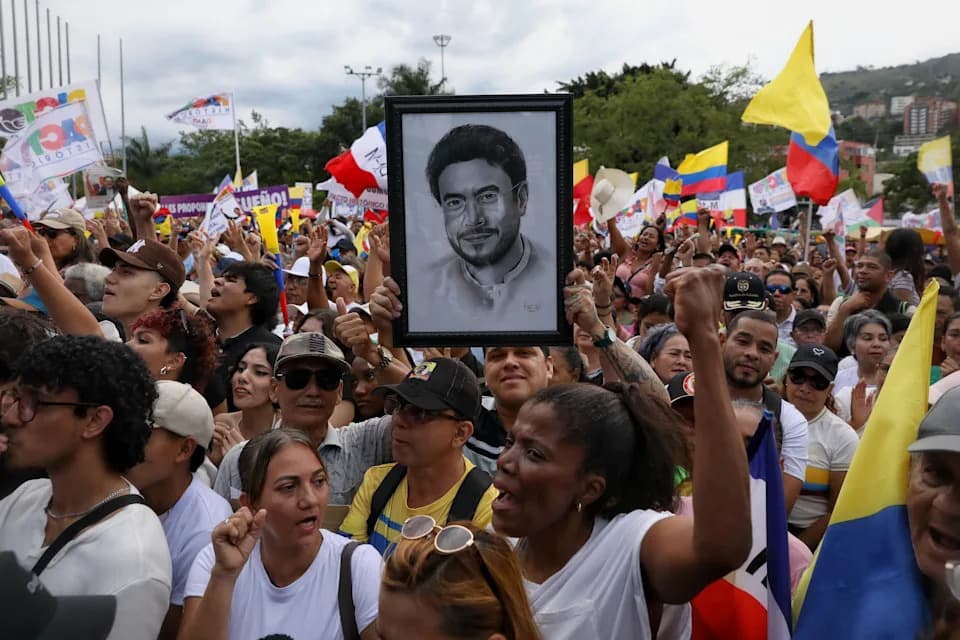
Supporters of Ivan Cepeda, presidential candidate for the Historic Pact coalition, cheer him on during a campaign rally in Cali, Colombia, Thursday, Feb. 26, 2026. (AP Photo/Santiago Saldarriaga)(ASSOCIATED PRESS)
Bogotá, Colombia — Colombians are voting to elect a new Congress and to choose presidential candidates in primary-style contests across three major political blocs as the country prepares for a national presidential vote on May 31.
The election takes place amid heightened concerns over political violence, especially in rural areas where illegal armed groups continue to exert influence. Authorities say more than 126,000 law enforcement officers will be deployed across the country on election day to help maintain security.
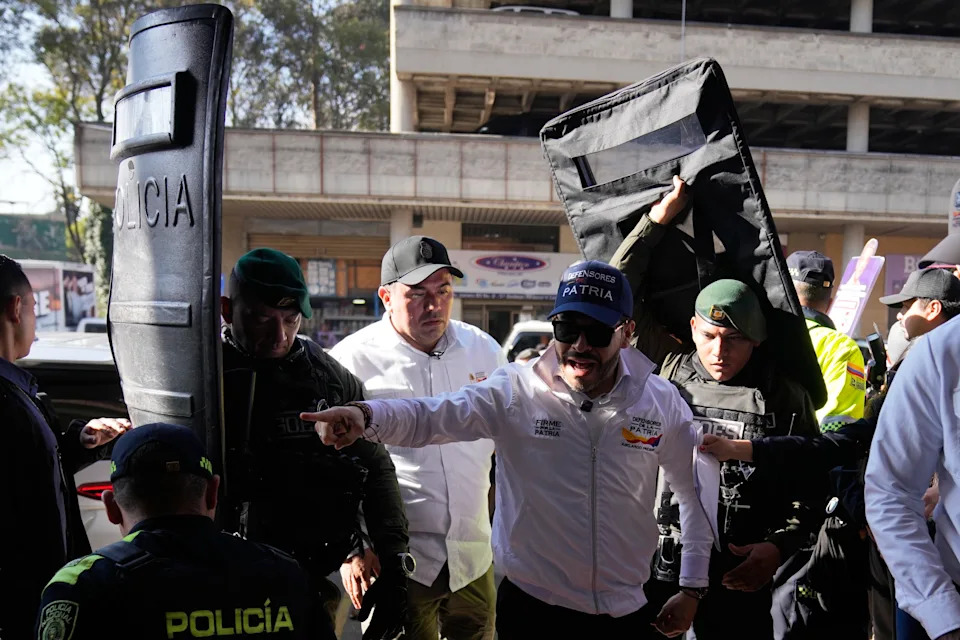
Police hold up shields protecting presidential candidate Abelardo de la Espriella as he points while speaking during a campaign rally at the Corabastos, the largest food distribution center, in Bogota, Colombia, Saturday, Feb. 28, 2026. (AP Photo/Fernando Vergara)(ASSOCIATED PRESS)
Election integrity questions and international observers. President Gustavo Petro — Colombia’s first left-leaning head of state — has raised questions about the integrity of the country’s election software, citing the 2022 legislative contests, when his Historic Pact movement gained roughly 390,000 additional votes after a recount. The European Union dispatched 40 observers in February and has said it plans to expand its delegation for the congressional vote.
The contest at a glance. More than 3,000 candidates are competing for 285 legislative seats: 102 in the Senate and 183 in the House of Representatives. An estimated 41.2 million Colombians are eligible to vote. Results from Sunday’s vote will help shape party strength in Congress and influence which figures emerge as presidential frontrunners ahead of the May first-round ballot.
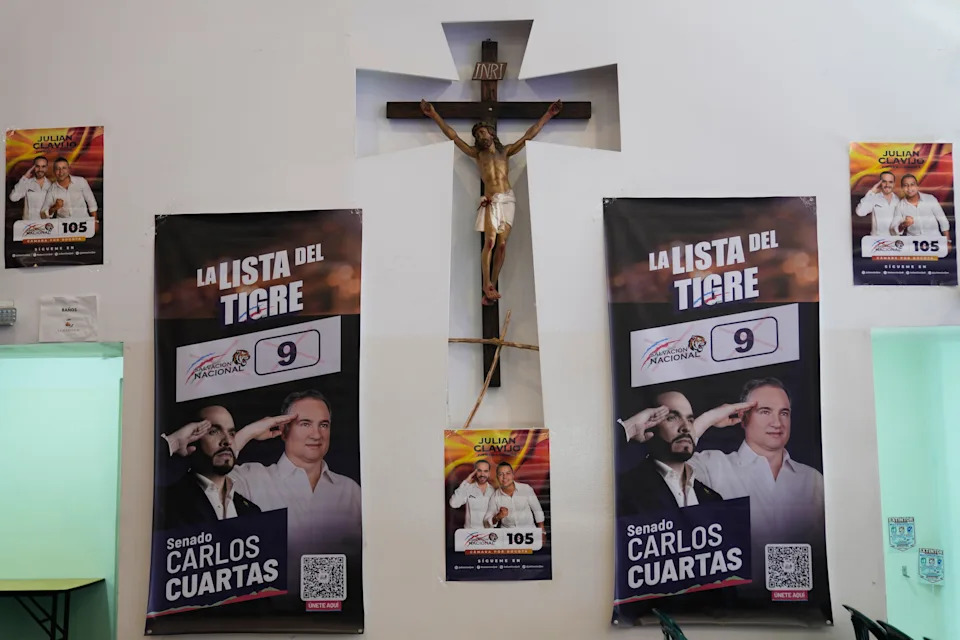
Electoral posters promoting presidential candidate Abelardo de la Espriella and legislative candidates hang on a wall next to a crucifix of Jesus Christ at the Corabastos, the largest food distribution center in Bogota, Colombia, Saturday, Feb. 28, 2026. (AP Photo/Fernando Vergara)(ASSOCIATED PRESS)
President Petro is barred by the constitution from seeking immediate reelection. During his term, Congress approved his pension and labor reforms but rejected proposed health-care and tax overhauls, contributing to frequent tensions between the executive and the legislature.
Political dynamics. On the right, the Democratic Center — the principal opposition party — remains closely associated with former President Álvaro Uribe, who is working to mobilize supporters and regain influence in Congress ahead of the presidential vote. Alongside the congressional elections, Colombians will hold "inter-party consultations" (similar to U.S.-style primaries) to select presidential candidates for the center, center-left and right blocs.
Notably, two figures often topping opinion polls — leftist Ivan Cepeda, aligned with Petro’s movement, and far-right lawyer Abelardo de la Espriella — are not participating in the optional primaries. Political analyst Gabriel Cifuentes described the consultations as a risky, high-stakes bet: a win will matter only if it clearly demonstrates the strength to compete with leading candidates who bypass the primaries.
Authorities and international observers will closely monitor voting and tabulation. Follow-up coverage will report on results and any developments that could affect Colombia’s political trajectory ahead of the May 31 presidential first round.
Help us improve.