The Feb. 14 beating death of 23-year-old Quentin Deranque in Lyon has become a unifying moment for Europe's far right, triggering coordinated marches and memorials in at least two dozen cities. Around 3,000 people marched in Lyon amid reports of Nazi salutes and abusive chants. Analysts and officials warn the incident has accelerated transnational networking among extremist groups, raising security concerns and spotlighting how far-right ideas are entering mainstream political debate.
Europe’s Far Right Mobilises After Lyon Killing, Raising Security and Political Concerns
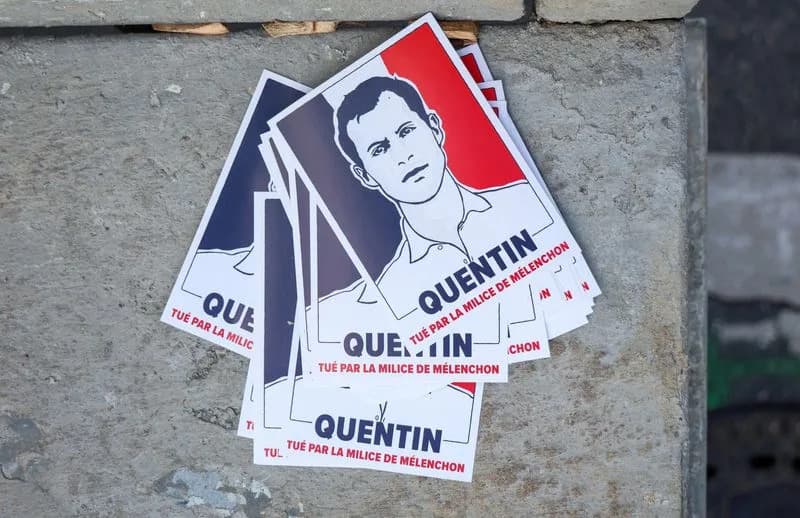
Images representing Quentin Deranque, a young far-right activist beaten to death during a violent assault by hard-left activists, with a text message reading: "Killed by Melenchon's militia", on the day of a march in tribute to Quentin Deranque, in Lyon, France, February 21, 2026. REUTERS/Nicolas Economou
The fatal beating of 23-year-old activist Quentin Deranque in Lyon on February 14 has emerged as a rallying point for far-right groups across Europe, prompting coordinated marches, vigils and online mobilisation in at least two dozen cities.
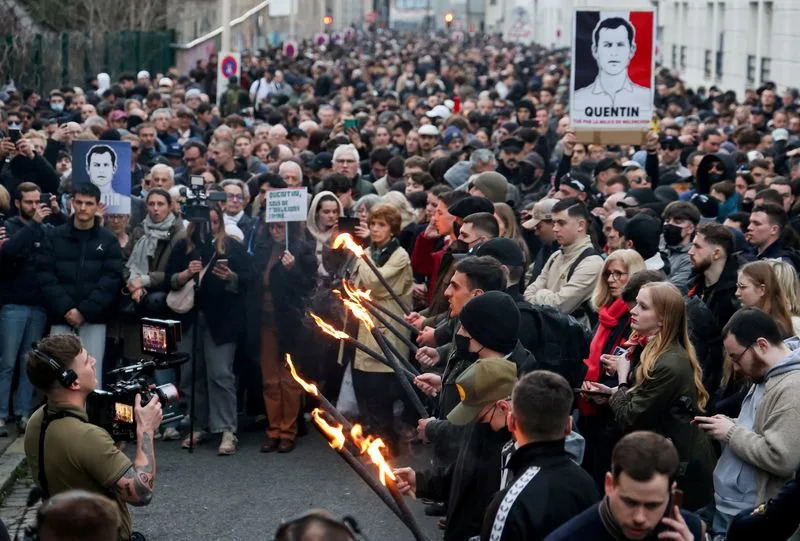
FILE PHOTO: People hold lit torches during a march in tribute to Quentin Deranque, a young far-right activist beaten to death during a violent assault by hard-left activists, in Lyon, France, February 21, 2026. REUTERS/Nicolas Economou/File Photo
Cross-Border Organising
Supporters and allied organisations travelled across borders to attend events from Rome and Dresden to Zagreb and Vienna. Organisers said roughly 3,000 people marched in Lyon a week after the attack; witnesses reported Nazi salutes and racist and homophobic chants during the demonstration.
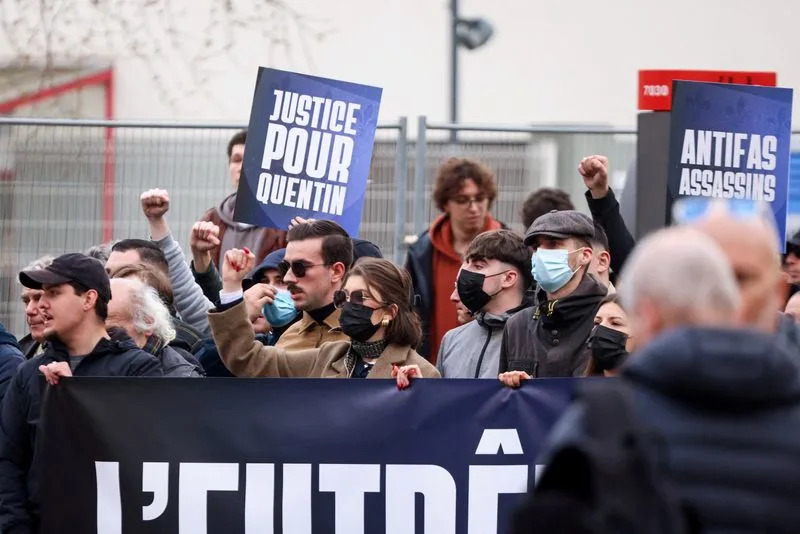
FILE PHOTO: People take part in a march in tribute to Quentin Deranque, a young far-right activist beaten to death during a violent assault by hard-left activists, in Lyon, France, February 21, 2026. REUTERS/Nicolas Economou/File Photo
Groups Involved And Networks
The Lyon turnout included branches of the Identitarian movement — classified by Germany’s domestic intelligence as extremist — and, according to participants' Telegram channels, Italian groups such as CasaPound and Lealta Azione. A French government source confirmed that far-right activists from Italy, Switzerland and Germany were present, without naming individuals.
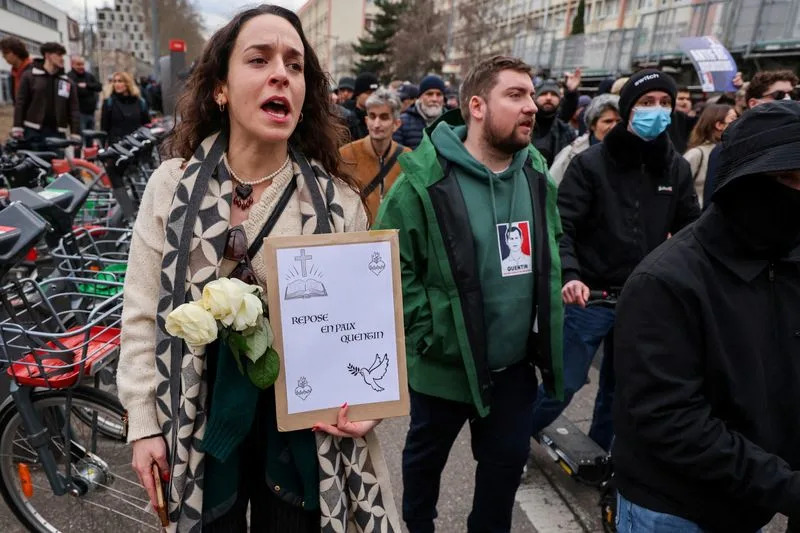
FILE PHOTO: A woman holds a placard reading: "Rest in peace Quentin", during a march in tribute to Quentin Deranque, a young far-right activist beaten to death during a violent assault by hard-left activists, in Lyon, France, February 21, 2026. REUTERS/Nicolas Economou/File Photo
From Ideas To Action?
A 2023 French parliamentary report previously described international ties among far-right movements as largely ideological rather than operational. But analysts and some officials now say that dynamic appears to be shifting. "It is an evolution," said Eric Poulliat, the report's author. Observers point to growing social-media coordination and more frequent in-person networking as evidence of deeper transnational links.
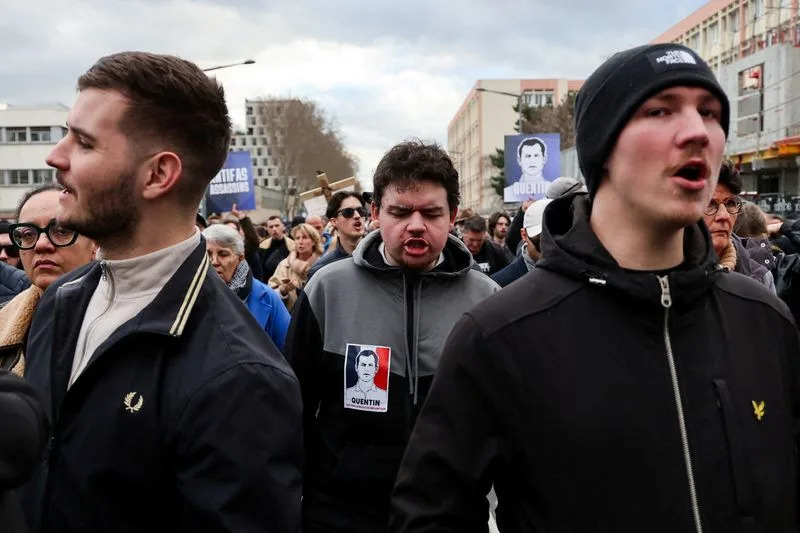
FILE PHOTO: People take part in a march in tribute to Quentin Deranque, a young far-right activist beaten to death during a violent assault by hard-left activists, in Lyon, France, February 21, 2026. REUTERS/Nicolas Economou/File Photo
Security And Political Implications
Authorities in Lyon deployed police to city entry points ahead of the march. French intelligence services and several European security agencies are monitoring the mobilisation, worried it could inspire reprisal attacks or influence upcoming elections. Foreign Minister Jean-Noel Barrot said efforts by the far right to "weaken democracy" after the killing were a concern and called for reclaiming public space.
Mainstreaming Of Far-Right Ideas
At the same time, elements of far-right ideology have seeped into mainstream political discourse in some countries. Policies such as "remigration" and "national preference" have surfaced in the platforms of parties including Germany’s Alternative for Germany (AfD) and France’s National Rally (RN). Parties like Britain’s Reform UK have proposed hardline immigration measures, while commentators note parallels with rhetoric used elsewhere, including the United States.
"The right only has potential if it works together," said an attendee who identifies online as Arminius, describing the event as an opportunity for networking and shared strategy.
Several European states have recently barred entry to prominent far-right activists; authorities in Switzerland and Germany have denied access to Austria’s Martin Sellner, and Britain blocked visa-free entry for Dutch influencer Eva Vlaardingerbroek. Security services in a range of countries say they are monitoring violent networks and cross-border contacts.
Why it matters: The Lyon events highlight both the organisational reach of Europe’s far right and the challenge for security services and democracies as activists increasingly coordinate across borders while some of their ideas enter mainstream debate.
(Reporting compiled from Reuters coverage in Paris, Berlin and other European capitals.)
Help us improve.