
Iranian Deputy Foreign Minister Abbas Araghchi told ISNA that the United States must drop what Tehran calls “excessive demands” for indirect nuclear talks to succeed. He said progress in Geneva paved the way for more detailed negotiations on sanctions relief and nuclear steps, with technical meetings planned in Vienna. The diplomacy is unfolding amid a significant US military deployment to the region, the arrival of the USS Gerald R. Ford in Haifa, and a wave of embassy staff departures and evacuation advisories.
Iran Says US Must Drop 'Excessive Demands' to Salvage Nuclear Talks as Tensions Rise
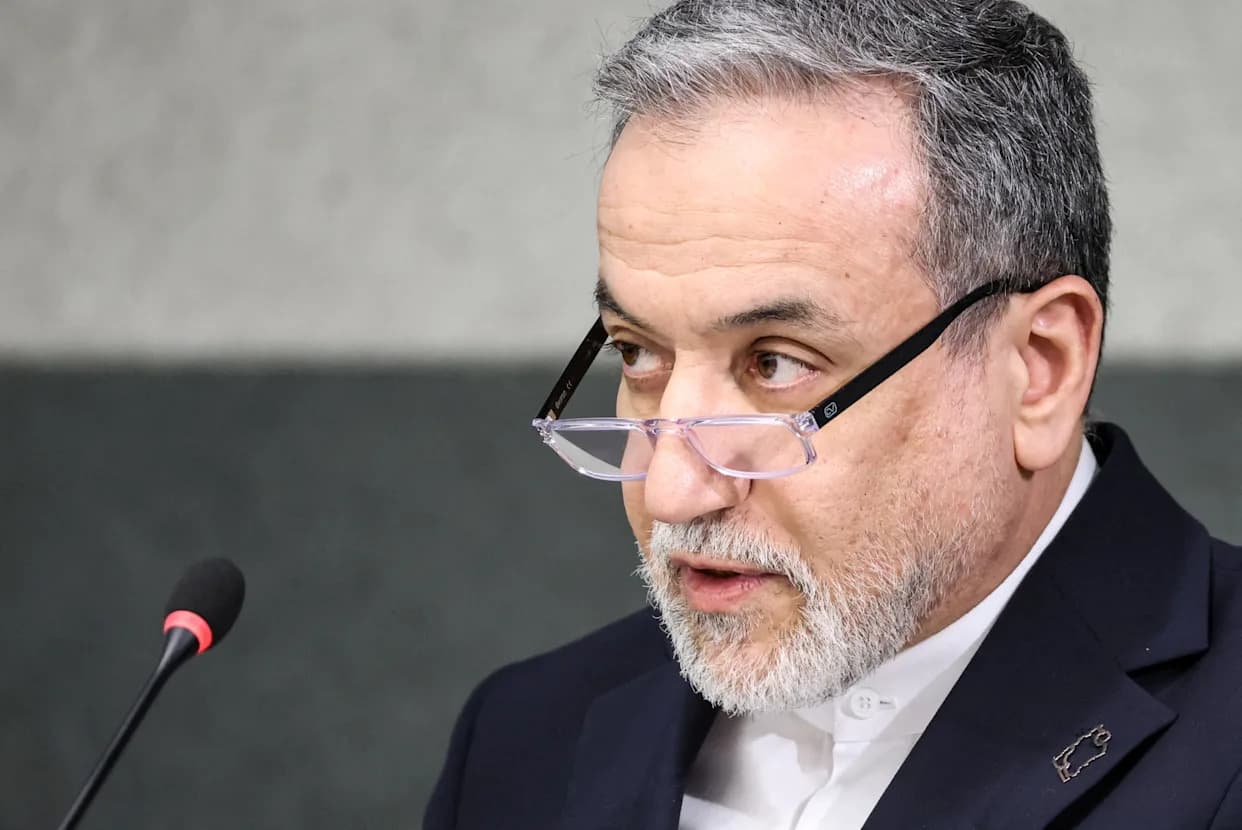
Iran's Foreign Minister Abbas Araghchi said that “success on this path requires seriousness and realism on the part of the other side and avoidance of any miscalculation and excessive demands” [File: Pierre Albouy/Reuters]
Tehran urges Washington to temper expectations as diplomacy continues amid regional anxiety.
Iranian Deputy Foreign Minister Abbas Araghchi told the ISNA news agency that the United States must abandon what Tehran calls “excessive demands” if indirect nuclear negotiations are to succeed. His remarks came during a phone call with Egyptian Foreign Minister Badr Abdel Ati and were reported on Friday by ISNA.
Araghchi said:
“Success on this path requires seriousness and realism on the part of the other side and avoidance of any miscalculation and excessive demands.”He did not specify which US demands he had in mind.
The Iranian diplomat appeared to soften earlier, more optimistic comments in which he described recent diplomacy as showing “progress,” calling the last round of indirect meetings in Geneva the “most intense so far.” He said those talks ended with a mutual understanding to continue detailed discussions on issues essential to any agreement, notably sanctions relief and nuclear-related steps.
Further diplomatic work, Araghchi added, will proceed in parallel with technical-team meetings scheduled in Vienna in the coming days. Delegations from both sides left Geneva after Oman-mediated indirect talks to consult with their capitals.
Since talks resumed last month, the US delegation has pushed for Tehran to dismantle its nuclear infrastructure completely, restrict its ballistic missile programme and curb support for regional proxy groups. Iran has indicated some flexibility on limits to civilian uranium enrichment but has thus far treated restrictions on missiles and regional allies as non-negotiable.
The wider diplomatic push is unfolding against a backdrop of increased US military assets in the Middle East. US media and Israeli outlets reported the arrival of the aircraft carrier USS Gerald R. Ford in Haifa this week amid the largest US force posture in the region since 2003.
Iran has stated it will not initiate hostilities but warned it would respond to any attack, including by targeting bases used by US forces in the region. The military build-up and reciprocal warnings have left states and foreign missions on edge: China urged its nationals to leave Iran “as soon as possible,” and the US authorised the departure of non-emergency embassy staff from Israel. Canada, India, the UK and Poland have issued similar advisories.
What Comes Next
Diplomatic negotiators from both sides are expected to reconvene with technical teams in Vienna while capitals review their negotiating positions. Observers say a breakthrough will require compromise on sanctions relief and reciprocal, verifiable steps on Iran’s nuclear programme — issues that remain politically sensitive for both Washington and Tehran.
Help us improve.





















