North Korea’s Kim Jong Un pledged to expand the country’s nuclear arsenal and reviewed a nighttime parade in Pyongyang accompanied by his teenage daughter, widely believed to be Ju Ae. About 14,000 troops marched, but the procession conspicuously lacked major strategic hardware such as ICBMs and tanks. The Workers’ Party congress reshuffled top posts, promoting Kim Yo Jong and reelecting Kim as general secretary, while Pyongyang emphasized unity at home even as it vowed stronger ICBMs, submarine-launched weapons, drones and AI.
Kim Jong Un Pledges Nuclear Build-Up While Reviewing Night Parade With Daughter
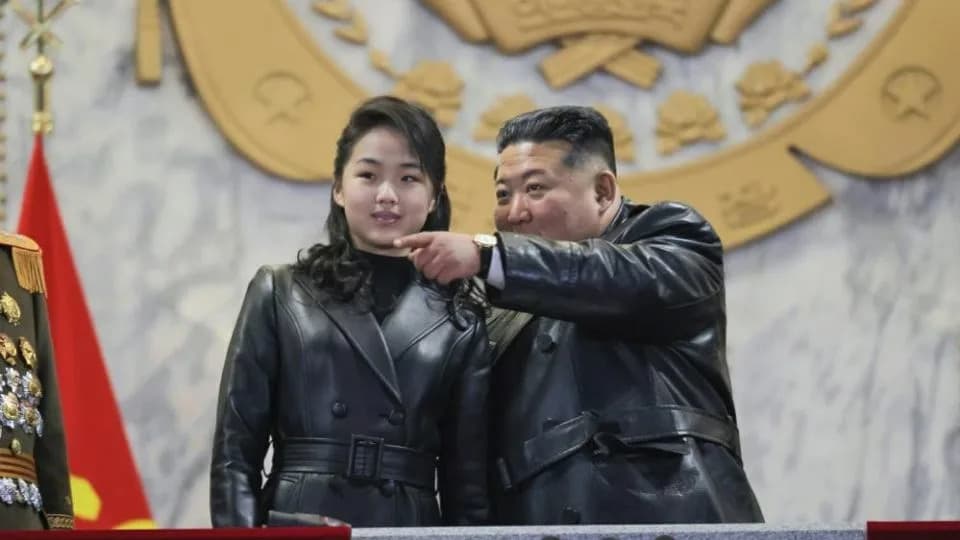
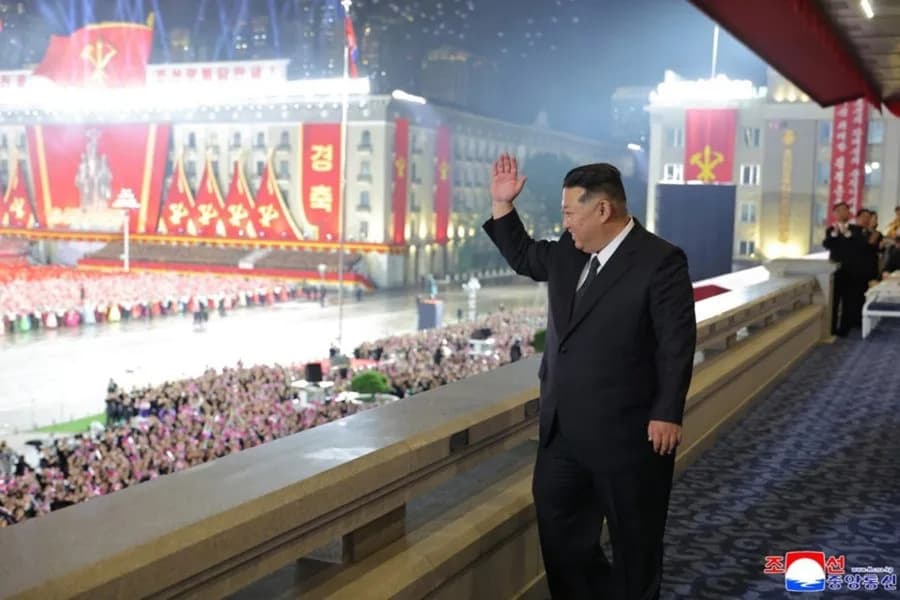
North Korea's leader Kim Jong Un and his daughter, believed to be named Ju Ae, at a military parade in Pyongyang on Wednesday night. - Rodong Sinmun/KCNA
North Korean leader Kim Jong Un pledged to expand his country's nuclear arsenal and delivery capabilities on Wednesday before presiding over a nighttime military parade in Pyongyang, where he was accompanied by his teenage daughter, widely believed to be Ju Ae.
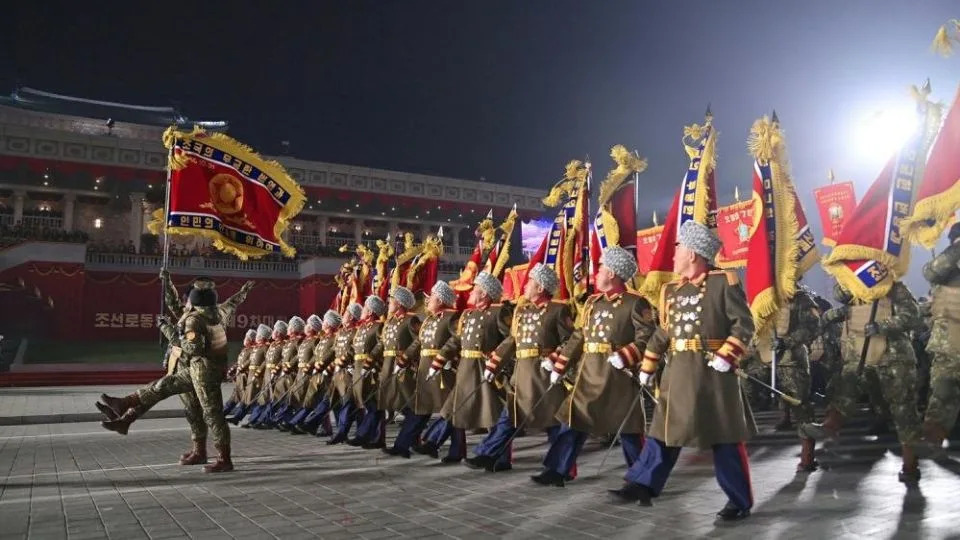
Members of North Korea's military march during a military parade involving 14,000 troops in Pyongyang on Wednesday. - Rodong Sinmun/KCNA
Parade Focused on Troops, Not Heavy Missiles
State media reported about 14,000 troops marched through Kim Il Sung Square under floodlights, with fighter jets roaring overhead and ranks of soldiers goose-stepping in formation. Observers noted a striking absence of the heavy strategic systems often highlighted at such events: there were no tanks, no towering intercontinental ballistic missiles (ICBMs), no hypersonic glide vehicles and no transporter-erector-launchers on display.
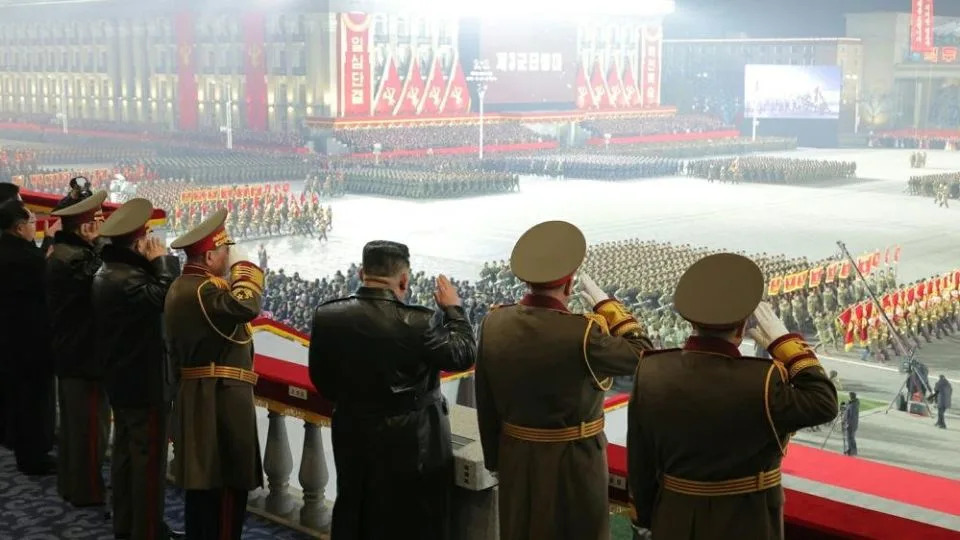
North Korean leader Kim Jong Un promised to strengthen his country’s nuclear weapons program on Wednesday, before presiding over a nighttime military parade. - Rodong Sinmun/KCNA
Nuclear Pledge and Strategic Priorities
In closing remarks at the Ninth Workers’ Party Congress, Kim framed nuclear expansion as the party’s "firm will," calling for more weapons and enhanced means of deployment. He singled out priorities including stronger ICBMs, submarine-launched capabilities and advances in drones and artificial intelligence — while leaving the door open to talks with Washington only on terms acceptable to Pyongyang, dependent on the "US attitude."
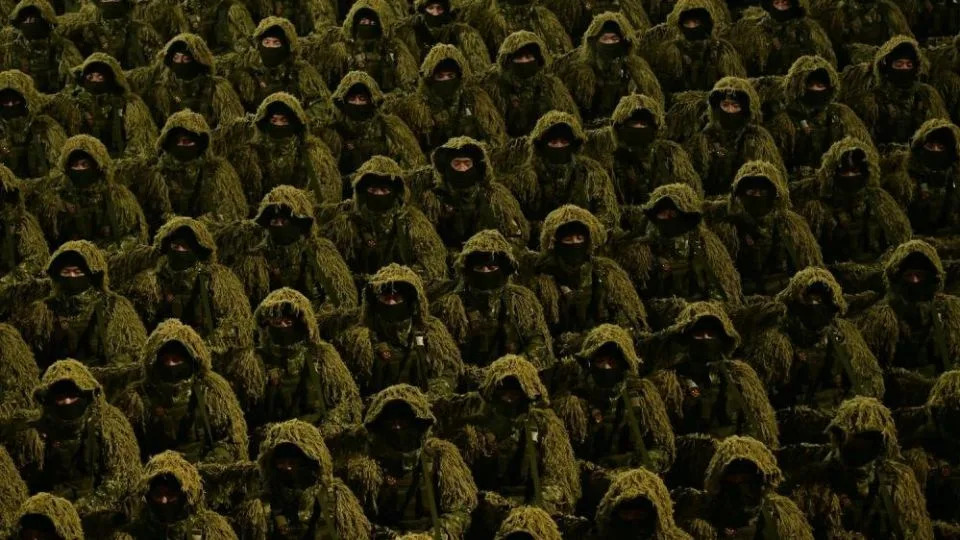
About 14,000 troops marched through Kim Il Sung Square in the capital of Pyongyang, state media said. - Rodong Sinmun/KCNA
Personnel Changes and Domestic Messaging
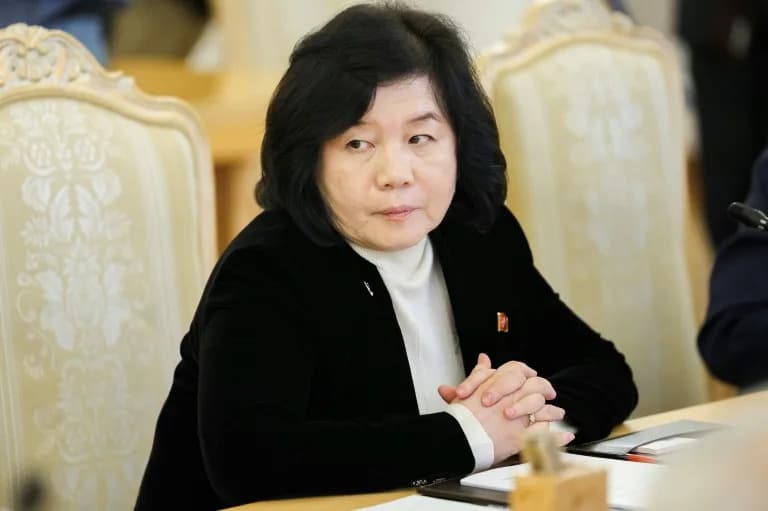
The congress also produced several leadership shifts. Kim’s sister, Kim Yo Jong, was elevated from a deputy role to director of a party department, reinforcing her position in the inner circle. Kim was unanimously "reelected" as general secretary, and other senior party and military posts were reshuffled to promote younger loyalists.
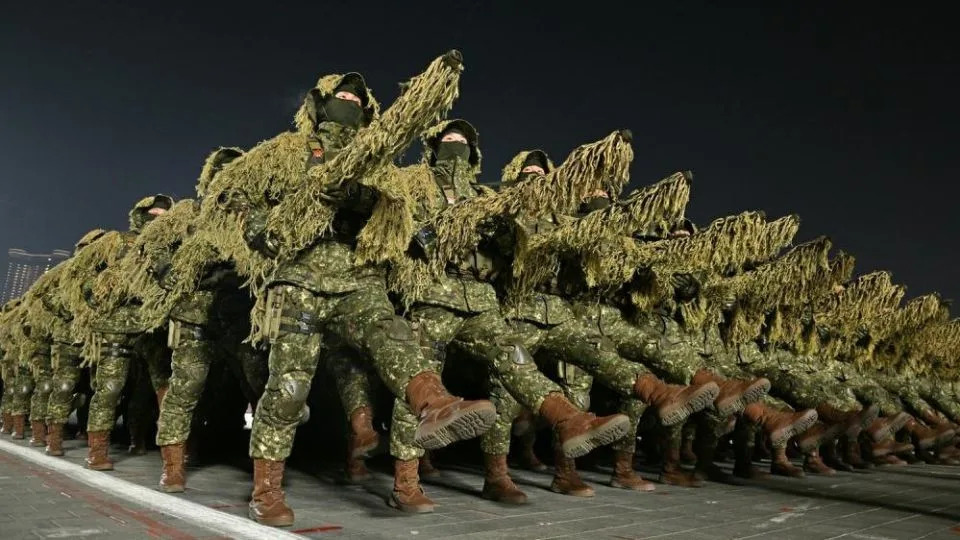
Columns of soldiers were seen goose-stepping under floodlights with fighter jets roaring overhead. - Rodong Sinmun/KCNA
Domestic Signal: Analysts say the focus on personnel and troops, rather than provocative hardware, appears aimed at conveying unity, discipline and political control at home while preserving the most consequential systems as strategic leverage abroad.
Context and International Signals
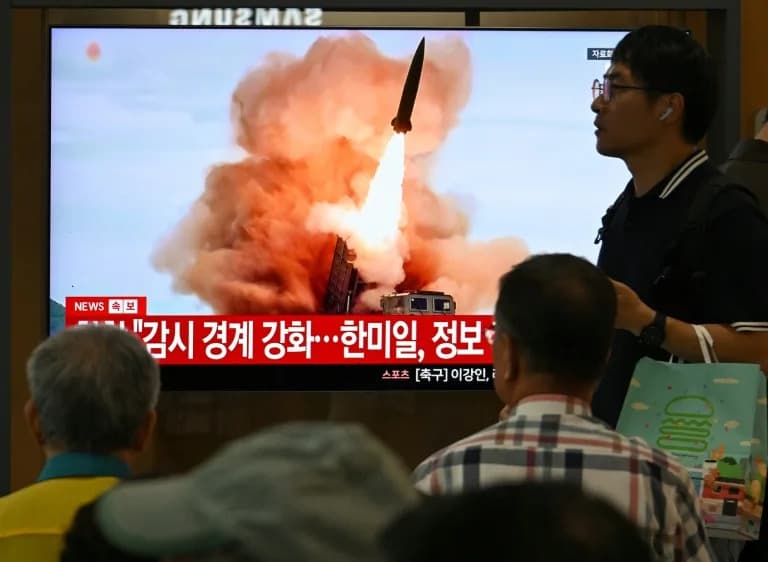
The muted hardware show follows recent media displays of weapons — including footage of Kim appearing to operate a 600mm multiple rocket launcher that Pyongyang has described as "nuclear-capable" — and a larger parade four months earlier that featured a prominent ICBM. The timing may also reflect practical considerations: parades are costly and repeating the same equipment soon after a major anniversary could blunt its impact.
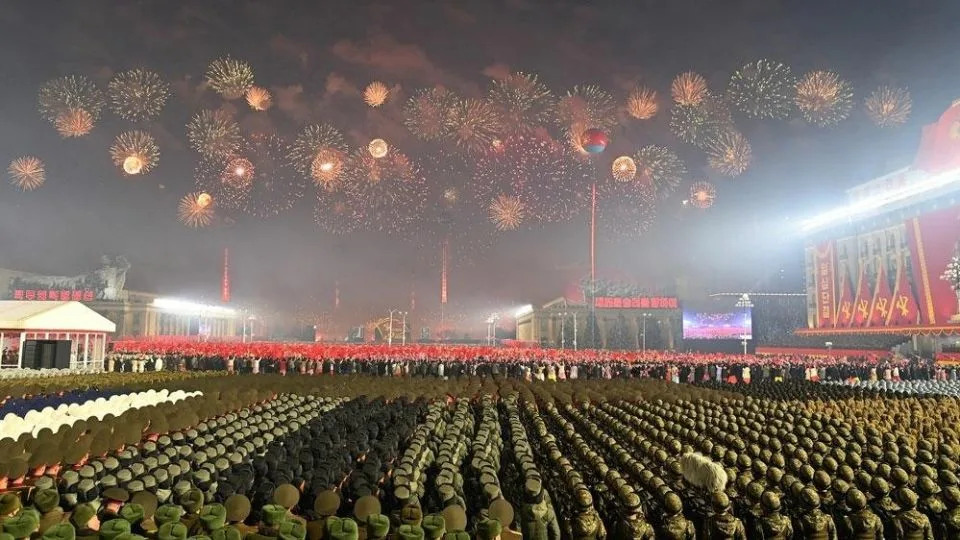
Member of North Korea's military watch a fireworks display during Wednesday's parade in Pyongyang. - Rodong Sinmun/KCNA
Kim’s international posture has shifted in recent months, notably after a June 2024 agreement with Russian President Vladimir Putin described as a "comprehensive strategic partnership" that includes a mutual-defense element. State media have highlighted North Korean fighters' involvement related to Russia’s war in Ukraine, using returning veterans and bereaved families in propaganda to bolster domestic support.
The regime’s warning to adversaries remained clear: state media quoted Kim saying any violation of North Korea’s sovereignty would trigger immediate retaliatory strikes. That statement accompanied announcements that U.S. and South Korean military drills — potentially scaled back — are set to resume next month.
Whether the scaled-back parade signals restraint, strategic calculation or a blend of both, analysts say Pyongyang is balancing domestic messaging, international leverage and the optics of its weapons programs as it moves forward with declared plans to expand its military capabilities.
Help us improve.