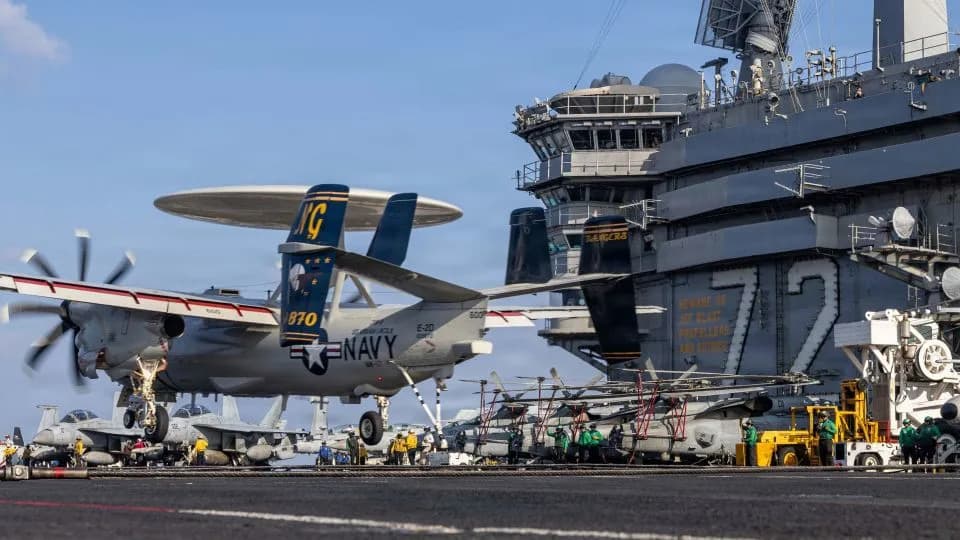
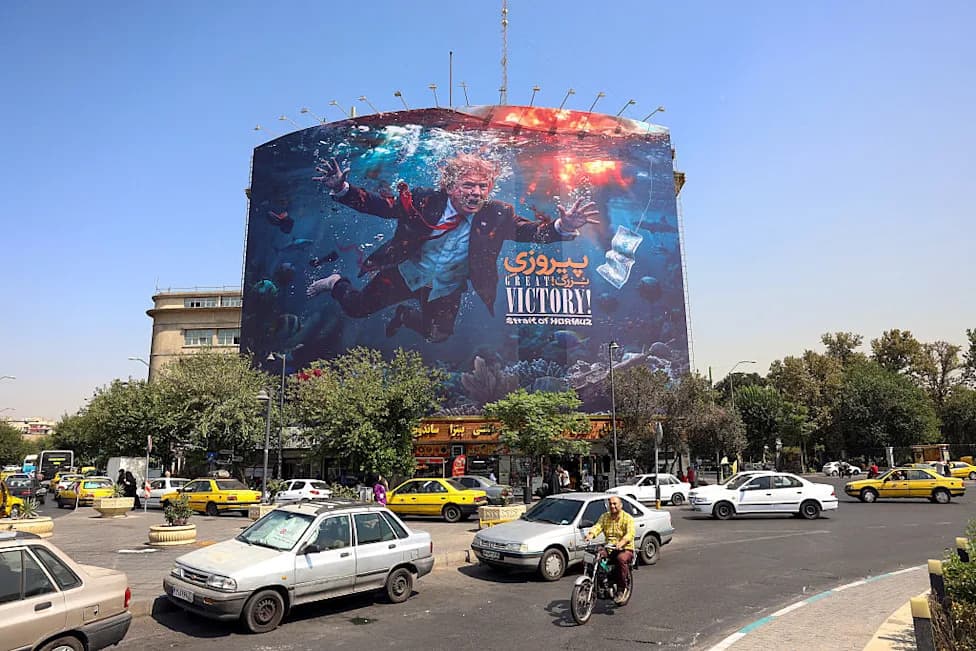
As the United States moves more military firepower into the Persian Gulf than those waters have seen since the Iraq war, diplomats, military planners and intelligence officials around the world are trying to read President Donald Trump’s intentions toward Iran.
In his State of the Union address, Trump presented his most public rationale for the buildup: to prevent Tehran from acquiring a nuclear weapon. Yet the administration has not specified clear demands, red lines, or the precise threshold that would trigger military strikes.
What Washington Appears To Want
Analysts and some former U.S. intelligence officials summarize the administration’s posture this way: the U.S. is asking Iran not to rebuild capabilities it currently lacks — namely, a weapons-grade nuclear program, long-range delivery systems, and a resurgent proxy network — and offering, in return, relief from sanctions and reentry into the global economy if Tehran complies.
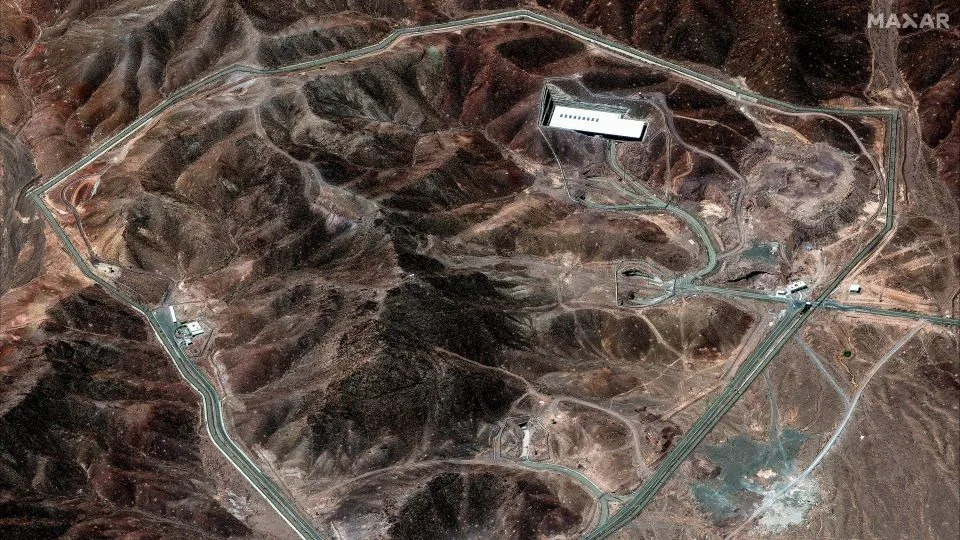
A satellite image taken on June 14, 2025, shows no visible damage to Iran's Fordow Fuel Enrichment Plant. Israel targeted the site during its attacks. - Maxar Technologies
Three Core Objectives
1) Prevent A Rebuilt Nuclear Weapons Program. Trump and other U.S. officials say the goal is to stop Iran from reconstructing the technical and industrial capacity for a nuclear weapons program. Reports of sabotage and targeted strikes on Iranian nuclear infrastructure in recent months have set back Tehran’s timeline, according to Western officials.
2) Halt Long-Range Missile Development. U.S. intelligence has long warned about Iranian efforts to extend missile range. A development of intercontinental ballistic missile (ICBM) capability would dramatically expand Iran’s reach; the U.S. aims to prevent that trajectory from progressing.
3) Stop Reconstituting Proxy Forces. Tehran’s Islamic Revolutionary Guard Corps (IRGC) has for years supported militias and allied groups across the region, often described as the "Axis of Resistance." Any durable deal would require Iran to commit not to rebuild or fund those proxy networks.
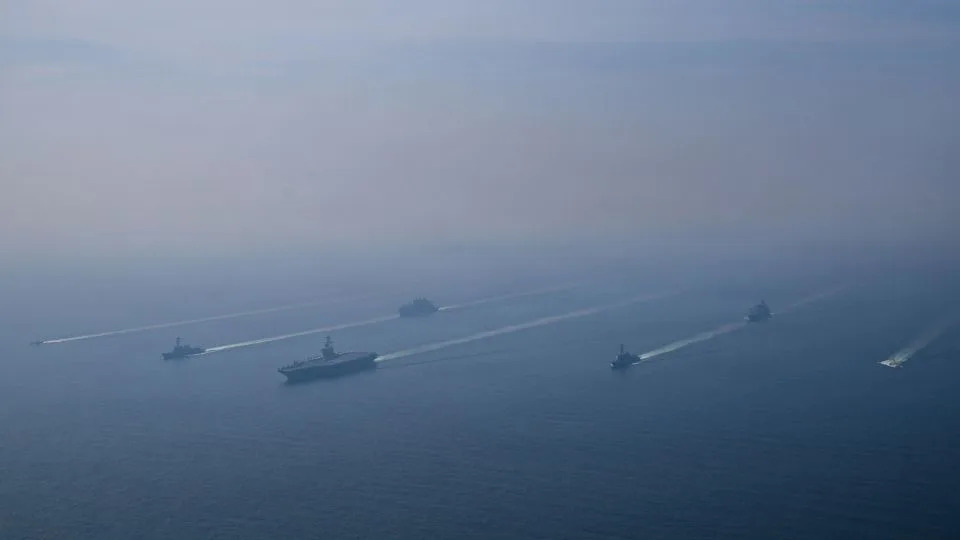
In this handout photo obtained from the US Defense Department, the aircraft carrier USS Abraham Lincoln and other ships sail in formation in the Arabian Sea on February 6. - Mass Communication Specialist 1st Class Jesse Monford/US Navy/Getty Images
The Carrot And The Stick
Washington’s leverage combines a visible military posture — naval forces, warships and regional assets — with economic incentives: sanctions relief and the prospect of normalization that could bring investment and trade. The administration frames the military buildup as the "stick" and sanctions relief as the "carrot."
“They want to make a deal, but we haven’t heard those secret words: We will never have a nuclear weapon,” said President Trump in his address, while reiterating a preference for diplomacy.
Tehran continues to deny pursuing a bomb and has accused the U.S. of spreading disinformation. Many Western analysts remain skeptical because Iran in the past enriched uranium to levels that would have shortened the technical path to weapons-grade material.
Is Regime Change The Goal?
The administration’s public posture emphasizes behavior change rather than explicit regime replacement. Historical analogies are imperfect: U.S. efforts to pressure regimes — such as attempts to isolate Venezuela’s leadership — have not always produced a wholesale change in government personnel, even when policy shifts followed. The U.S. may be seeking to constrain Iran’s capabilities and influence rather than to install a new government.
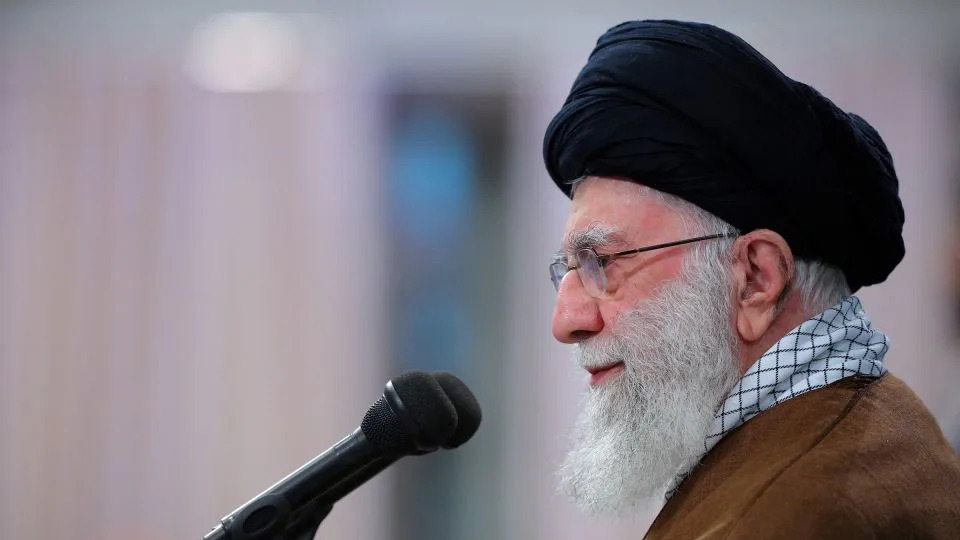
Iran's Supreme Leader Ayatollah Ali Khamenei, at a meeting with a group of Iranian elites in Tehran on October 17, 2023. - Office of the Iranian Supreme Leader/WANA News Agency/Reuters
Verification And Risk
Any agreement that lifts sanctions would require rigorous verification measures to ensure funds do not flow back into weapons programs or proxies. Without strong monitoring, a temporarily weakened Iran could rebuild capabilities over time, creating a recurring cycle of intervention.
Analysts warn against mirror imaging — assuming Tehran values economic reintegration the way Western negotiators might. The Islamic Republic was founded on a revolutionary, anti-Western ideology and has prioritized strategic autonomy, often at the expense of broad economic gains.
The Moment Of Decision
After waves of protests, a struggling economy and targeted strikes, Iran may be more willing to negotiate as a survival strategy. Washington, however, cannot sustain a prolonged, massive regional deployment indefinitely without producing a result. A decision point is approaching for both President Trump and Iran’s Supreme Leader Ayatollah Ali Khamenei.
Author: John Miller, Chief Law Enforcement and Intelligence Analyst for CNN; previously Deputy Assistant Director of National Intelligence (2009–2010). Report contributors: Kevin Liptak and Rhea Mogul, CNN.
Note: This article synthesizes public statements, reporting and expert analysis; some operational details remain classified or disputed among sources.