
President Trump’s State of the Union undercut his earlier claim that last year’s strike had "completely and totally obliterated" Iran’s nuclear enrichment facilities by warning that Tehran is rebuilding missile capabilities that could threaten Europe and U.S. interests. The strike, dubbed "Operation Midnight Hammer," reportedly used ~75 precision munitions and 30,000-pound bunker-busters and was carried out without congressional authorization. As nuclear talks resume in Geneva, lawmakers on both sides are debating new limits on presidential war powers amid heightened political stakes ahead of the midterms.
Trump’s State of the Union Undermines His Claim of Having ‘Obliterated’ Iran’s Nuclear Program
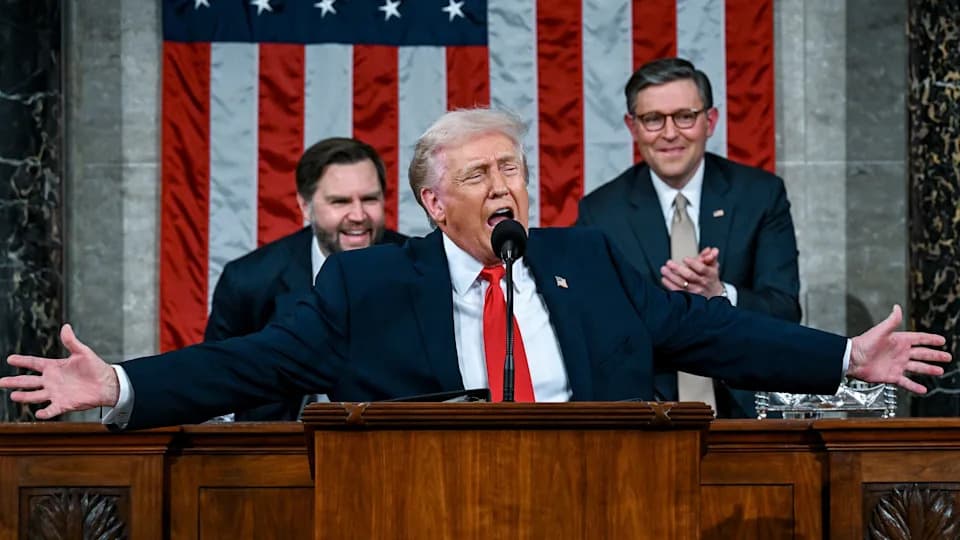
President Donald Trump delivers the State of the Union address on Tuesday. / Pool/Getty Images
President Donald Trump’s State of the Union address raised fresh questions about his earlier assertion that a U.S. strike had "completely and totally obliterated" Iran’s nuclear enrichment sites. In remarks to Congress, he warned that Iran is rebuilding missile capabilities that could threaten U.S. bases overseas and potentially reach the United States.
David McNew/Getty
What He Said—and Why It Matters
Last year, after a pre-dawn U.S. military operation against Iranian nuclear facilities, Mr. Trump publicly declared that the Pentagon had destroyed Iran’s key enrichment sites and said rebuilding would take "years." Yet in Tuesday’s joint session he told lawmakers: “They’ve already developed missiles that can threaten Europe and our bases overseas, and they’re working to build missiles that will soon reach the United States of America.” The comments were widely interpreted as setting the stage to justify potential additional military action.
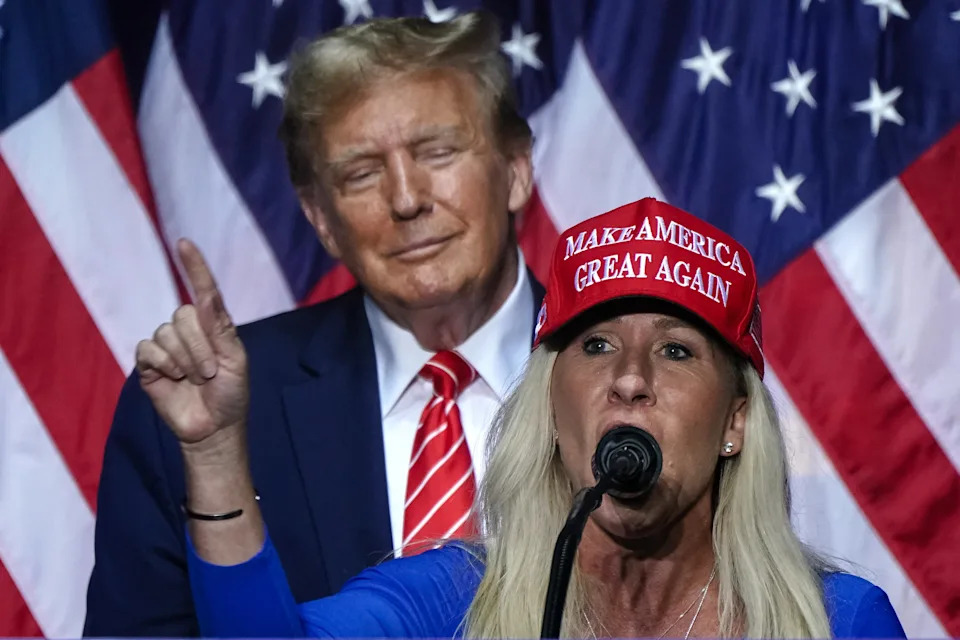
Marjorie Taylor Greene, Trump's former cheerleader, broke from the president over the release of the Epstein files. / ELIJAH NOUVELAGE / AFP via Getty Images
Context And Comparisons
Critics compared the tone of the address to the rhetoric used before the Iraq War, when claims about weapons of mass destruction were later found to be unsupported. Meanwhile, U.S. and Iranian negotiators are due to resume nuclear talks in Geneva, and the White House has warned of negative consequences if an agreement is not reached.
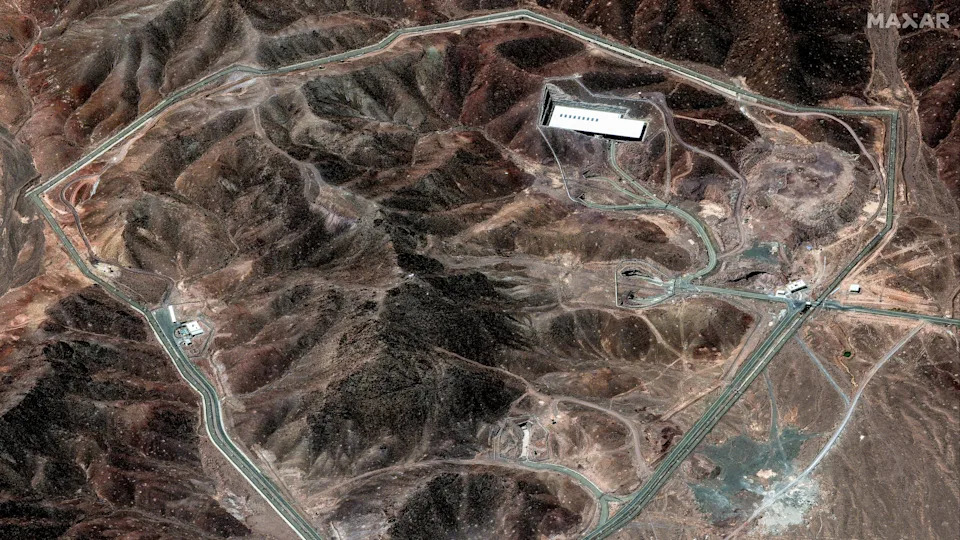
The white structure seen in this June 14 image of the Fordo site appeared to still be standing following the strikes. / Maxar Technologies / via REUTERS
Military Action And Domestic Politics
As the U.S. conducts one of the largest military buildups in the Middle East since the Iraq era, the prospect of renewed hostilities has become a contentious issue within the Republican Party and across Congress ahead of the midterm elections. High-profile conservatives, including Steve Bannon and former ally Rep. Marjorie Taylor Greene, as well as libertarian-leaning Sen. Thomas Massie, have spoken publicly about the risks of intervention.
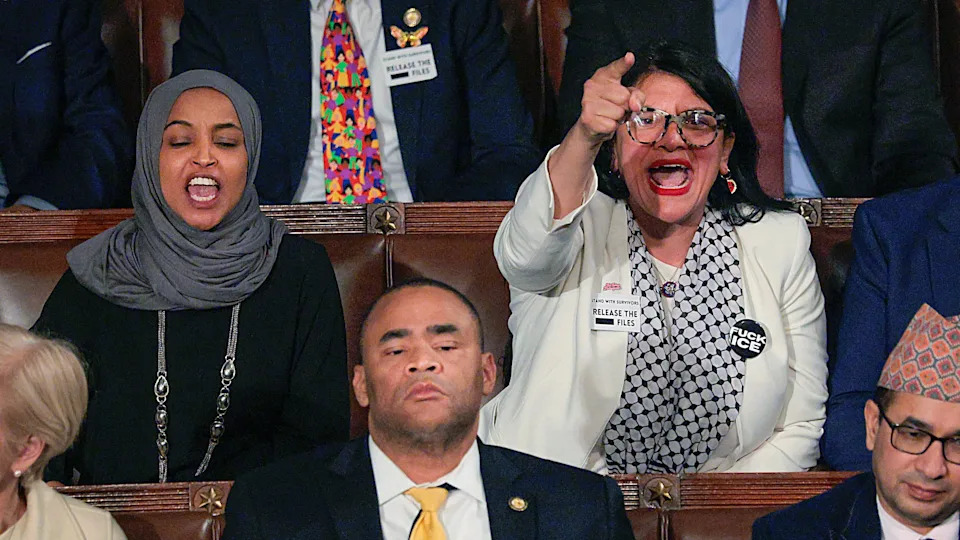
Rashida Tlaib (D-MI) (R) and Rep. Ilhan Omar (D-MI) shout during U.S. President Donald Trump's State of the Union address. / Chip Somodevilla / Getty Images
Operation Midnight Hammer
The strike, labeled by the Pentagon as "Operation Midnight Hammer," reportedly used about 75 precision-guided munitions against Fordow, Natanz and Isfahan, key sites in Iran’s nuclear infrastructure. Reports also noted the operational use of 30,000-pound bunker-buster bombs. The operation was carried out without explicit congressional authorization, prompting calls from some Democrats for accountability and even impeachment.
Congressional Response
In response to the strike and ongoing tensions, Rep. Thomas Massie (R-Ky.) and Rep. Ro Khanna (D-Calif.) have introduced legislation to limit presidential authority to launch further strikes on Iran. Those proposals face resistance from some House Republicans and other lawmakers.
Trump’s Position
After last year’s strike Mr. Trump hailed its success: “Tonight, I can report to the world that the strikes were a spectacular military success. Iran’s key nuclear enrichment facilities have been completely and totally obliterated.” Yet administration officials have since discussed the possibility of a limited follow-up strike to pressure Tehran during negotiations. In his speech the president said he preferred diplomacy but insisted he would not allow Iran to acquire a nuclear weapon.
Tensions In The Chamber
The State of the Union provided several dramatic moments: Supreme Court Justice Neil Gorsuch, a Trump appointee, did not attend the address days after a ruling against a signature Trump economic policy; Rep. Al Green was escorted from the chamber after displaying a protest sign; and the room briefly erupted when Rep. Ilhan Omar vocally challenged the president during an exchange on immigration and public safety.
The speech underscored how foreign policy decisions—especially those involving potential military action—are increasingly entangled with domestic political dynamics as lawmakers and voters weigh the risks ahead of November’s midterm elections.
Help us improve.





















