
Japan plans to station surface-to-air missile systems on Yonaguni island by March 2031, with officials citing fiscal 2030 preparations. Analysts say the move signals a deliberate hardening of Tokyo’s posture and is politically timed as Prime Minister Sanae Takaichi prepares for a Washington visit in March 2026. Beijing has responded with travel advisories, export controls and military posturing, while deep economic ties between the two countries complicate any sustained confrontation.
Japan To Deploy Missiles On Yonaguni Near Taiwan — Experts Warn It Will Heighten Tensions With China
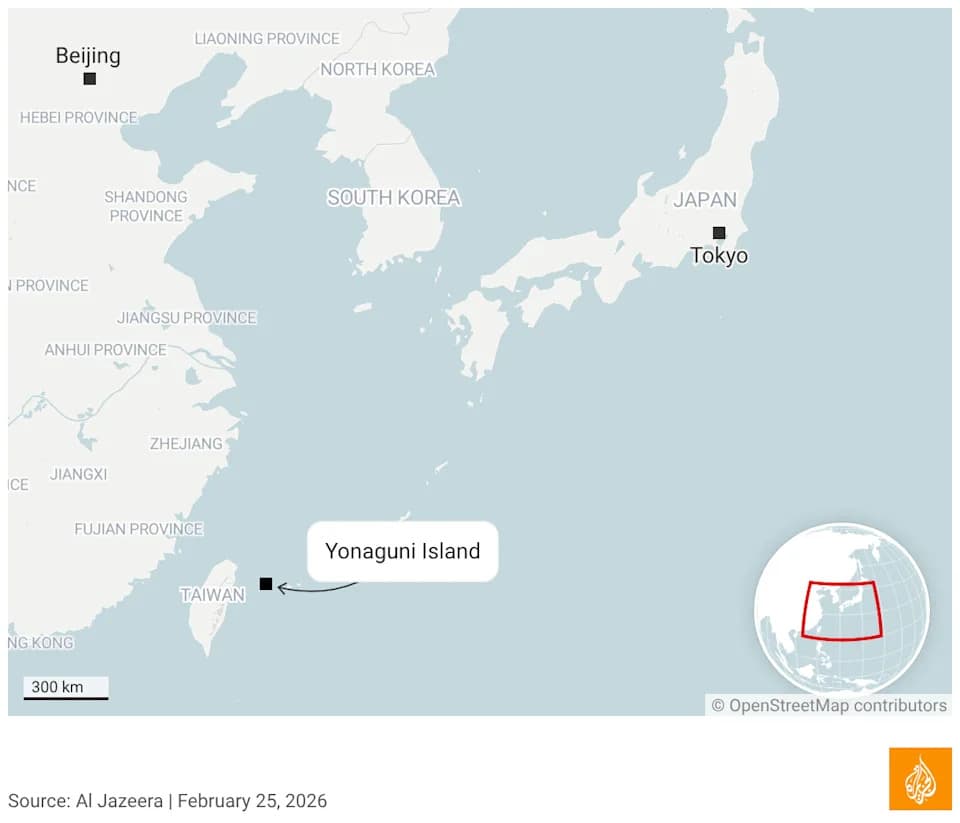
Japan has announced plans to deploy surface-to-air missile systems on Yonaguni, its westernmost island, with Defence Minister Shinjiro Koizumi saying the systems are expected to be in place by March 2031 as part of fiscal 2030 preparations.
What Was Announced
The planned systems are designed to intercept aircraft and ballistic missiles. Yonaguni sits about 110 km (68 miles) east of Taiwan and is part of the Ryukyu island chain that stretches toward Japan’s main islands. Tokyo first flagged intentions to bolster Yonaguni’s defences in 2022, but Koizumi’s timetable is the most specific to date.
Political And Strategic Context
Analysts say the move signals a deliberate hardening of Japan’s posture toward China.
'This represents a calculated escalation that will increase regional tensions,' said Einar Tangen, senior fellow at the Centre for International Governance Innovation (CIGI).Some observers link the timing to Prime Minister Sanae Takaichi consolidating political standing ahead of a planned visit to Washington in March 2026.
Experts also place the deployment within a longer trajectory of Japanese defence policy that accelerated after former prime minister Shinzo Abe’s 2014 reinterpretation of collective self-defence. Measures described as incremental — coastal surveillance, missile batteries on nearby islands, and electronic-warfare units — have steadily expanded Tokyo’s forward capabilities.
China’s Reaction And Measures
Beijing condemned recent Japanese political remarks about potential involvement in a Taiwan contingency, calling them provocative. In response to escalating tensions, China has taken several steps, including discouraging travel to Japan, tightening export controls on certain materials and firms (reportedly targeting 40 Japanese entities), scaling back cultural exchanges and dispatching naval vessels and drones near Japanese waters.

Panda lovers wave goodbye to a truck believed to be carrying the twin pandas upon their departure from Ueno Zoo in Tokyo on January 27, 2026, heading towards their return to China [Kazuhiro Nogi/AFP]
China’s control of rare earth production — critical for electric vehicles, mobile phones and other high-tech industries — is cited as an important lever in the dispute. Beijing also withdrew giant pandas from Tokyo’s Ueno Zoo, a symbolic move that underscores the diplomatic chill.
Security Implications
Japanese authorities say the shift in focus reflects a change in threat perception: whereas Tokyo once prioritized northern threats such as Russia, the current emphasis is on Chinese activity in the East China Sea. Incidents in recent months — including Chinese drones approaching Yonaguni and Japan scrambling jets — demonstrate how sensitive the area has become.
Observers note U.S. pressure for allies to increase defence contributions and readiness, a dynamic that has influenced regional planning. Domestically, Prime Minister Takaichi’s strengthened parliamentary position following recent elections is likely to sustain a tougher defence posture.
Economic Stakes
Economic interdependence complicates the security standoff. China has been Japan’s largest trading partner since 2005; bilateral trade reached approximately $322 billion in 2024. China accounts for roughly one-fifth of Japan’s trade and Tokyo runs an estimated $43 billion annual trade deficit with Beijing. Analysts warn these ties limit the scope for outright decoupling and increase the cost of sustained confrontation.
Outlook
While Tokyo frames the deployments as defensive and time-sensitive — driven by a perceived narrowing window to establish forward deterrence — Beijing views them as provocative interference in the sensitive Taiwan issue. The announcement is therefore likely to keep regional tensions high, prod further diplomatic and economic countermeasures, and shape defence planning across East Asia.
Help us improve.





















