The CSIS report finds Xi Jinping’s anti-corruption purge has reached deeply into the PLA, with 36 generals officially removed and another 65 officers missing or plausibly purged since 2022. Overall, about 52% of the PLA’s 176 top leadership posts have been affected, shrinking the pool of experienced commanders and reducing succession options for key theater commands. Analysts say this leadership churn may already be slowing responses around Taiwan and could limit Beijing’s ability to carry out complex, high-risk operations—though simpler coercive actions remain feasible.
CSIS: Xi’s Sweeping Military Purges Erode PLA Leadership and Could Weaken Readiness
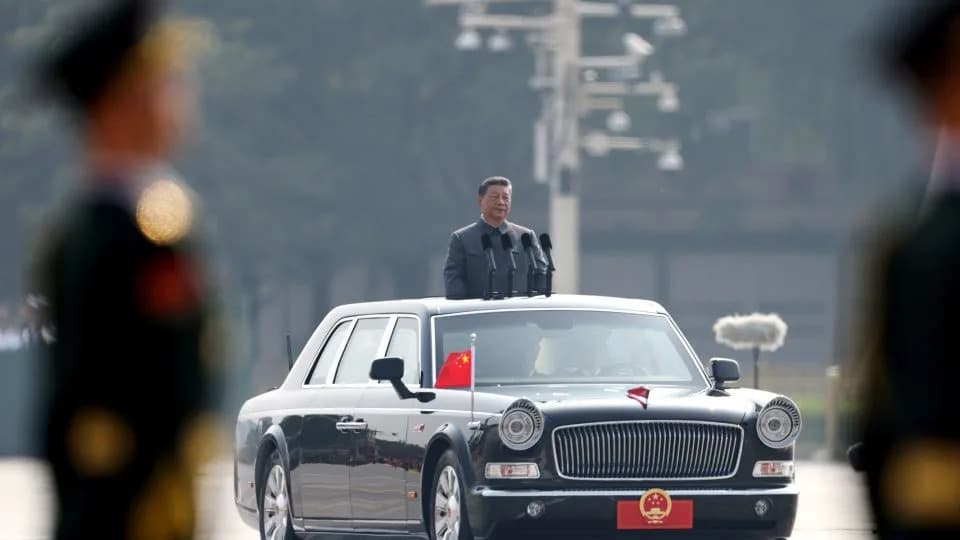
China’s President Xi Jinping attends a military parade marking the 80th anniversary of victory over Japan and the end of World War II, in Beijing last September. - Lintao Zhang/Getty Images
Chinese leader Xi Jinping has extended his anti-corruption campaign deep into the People’s Liberation Army (PLA), removing top officers in a sustained shake-up that analysts say may be degrading the service’s operational capacity. A new report from the Washington-based Center for Strategic and International Studies (CSIS) maps the scale of the campaign and warns of potential risks to China’s ability to conduct complex military operations.
The CSIS study documents that 36 generals and lieutenant generals have been officially purged since 2022, while another 65 officers are listed as missing or plausibly purged. When counting positions cleared more than once, the report finds that roughly 52% of the PLA’s 176 top leadership posts have been affected by removals, reassignments, or investigations.
“This figure is striking and extraordinary, demonstrating the depth of Xi’s campaign and the unprecedented churn in the PLA leadership,” wrote M. Taylor Fravel, one of the report’s authors.
The purge reaches beyond headline cases involving senior figures such as Zhang Youxia and Liu Zhenli and extends into lower levels of command. CSIS highlights consequential gaps in the promotion pipeline: with 56 deputy theater commanders purged, the pool of candidates eligible to lead one of the PLA’s five theater commands has shrunk by more than 33%.
Authors warn the removal of experienced, battle-tested leaders forces reliance on officers with less command and no combat experience, which could constrain Beijing’s willingness or ability to execute large, complicated operations. CSIS analysts point to operational signs that readiness may already be affected: PLA responses to perceived provocations around Taiwan reportedly took 19 and 12 days to mobilize in 2025—compared with four days in 2024.
“Newly promoted leaders may be reluctant to pass bad news up the chain for fear of incurring scrutiny, which is dangerous for crisis management,” wrote analyst Thomas Christensen.
Still, the report stresses the PLA retains significant capabilities. Less-complex actions—such as blockades, localized strikes, or punitive measures—likely remain within China’s reach and do not demand the same depth of coordinated command and control as a cross-strait invasion.
“If Taiwan or the United States run over a red line for military force, China has many options to punish, teach a lesson, and declare its own ‘victory’ that do not require highly coherent command coordination,” wrote John Culver of Brookings.
Looking ahead, some experts argue Xi may view this moment as strategically favorable to tighten control over the military. Others caution that by the end of the decade, newly promoted officers could gain experience with modern systems and with Xi’s command style, potentially restoring much of the PLA’s operational capacity.
Bottom line: CSIS concludes that Xi’s unprecedented purge has materially altered the PLA’s leadership landscape and created short- to medium-term risks to China’s ability to conduct large, high-risk operations—while leaving intact options for less-complex coercive actions.
Help us improve.