President Trump delivered a record-length State of the Union that focused on affordability, immigration, tariffs and the standoff with Iran. Polling shows 38% approval and 58% disapproval, and many voters remain worried about the cost of living. Trump announced several policy proposals (TrumpRx, child tax-free accounts, a $1,000 401(k) match) and defended tariffs despite a recent Supreme Court setback, while signaling a robust posture toward Iran.
State of the Union 2026: Five Takeaways From Trump’s Record-Length Address
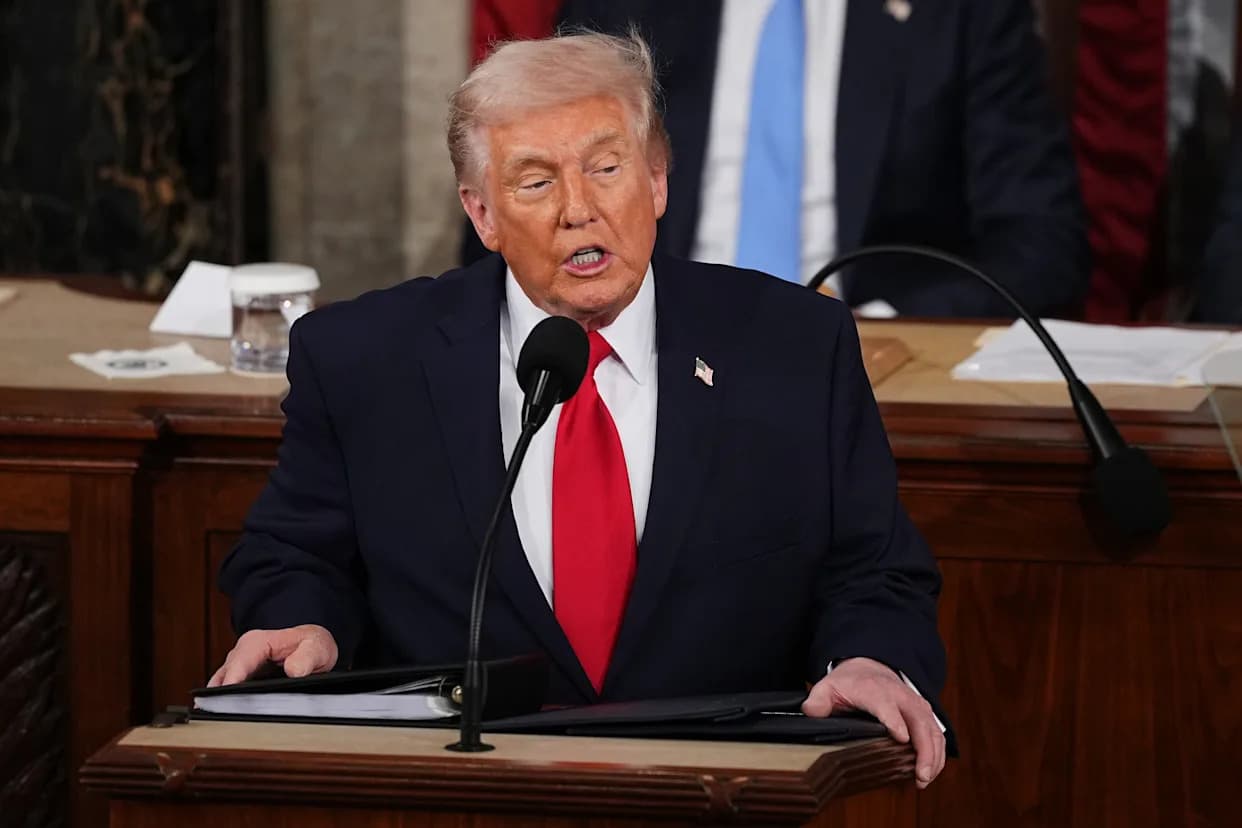
President Trump delivers his State of the Union on Tuesday, Feb. 24, 2026.(ASSOCIATED PRESS)
President Donald Trump returned to Capitol Hill to deliver his 2026 State of the Union, a nearly two-hour address that reiterated familiar themes while aiming to reassure wavering voters ahead of the midterms. He combined policy announcements with sharp partisan attacks, touching on the economy, immigration, trade and the situation with Iran.
Five Key Takeaways
1. A Record-Long Address
Trump warned reporters the speech would be long, and it was: by Yahoo’s unofficial tally, the 2026 State of the Union lasted more than 1 hour and 48 minutes, making it the longest modern-era joint-session presidential speech. That beat his own 2025 marathon (about 1 hour 40 minutes) and far exceeds the typical joint-session length for recent presidents.
2. Economy and Affordability Dominated
Affordability — especially the cost of living — was the evening’s central theme. A Yahoo/YouGov poll (Feb. 9–12) showed Trump with 38% approval and 58% disapproval, while 55% of respondents said he focuses on issues they consider unimportant. Trump touted lower inflation, reduced gas and mortgage pressures and what he called a surging stock market, and he announced measures such as tax cuts on tips and some overtime pay, tax-free "Trump accounts" for children, the TrumpRx portal for prescription discounts, limits on bulk purchases of single-family homes by large Wall Street firms and a proposed $1,000 annual 401(k) match.
Analysts and independent studies caution those proposals would likely have limited effects on everyday prices. Grocery prices remain elevated (about a 2.1% year-over-year rise) and interest rates are still high. Voters remain sensitive to costs despite earlier inflation declines during the prior administration.
3. Immigration: A Showdown Moment
About an hour into the speech, Trump asked lawmakers to stand if they believed "the first duty of the American government is to protect American citizens, not illegal aliens." Republicans rose and cheered; most Senate Democrats remained seated. The administration’s enforcement tactics have drawn criticism, including from Democrats who refused to continue certain Department of Homeland Security funding without reforms after recent lethal police actions.
Department of Homeland Security records obtained by CBS News indicate fewer than 14% of nearly 400,000 immigrants arrested by ICE in Trump’s first year back had charges or convictions for violent crimes. Public polling from Yahoo/YouGov finds 58% of Americans say recent ICE raids went too far, and many support the reform proposals put forward by Democrats.
4. Tariffs and the Supreme Court Ruling
Last Friday the U.S. Supreme Court struck down Trump’s global tariffs. Trump called the decision "unfortunate" and vowed to pursue alternative legal routes to preserve his trade policies. He reiterated claims that tariffs bring factories, jobs and investment back to the U.S. — and predicted, inaccurately, that foreign-paid tariffs could substantially replace income taxes.
Independent estimates put the annual cost of Trump’s tariffs to U.S. households at roughly $1,600–$2,600, and a New York Fed study found nearly 90% of tariff-related economic costs fell on U.S. businesses and customers. Polls show broad public opposition to the tariffs, with a recent ABC/Washington Post/Ipsos poll reporting 64% disapproval of Trump’s handling of tariffs.
5. Iran: Military Buildup and Uncertain Objectives
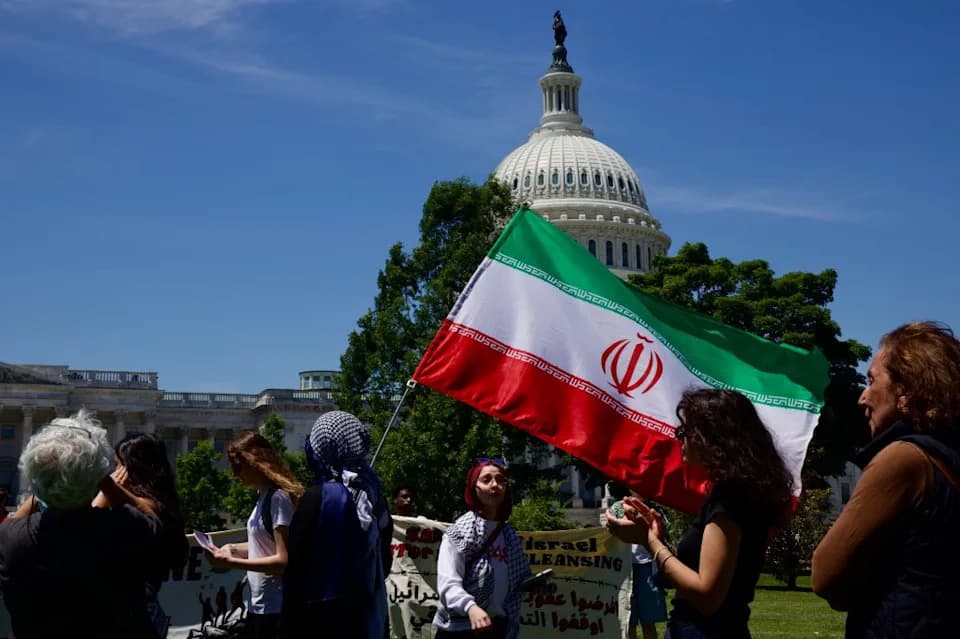
Trump described a naval and air buildup near Iran — an "armada" of ships and aircraft — and said the U.S. now has options to strike if necessary. He asserted Iran is developing missiles capable of reaching the U.S. and has resumed work toward nuclear capability after prior strikes damaged facilities. The administration says diplomacy is preferred, but Trump warned he will not allow Iran to obtain a nuclear weapon.
Reports say limited strikes are being considered while last-ditch diplomatic talks proceed. The address left key questions about concrete objectives, conditions for military action and a longer-term strategy for de-escalation.
What It Means
The address reinforced signature Trump themes — economic nationalism, tough immigration enforcement and a muscular foreign-policy posture — while attempting to reassure undecided voters. Whether the marathon speech persuades a meaningful number of swing voters remains unclear: measured approval is low, and many Americans remain skeptical about tariffs and aggressive enforcement tactics.
Notable quotes: “Our nation is back: bigger, better, richer and stronger than ever before,” and “This is the golden age of America,” — lines Trump used to frame the address and its optimistic economic narrative.
Help us improve.