Summary: President Trump delivered a nearly two-hour 2026 State of the Union that mixed a buoyant delivery with graphic, often racially charged anecdotes aimed at arguing for tougher immigration policies. He praised administration achievements, awarded Connor Hellebuyck the Presidential Medal of Freedom, and repeatedly taunted Democrats. Critics called the use of homicide victims' stories exploitative, and NPR reported no evidence that Iryna Zarutska’s killer was an immigrant. The speech highlighted a stark dissonance between tone and content while Trump’s approval ratings remain low.
Trump’s 2026 State of the Union: Upbeat Delivery, Troubling Rhetoric
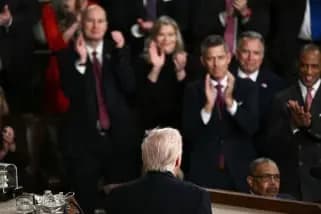
Trump’s State of the Union address was as cheery as it was disturbingly macabre
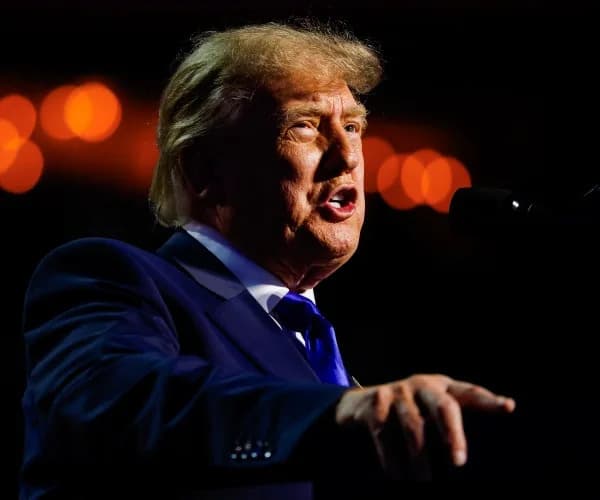
President Donald Trump delivered a notably upbeat State of the Union address on Tuesday night — a near two-hour speech that set a record for length and juxtaposed a buoyant delivery with stark, often violent imagery.
Cheerful Delivery, Controversial Claims. Trump repeatedly celebrated what he described as accomplishments since returning to the White House 13 months ago. He touted policy gains, including the declaration "We ended DEI in America!," defended his contentious tariff campaign as successful and "paid for by foreign countries," and revisited false assertions about the 2020 election.
Moments of Ceremony and Confrontation. Early in the address he honored members of the gold-medal-winning U.S. men’s Olympic hockey team and presented goaltender Connor Hellebuyck with the Presidential Medal of Freedom, appearing genuinely pleased in that moment. He also repeatedly heckled Democratic members in the chamber, labeling them "sick people" and "crazy," and appeared to relish those exchanges.
Graphic Anecdotes and Immigration Rhetoric. Much of Trump’s case against immigration relied on vivid, often gruesome anecdotes. He spotlighted family members of homicide victims to underscore his argument that open borders and illegal immigration fuel violent crime. Critics described the approach as exploitative: as Josh Marshall of Talking Points Memo put it, he spoke about these murders with a kind of "joy."
Trump recounted the killing of 16-year-old Lizbeth Medina, saying her body was found in a bathtub and that her attacker was a "previously arrested illegal alien" who had overstayed a work visa. He also introduced the mother of Iryna Zarutska, a Ukrainian-born woman murdered on a Charlotte light rail train in August 2025, describing the attack in vivid terms and suggesting the murderer was among "hardened criminals set free to kill in America." NPR has reported there is no evidence that Iryna’s killer was an immigrant.
Racialized Claims and Policy Signals. Trump accused "members of the Somali community" of having "pillaged an estimated $19 billion from the American taxpayer" and warned that importing certain cultures through "unrestricted immigration" brings bribery, corruption and lawlessness. Those remarks were framed broadly as warnings about immigration policy and cultural compatibility. At the same time, he offered a line in favor of lawful immigration: "We will always allow people to come in legally, people that will love our country and will work hard to maintain our country," even as his administration pursues legal strategies that critics say could curtail birthright citizenship and denaturalize some foreign-born citizens.
“I’ll never forget the joy with which he describes these murders,” — Josh Marshall, Talking Points Memo.
Tone vs. Substance. The speech’s buoyant tone and ceremonial moments contrasted sharply with an itinerary of fearsome anecdotes, racialized claims and vivid descriptions of violence. Observers noted the dissonance between the president’s sunny demeanor and the callousness some critics saw in turning private tragedies into political theater.
Political Context. Trump appeared relaxed and confident in the moment, but his broader political standing remains fragile: approval ratings are low, and that weakness is weighing on his party’s midterm prospects. For now, however, he presented himself as winning and left the chamber in high spirits.
Note: This article preserves reported facts about the speech, including NPR’s reporting that there is no evidence Iryna Zarutska’s killer was an immigrant.
Help us improve.