
Key takeaway: The DOJ's public Epstein document release appears to omit more than 90 FBI interview memos listed in Maxwell's evidence logs, including three linked to a woman who accused Donald Trump of sexual assault. The DOJ says it did not delete records and that excluded files were duplicates, privileged, or part of ongoing probes. Survivors, lawmakers and experts say missing 302s hinder transparency and understanding of the FBI's investigation.
Dozens Of FBI Interview Files Listed In Maxwell Log Are Missing From DOJ Epstein Release, Including Records Linked To Trump Accuser
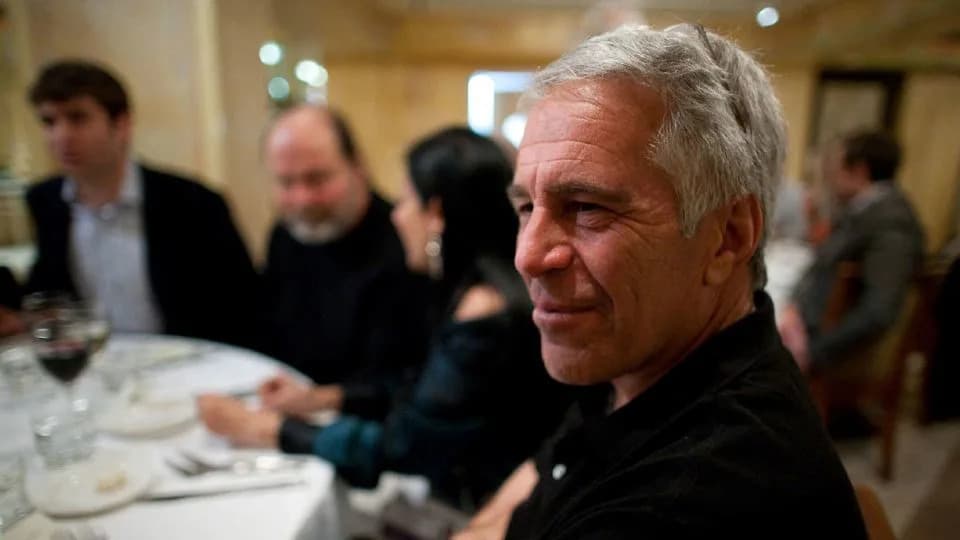
Jeffrey Epstein is seen in this image released by Democrats on the House Oversight Committee in December. - House Oversight Committee Democrats/Reuters
The Department of Justice's public release of documents related to Jeffrey Epstein appears to omit more than 90 FBI witness interview records listed in evidence logs provided to Ghislaine Maxwell's defense — including three interviews tied to a woman who accused President Donald Trump of sexual assault, according to a CNN review.
What the records show
An evidence log included among the materials the DOJ made public lists roughly 325 FBI interview records (commonly known as "302" memoranda). CNN found that more than a quarter of those entries — more than 90 files — do not appear on the DOJ's publicly posted site. Several of the missing entries are linked to a woman who told FBI agents that Epstein repeatedly abused her beginning when she was about 13 and who also accused Trump of sexual assault decades ago.
Why 302s matter
302 reports are interview summaries that document what witnesses told agents; they do not typically include supporting evidence or agents' opinions. Experts told CNN that 302s are a central building block of an investigation and essential for understanding the FBI's handling of leads and allegations.
"It's the most basic and important brick in the wall that becomes the investigation," said Andrew McCabe, former FBI deputy director and CNN contributor.
DOJ response and possible explanations
A Justice Department spokesperson denied that any Epstein-related records were deleted and said the department complied with the law when publishing responsive materials. The spokesperson said documents excluded from the public release were duplicates, privileged, or part of ongoing federal investigations. They added that some documents were temporarily removed from the site for additional victim redactions.
It is also possible that items listed in the Maxwell evidence logs exist elsewhere in the released materials under different serial numbers or with the serial numbers redacted, which would make them difficult to match with the logs.
Allegations linked to a Trump accuser
Case files show the woman first contacted an FBI hotline on July 10, 2019, and was interviewed by agents two weeks later at her attorney's office. According to a 302 in the release, she said Epstein abused her at a South Carolina residence after responding to a babysitting ad, beginning when she was about 13. The Maxwell evidence log references three additional 302s and three sets of interview notes dated in August and October 2019 related to the same woman, but those items were not found in the DOJ's public posting.
Some redacted documents in the release appear to reference allegations that align with this 302 and other filings. An FBI presentation included in the release, dated 2025, lists "prominent names" and attributes to a redacted woman the allegation that Trump forced her to perform oral sex and struck her after Epstein introduced them, allegedly between 1983 and 1985. A civil complaint filed against Epstein's estate identifies a plaintiff, "Jane Doe 4," whose biography in the suit aligns with the 302 account: she said Epstein abused her in South Carolina after she responded to an ad to babysit and that she was taken to intimate gatherings where other wealthy men assaulted her. The complaint does not name the prominent men allegedly involved.
Victims, lawmakers and transparency concerns
Survivors and lawmakers have criticized the DOJ release as incomplete. Rep. Robert Garcia, the ranking Democrat on the House Oversight Committee, said the apparent absence of the interview records raises questions about whether the agency complied with legal obligations to publish files related to Epstein. Victims have reported searching for their own interview records on the DOJ site and finding heavily redacted documents or none at all.
One victim, Haley Robson, asked a federal judge to compel fuller disclosure, arguing that the department has not posted victim interview reports with only names redacted. "As survivors, this failure is not merely procedural—it is deeply personal," Robson wrote, saying the omissions perpetuate the secrecy that allowed these crimes to continue.
What remains unclear
It is not publicly clear why the referenced 302s are missing from the DOJ posting or what became of the FBI's follow-up on the woman's allegations. An email included in the released materials says "one identified victim claimed abuse by Trump but ultimately refused to cooperate," without specifying whether that comment refers to the same woman or to another victim. The DOJ has not provided file-by-file explanations for the discrepancies CNN identified.
The appearance of missing FBI interview records in Maxwell's evidence logs has renewed scrutiny over the completeness of the DOJ's publication and how allegations involving high-profile figures were documented and handled by federal authorities.
Reporting Credits: CNN reporters and contributors, plus additional reporting cited in case files and court records.
Help us improve.





















