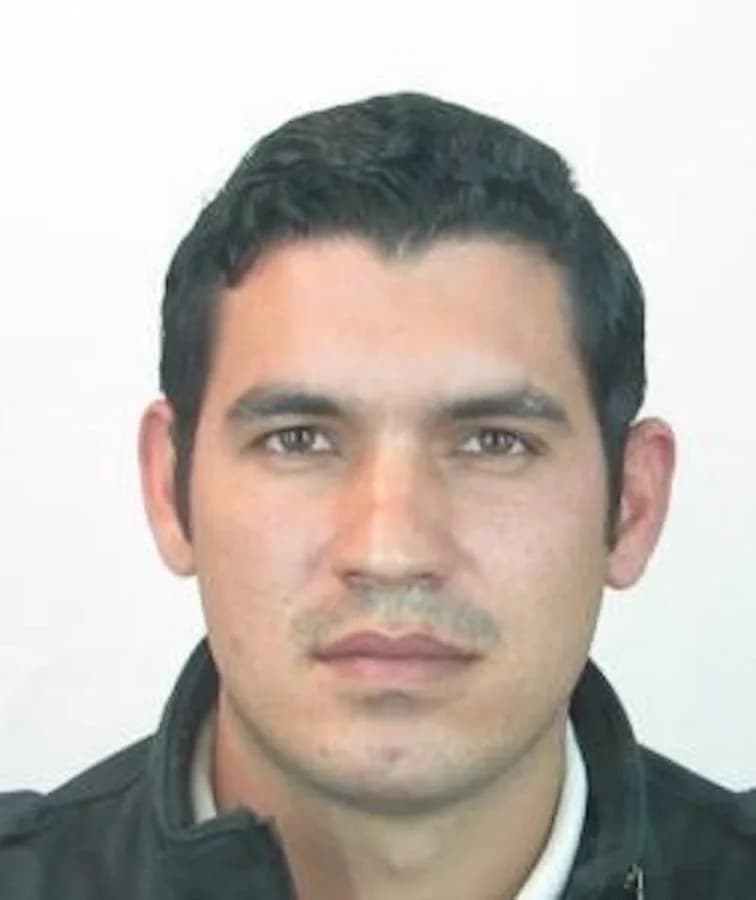
Mexican forces say they killed Nemesio “El Mencho” Oseguera Cervantes, leader of the Jalisco New Generation Cartel, after a tip led them to a compound near Tapalpa. The raid, aided by U.S. intelligence but carried out solely by Mexican forces, sparked fierce firefights that left several cartel members dead and wounded soldiers. Three captured suspects later died during air transfer, and retaliatory violence—roadblocks, shootouts and major disruptions—followed. Analysts say the government weighed the short-term risks against the strategic gain of neutralizing a high-value target with a $15 million U.S. bounty.
How Mexico Tracked and Killed ‘El Mencho’: Inside the Tapalpa Raid That Triggered Widespread Violence
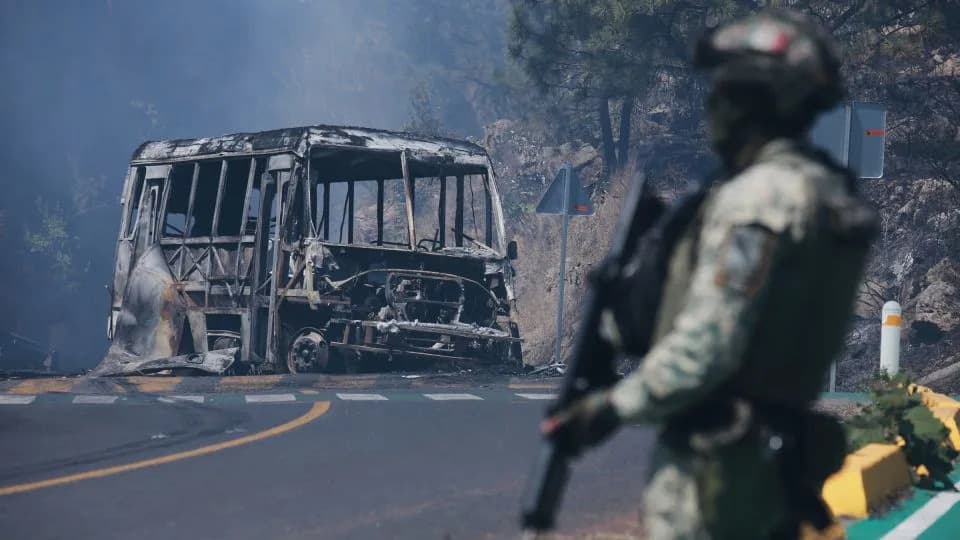
A soldier stands guard by a charred vehicle after it was set on fire, in Cointzio, Michoacán state, Mexico, on Sunday, following the death of the leader of the Jalisco New Generation Cartel, Nemesio Oseguera, known as "El Mencho." - Armando Solis/AP
Mexican security forces say they killed Nemesio “El Mencho” Oseguera Cervantes, the most-wanted leader and co-founder of the Jalisco New Generation Cartel (CJNG), after a targeted operation near Tapalpa that set off a wave of retaliatory violence across parts of the country.
Officials described the CJNG as one of Mexico’s fastest-expanding criminal organizations and a key trafficker of methamphetamine and fentanyl into the United States. The successful operation came amid heightened political pressure from the U.S. for Mexico to take tougher action against drug-trafficking networks and just months before Guadalajara is scheduled to host group-stage matches for the 2026 FIFA World Cup.
Mexican authorities say the breakthrough began after a precise tip on February 20 identified Oseguera’s likely whereabouts. Investigators traced the lead to an intermediary described by Defense Secretary Ricardo Trevilla Trejo as a “trusted man” connected to one of Oseguera’s lovers—an insider who could provide access to the compound.
Within 24 hours, special operations units and the National Guard’s Special Immediate Reaction Force had assembled and executed a carefully planned ground-led assault, using only limited helicopter support to avoid alerting suspects. Social-media footage analyzed by reporters showed multiple army units converging in central Tapalpa the morning of the operation.
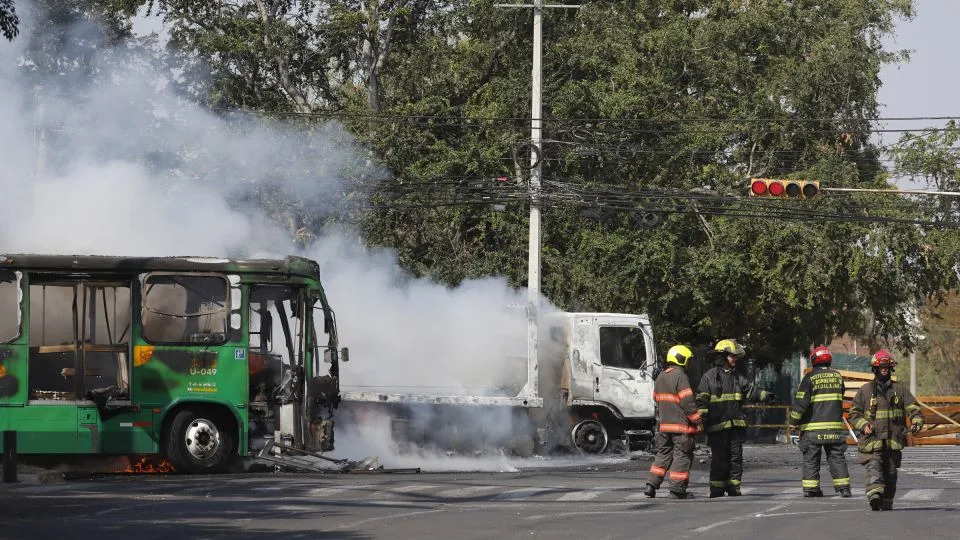
The site where Mexican Army troops captured Nemesio Oseguera Cervantes, known as "El Mencho," leader of the Cartel Jalisco Nueva Generacion on Sunday. - Anadolu/etty Images
The Compound and The Assault
The target was a wooded area of small gated compounds about three miles southwest of Tapalpa, at a vacation-rental complex known as Cabañas La Loma near the Tapalpa Country Club. U.S. Treasury sanctions had previously targeted the property in 2015 and 2017 for allegedly providing material assistance to cartel activity.
As troops closed in, Oseguera’s lieutenants opened fire. Verified eyewitness footage showed armored vehicles and dozens of uniformed personnel advancing up a slope, automatic gunfire, and thick black smoke rising from the site. Defense officials said the initial exchange of fire killed eight cartel members and wounded two soldiers.
Pursuit, Capture and Deaths in Transit
A Special Forces team pursued Oseguera and several deputies into dense undergrowth. After a further firefight, operatives detained Oseguera and two bodyguards; all three were seriously wounded and required urgent medical evacuation, according to Trevilla. The wounded suspects and a soldier were placed on a helicopter bound for a Guadalajara hospital, but the three cartel members died during the flight. Concerned about potential violence in Guadalajara, authorities rerouted the helicopter to Morelia, where an Air Force plane waited to transfer the bodies to Mexico City.
President Claudia Sheinbaum confirmed that U.S. intelligence was shared to support the raid but emphasized that no U.S. ground forces participated.
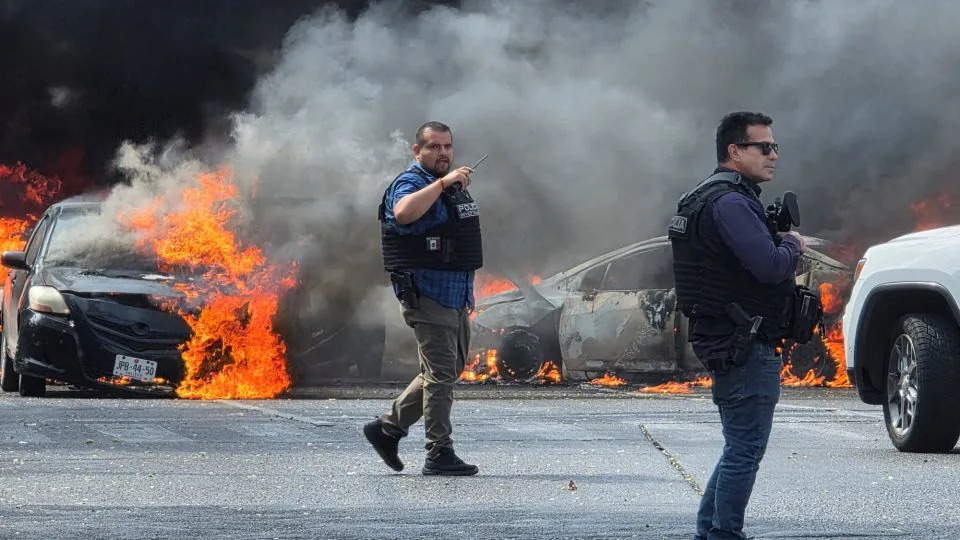
Police officers secure an area where vehicles were set on fire following the operation against Mexican drug lord Nemesio Oseguera, commonly known as "El Mencho," in Zapopan, Mexico, on Sunday. - Gilberto Gallo/Reuters
“The most important thing right now is to guarantee peace and security for the entire population of all of Mexico. And that is what is being done,” Sheinbaum said, urging calm as authorities worked to restore order.
Retaliation and Wider Chaos
News of Oseguera’s death triggered widespread unrest. Cartel factions reportedly erected burning roadblocks, engaged in shootouts with military units, and disrupted transport and commercial flights; the U.S. advised its citizens in affected areas to shelter in place. Authorities reported heavy security casualties amid the unrest, including the deaths of members of the National Guard’s military police.
Security analysts said the government made a high-stakes calculation: remove a high-value target—who carried a U.S. $15 million bounty and had been designated a Specially Designated Global Terrorist—and accept the short-term risk of violent reprisals. Analysts noted the CJNG’s decentralized, franchise-like structure means the cartel’s broader leadership remains operational, and a wholesale collapse of the organization is not assured.
Experts said Oseguera’s death is both operationally significant and symbolically powerful, but could also open opportunities for infighting within the CJNG and for rival groups to encroach on its territory.
This operation marks a consequential moment for Mexico’s security strategy: it demonstrates the state’s willingness to act decisively against organized crime while highlighting the persistent risks of explosive backlash that can affect public safety and critical events such as the upcoming World Cup matches in Guadalajara.
Help us improve.