
Mexican security forces, aided by U.S. intelligence according to officials, killed CJNG leader Nemesio "El Mencho," prompting retaliatory violence that left tourists sheltering in place and hundreds of Americans stranded. The White House warned cartels not to harm U.S. citizens, and the State Department set up 24-hour emergency lines. The administration frames the action as part of a broader campaign—including designating cartels as foreign terrorist organizations and authorizing strikes on smuggling vessels—to disrupt drug trafficking into the United States.
White House Warns Mexican Cartels: "Don't Lay A Finger On Americans" After Killing Of CJNG Leader
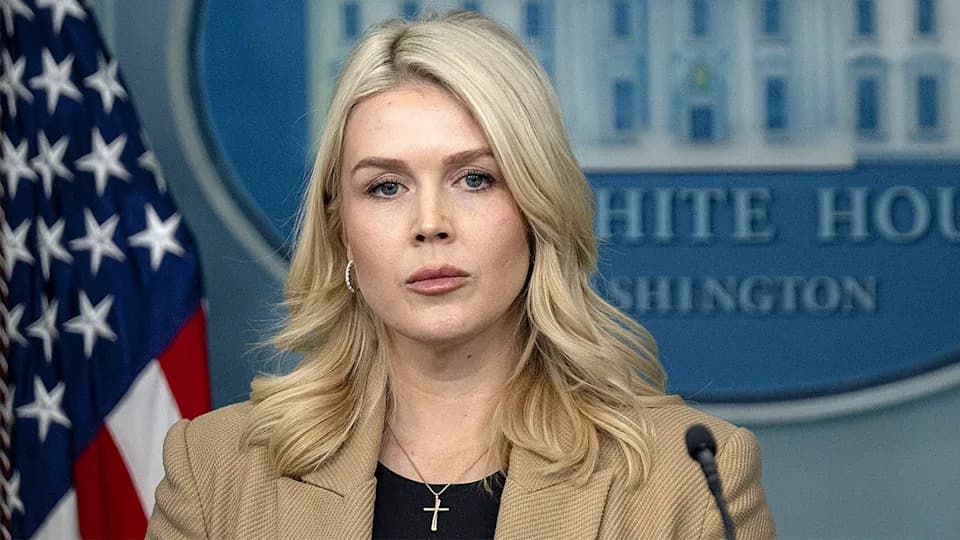
White House press secretary Karoline Leavitt speaks during a press briefing at the White House in Washington, D.C., on Jan. 15.(Getty Images)
The White House issued a stern warning to Mexican drug cartels after Mexican security forces, with reported assistance from U.S. intelligence, killed Nemesio "El Mencho" Oseguera Cervantes, the leader of the Jalisco New Generation Cartel (CJNG). The operation and its aftermath have triggered violent retaliation in some regions of Mexico, leaving tourists and hundreds of U.S. citizens stranded or sheltering in place.
Officials say cartel elements erected roadblocks and set vehicles on fire in response to the operation. Local authorities and resort managers instructed visitors to remain indoors while the situation was assessed. The U.S. State Department established 24-hour emergency lines to assist American citizens in affected areas.
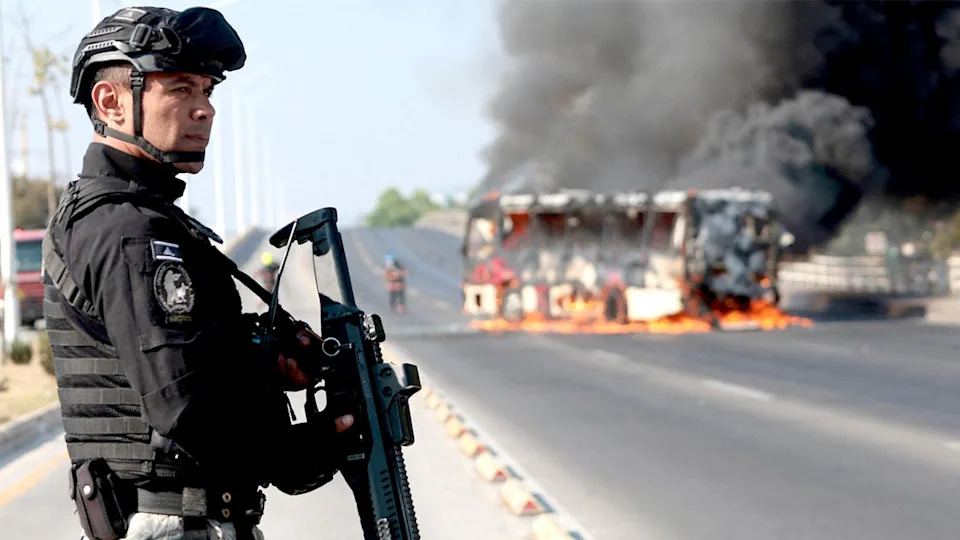
A member of the Prosecutor’s Office stands guard Sunday near a burning bus on a main avenue after it was set on fire by organized crime groups in Zapopan, Jalisco, Mexico.
"The Mexican drug cartels know not to lay a finger on a single American, or they will pay severe consequences under this president," White House press secretary Karoline Leavitt said on "Fox & Friends," reiterating that the administration views protecting U.S. citizens as a top priority.
Leavitt confirmed that U.S. intelligence played a role in enabling Sunday’s operation and framed the action as part of a broader push by the administration to compel Mexico to dismantle transnational drug-trafficking networks. She noted that the president has prioritized targeting violent cartels and disrupting the flow of illicit drugs into the United States.
On his first day back in office, the president signed an executive order designating certain cartels as foreign terrorist organizations, the administration says. Since then, officials say the U.S. has authorized strikes on suspected drug-smuggling vessels in the Caribbean and Pacific as part of an intensified effort against narcotics trafficking.
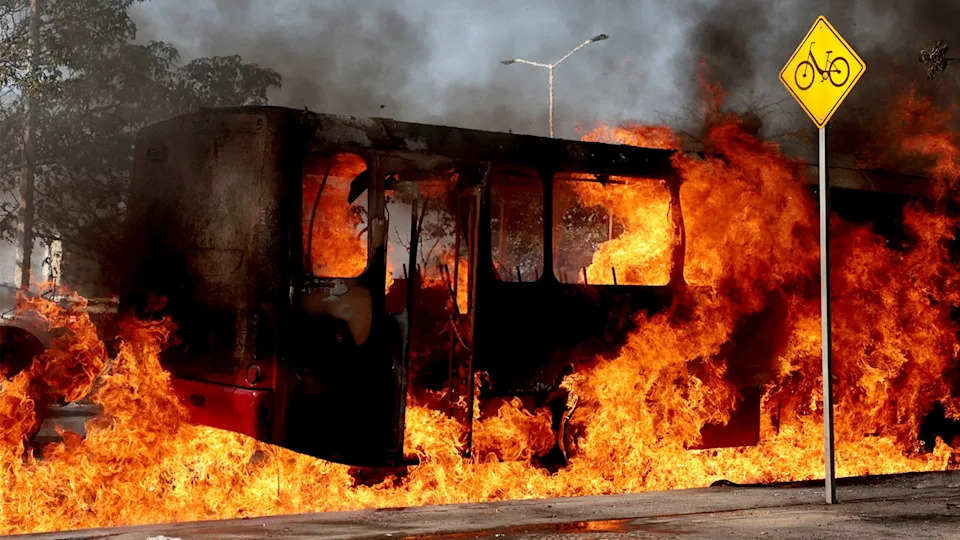
A bus burns on a main avenue in Zapopan, Jalisco, Mexico, on Sunday after it was set on fire by organized crime groups.
Relations between the U.S. and Mexico have been under sustained pressure: Mexican authorities transferred 37 cartel suspects to the United States last month, and U.S. officials pointed to other recent operations in the region as part of a broader campaign. Some officials also referenced high-profile developments in neighboring countries in the context of regional security efforts.
The situation remains fluid. U.S. consular teams and Mexican authorities continue to coordinate on traveler safety, and residents and visitors in affected areas are advised to follow official guidance and monitor updates from local and U.S. government sources.
Help us improve.





















