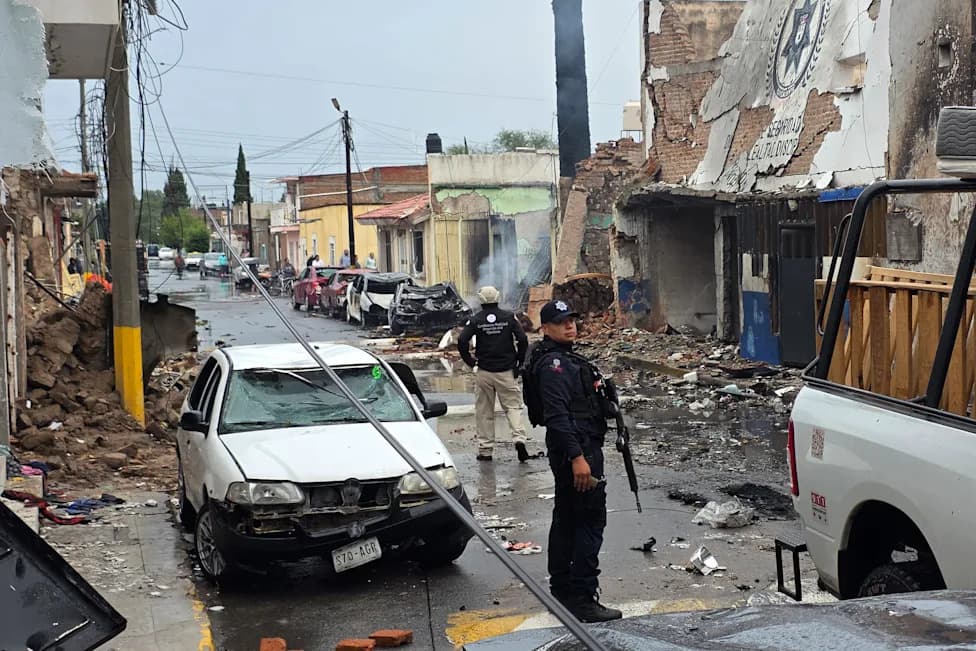
El Mencho's death has left the Jalisco New Generation Cartel (CJNG) without a clear successor, raising the risk of violent internal conflict and renewed clashes with the Sinaloa cartel. Analysts warn the power vacuum could lead to factional bloodletting, widespread blockades and attacks, and even narco‑terror tactics. The CJNG operates in more than 20 Mexican states and was designated a Foreign Terrorist Organization by the U.S. State Department in February 2025. The coming weeks will determine whether the group fragments, negotiates a transition, or mounts a violent campaign against the state.
Could El Mencho’s Death Ignite Turf Wars and Narco‑Terrorism Across Mexico?
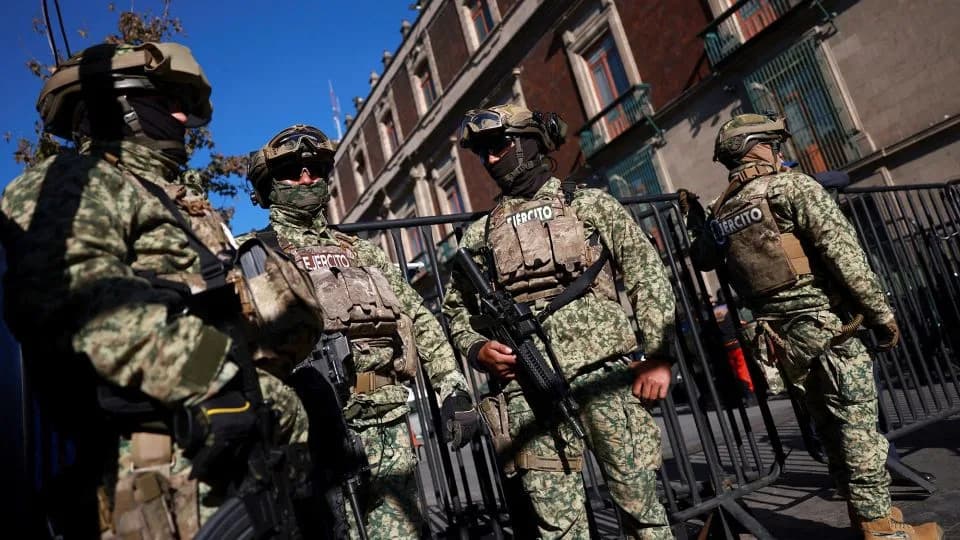
Military personnel patrol the Palacio Nacional in Mexico City following the killing of drug lord "El Mencho" in a military operation on Sunday. - Raquel Cunha/Reuters
The killing of Nemesio Oseguera, known as "El Mencho," the founder and long‑time leader of the Jalisco New Generation Cartel (CJNG), has created a volatile power vacuum that could reshape the landscape of organized crime across Mexico and the Americas. Analysts warn the death could spark internal succession battles, renewed clashes with the rival Sinaloa cartel, and an uptick in violent, terror‑style tactics.
Context and Stakes
The CJNG and the Sinaloa cartel have long competed for control of lucrative U.S. markets for cocaine, heroin and fentanyl, and increasingly contest migration and smuggling routes into the United States. The U.S. State Department designated the CJNG a Foreign Terrorist Organization in February 2025, and U.S. officials estimate the cartel earns billions annually.
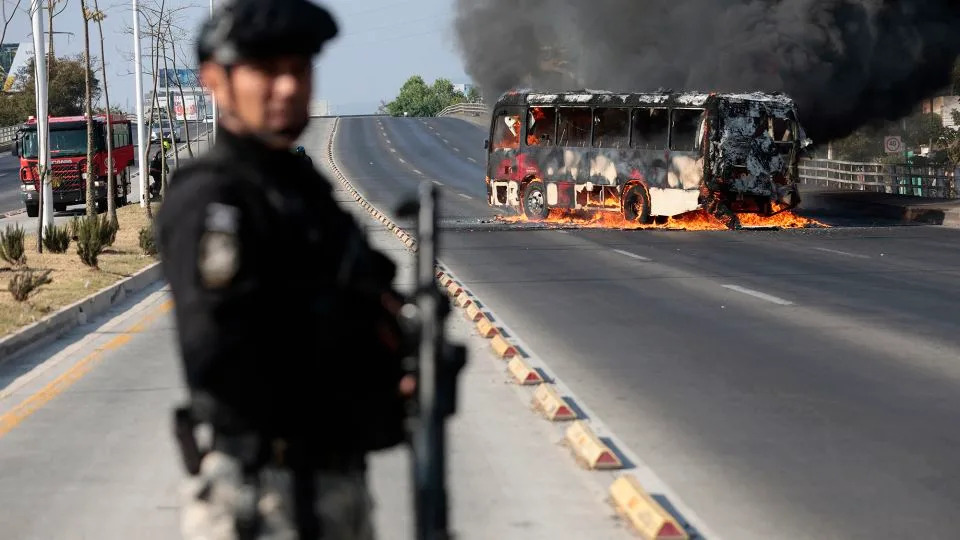
A member of the prosecutor's office stands guard near a burning bus at one of the main avenues in Zapopan, Mexico, on Sunday. - Ulises Ruiz/AFP/Getty Images
Leadership Vacuum and Possible Outcomes
El Mencho's death removes a central figure who had held the CJNG together. Key members of his immediate family are already detained or jailed: his son Rubén Oseguera was extradited to the United States in 2020; his wife was arrested in Mexico in November 2021 on money‑laundering charges; and two brothers are incarcerated in Mexico. Mexico City‑based security analyst David Saucedo says the cartel's line of succession has been seriously disrupted.
'The Jalisco cartel's line of succession has been broken,' Saucedo said, adding that only one brother remains free and that a stepson 'still lacks influence among other cartel commanders.'
Authorities and analysts identify as many as four senior CJNG commanders who could vie for control. Possible scenarios include a violent succession war, negotiated transitions between commanders, fragmentation into rival factions, or consolidation under a new leader backed by powerful lieutenants.
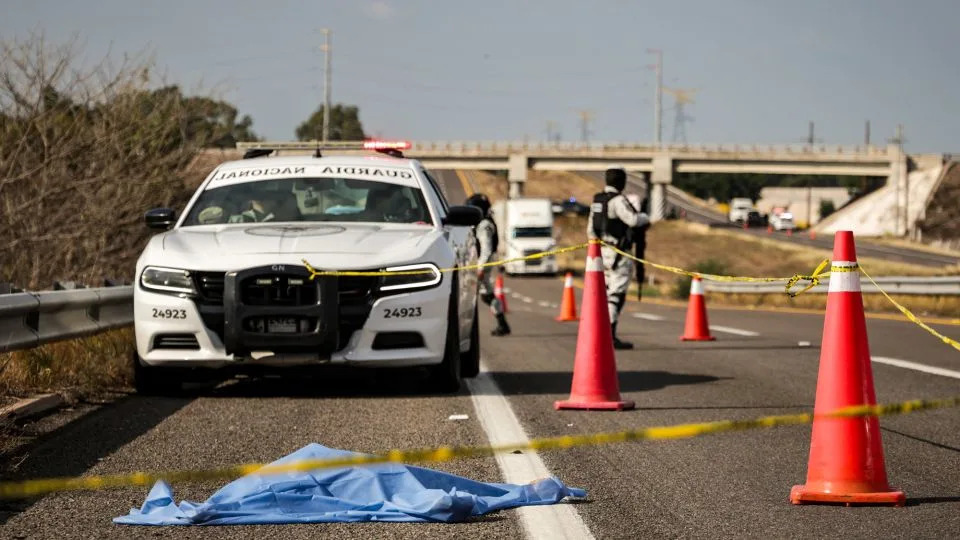
Security forces secure the scene after the body of a man was found along the highway linking Culiacan to the municipality of Navolato, Mexico, on January 12, 2026. - Jesus Verdugo/Anadolu/Getty Images
Broader Violence and Narco‑Terror Risk
There is a real risk that parts of the CJNG will adopt narco‑terror tactics similar to those used by Colombian cartels in the 1980s — bombings, targeted assassinations and attacks on infrastructure. Saucedo points to early signs of organized reprisals: blockades, attacks on commercial property and fires at businesses. The CJNG has demonstrated a willingness to mount high‑profile attacks before; six years ago it attempted to assassinate Mexico's Secretary of Public Security, Omar García Harfuch, wounding him and killing several people.
Geographic Scope and Rivalries
Analysts say CJNG has a presence in more than 20 Mexican states. The group's rivalry with Sinaloa spans central and northern Mexico and extends to border regions. Mexicali (Baja California) has been a focal point of clashes, with roadblocks erected by cartel factions after El Mencho's death. The two cartels are also competing in Chiapas, on the Guatemala border, for control of migrant‑smuggling routes.
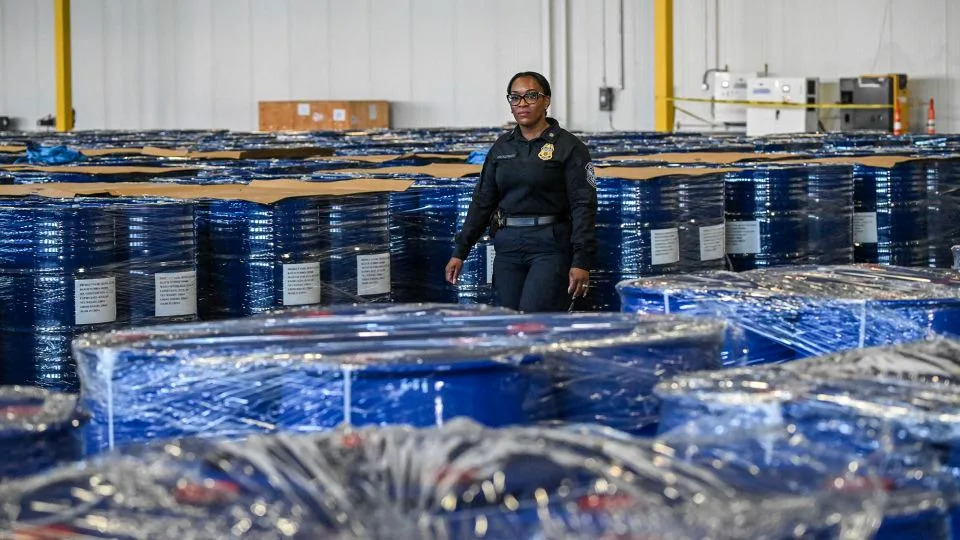
A US Customs and Border Protection agent walks between barrels with chemicals used to create synthetic drugs like methamphetamine in Pasadena, Texas, on September 3, 2025. - Ronaldo Schemidt/AFP/Getty Images
Government Response and Opportunities
For the Mexican government, the immediate priority is restoring order after widespread blockades and attacks. Some analysts argue El Mencho's death could give authorities an opening to further destabilize cartel leadership through targeted operations against other senior figures; others warn aggressive action risks provoking wider retaliation and a spike in violence.
What to Watch Next
- Whether CJNG fragments into competing factions or unites behind a successor.
- Escalation of narco‑terror tactics, including blockades, bombings or coordinated attacks on public and commercial targets.
- Shifts in the CJNG‑Sinaloa balance of power in key trafficking corridors and border cities.
- How Mexican and U.S. security forces coordinate responses and targeted operations against cartel leadership.
Bottom line: El Mencho's death significantly raises the risk of violent succession struggles, expanded cartel confrontations and potential narco‑terror actions that could destabilize multiple Mexican states and affect drug and migration routes into the United States.
Help us improve.