The U.S. military’s strikes on boats have killed at least 151 people and destroyed 45 vessels in an operation officials say targets drug trafficking. At least 13 survived (two briefly detained by the Navy) and 11 are presumed dead after searches failed to find them. The Trump administration has described the campaign as an "armed conflict" with drug cartels and cited a classified DOJ finding to justify lethal strikes; critics call for prosecutions and greater transparency. Officials have not publicly shown evidence of drugs or cartel ties on the struck boats.
Timeline: U.S. Boat Strikes Killed At Least 151 — What We Know
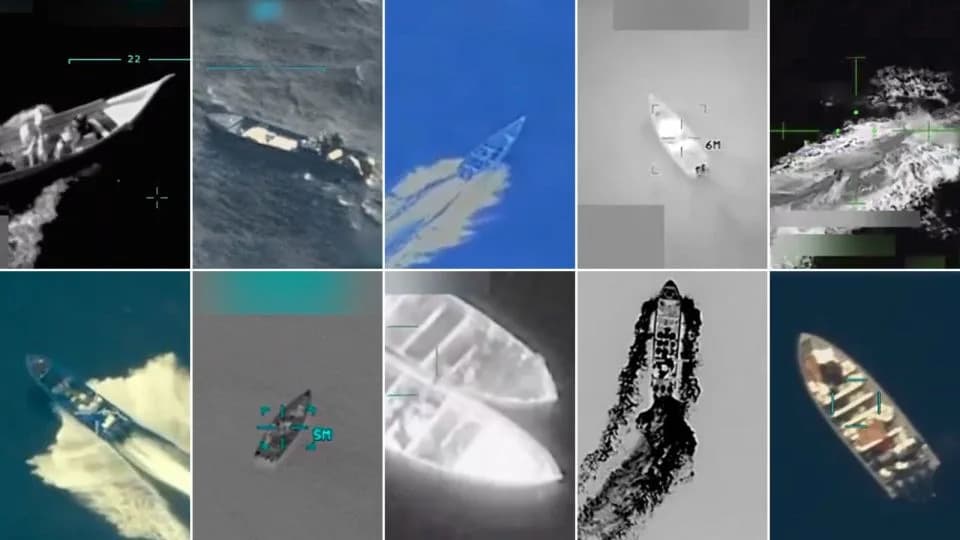
This grid of images shows 10 of the incidents in which the US military has targeted boats in international waters, from September 2 to October 29. - Pete Hegseth/X/Donald Trump/Truth Social
The U.S. military has killed at least 151 people and destroyed 45 vessels in a series of strikes that officials say are intended to disrupt the flow of illegal drugs into the United States, according to official statements and CNN’s analysis of search-and-rescue operations.
Overview
At least 13 people survived these strikes; two survivors were briefly detained by the U.S. Navy before being returned to their home countries. Another 11 people are presumed dead after searches failed to find them in the water. Military officials say no U.S. service members have been harmed in the strikes.
Search Efforts
The U.S. Coast Guard launched multiple search operations after several strikes but suspended each without locating all missing people. Notable search efforts included responses after strikes on Oct. 27, Dec. 30 (search suspended Jan. 2; officials later said eight survivors were being sought), Jan. 23 and Feb. 9. In several cases, searches were called off after rescuers were unable to locate those reported missing.
Legal And Political Context
The Trump administration has informed Congress that it regards the U.S. campaign against drug traffickers as an "armed conflict," a position it traces to the first strike on Sept. 2. Officials have labeled those killed "unlawful combatants" and cited a classified Department of Justice finding to justify use of lethal force without routine judicial review.
That legal rationale has drawn criticism from some members of Congress and human-rights organizations, who say suspected traffickers should be prosecuted under criminal law rather than targeted with lethal force. The White House has not publicly released evidence showing narcotics aboard the struck vessels or proving links between those killed and established drug cartels.
Key Facts
- Deaths: At least 151 people killed across multiple strikes.
- Vessels destroyed: 45 boats.
- Survivors: At least 13; two briefly detained then returned home.
- Presumed dead: 11 people not found after searches.
- Searches: Multiple Coast Guard search-and-rescue efforts were launched and later suspended.
- Legal claim: Administration calls this an "armed conflict" with drug cartels, citing a classified DOJ finding.
- Controversy: Lawmakers and human-rights groups have challenged the legal basis and urged criminal prosecutions and greater transparency.
What remains unresolved: Officials have not publicly shown evidence of narcotics on the struck boats or confirmed cartel affiliation for those killed. Reporting continues and the story has been updated with additional information.
Note: This article synthesizes official briefings and analysis of search-and-rescue records; dates and figures reflect available public information and reporting to date.
Help us improve.