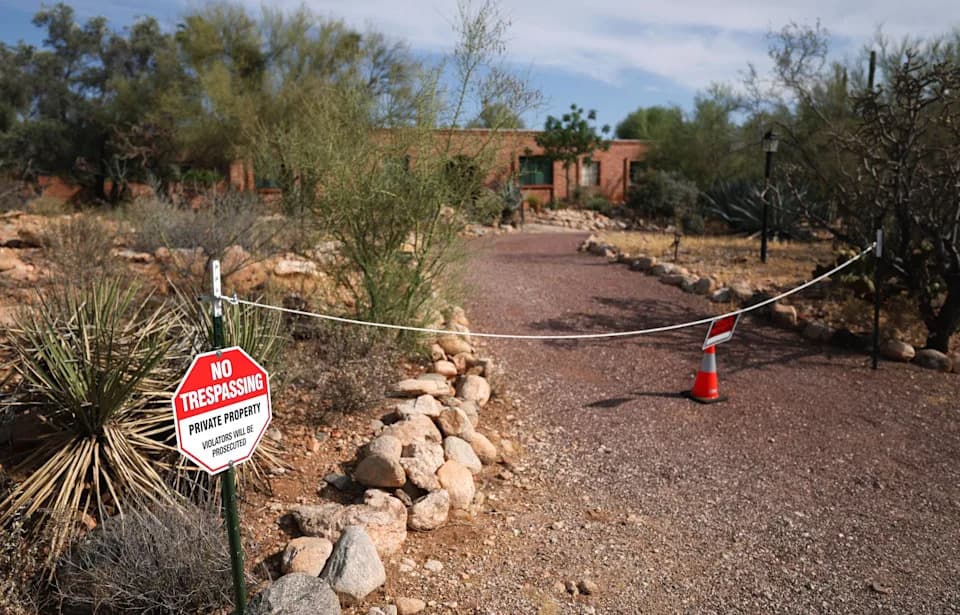
Investigators hope genetic genealogy can help identify who is responsible for the disappearance of 84‑year‑old Nancy Guthrie after mixed and partial DNA was found at her Tucson home. Officials say some recovered DNA does not match Guthrie or household members, but the lab has reported "challenges" separating the sample. Experts note that mixed samples can still yield leads, though success and speed depend on contributor ratios, ancestry representation in public databases and access to larger commercial DNA datasets. Advances in lab techniques mean even tiny amounts of DNA can now sometimes produce usable profiles, but timing remains uncertain.
DNA Breakthroughs and Obstacles: How Genetic Genealogy Is Being Used in the Search for Nancy Guthrie
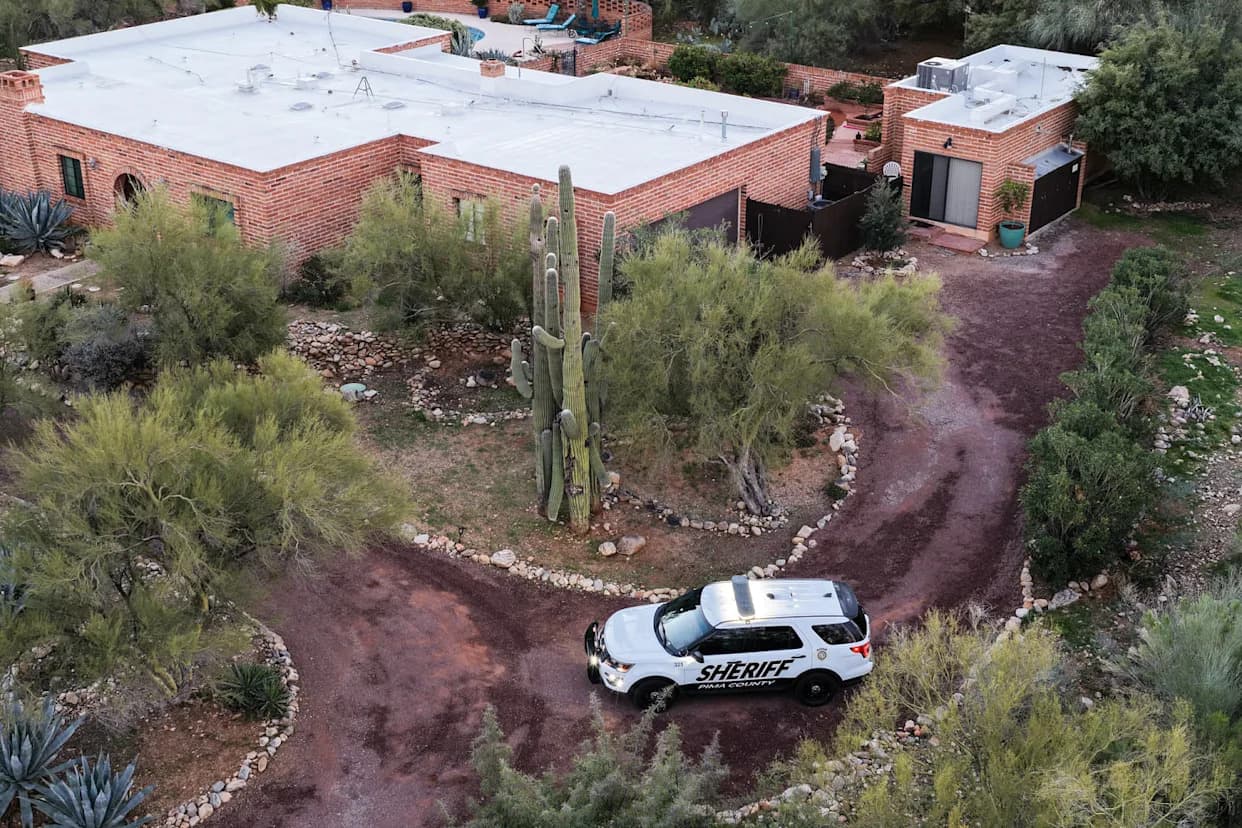
A Pima County sheriff's vehicle in the driveway of Nancy Guthrie's home in the Tucson, Ariz., area on Saturday. (Joe Raedle / Getty Images)(Joe Raedle)
A Q‑tip, a used tissue and a pizza crust — ordinary items that have helped solve major cold cases — are the kind of evidence investigators look for when using investigative genetic genealogy (IGG). Authorities probing the disappearance of 84‑year‑old Nancy Guthrie say mixed and partial DNA was recovered at her Tucson home, and forensic teams hope IGG or a CODIS match can point to a suspect. But officials warn technical challenges remain before a usable profile can be produced.
What Authorities Have Said
Pima County Sheriff Chris Nanos has confirmed that investigators recovered mixed and partial DNA at Guthrie’s residence and that some of the material does not match Guthrie, her family members or household staff. "We believe that we may have some DNA there that may be our suspect, but we won’t know that until that DNA is separated, sorted out, maybe admitted to CODIS, maybe through genetic genealogy," Nanos said. He added that the lab processing the evidence reported "challenges" with the sample and that investigators are hopeful technological advances will resolve some issues in the coming weeks, months or possibly a year.
How Investigative Genetic Genealogy Works
Investigative genetic genealogy converts an unknown DNA sample into a digital profile that is then compared with public ancestry databases to find genetic relatives, build family trees and narrow the pool of possible suspects. The technique helped solve the Golden State Killer case in 2018 and has since been used to identify victims and perpetrators in other high‑profile investigations.
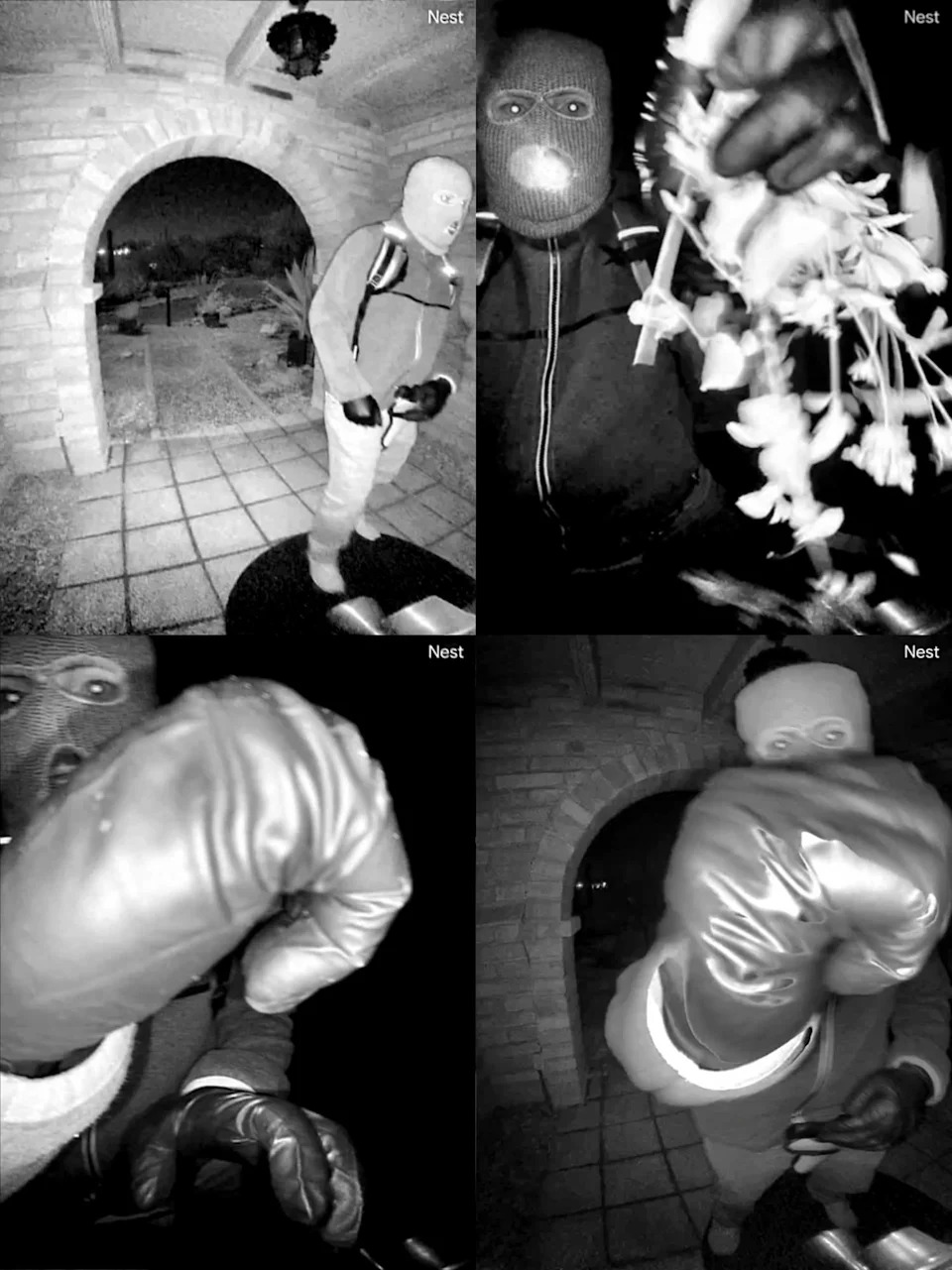
Security camera video from the front door of Nancy Guthrie's house. (Kash Patel via X)(Kash Patel via X)
Why This Case Is Technically Challenging
Experts say two common problems can slow or block IGG: mixed DNA samples and limited database access. Mixed samples contain DNA from more than one person, and when the victim’s DNA dominates the mixture it can be difficult to isolate the suspect’s profile. As genetic genealogist Colleen Fitzpatrick explained, "Suppose you have a mixture and it’s 90% Nancy’s and 10% somebody else’s, that might not be enough for the lab to go forward and get enough markers and make the identification." When contributors are roughly equal, separation becomes even harder.
CeCe Moore, Parabon’s chief genetic genealogist, emphasized that mixtures are common and often solvable, but require extra bioinformatics work to extract the perpetrator’s signal. "We’ve had success with a lot of cases with mixtures," she said, noting that the additional analytic step takes time but can still lead to useful matches.
Database Limitations and Ancestry Factors
Even with a clean profile, identification speed depends heavily on how well the suspect’s ancestry is represented in public genealogy databases. Moore noted that many available databases skew toward people of northwest European descent with deep U.S. roots, meaning searches for people with recent immigrant backgrounds or limited U.S. genealogical records can take longer. Barbara Rae‑Venter added that historical gaps — for example, the lack of written records before emancipation for many African‑American family lines — can create dead ends for tree‑building efforts.
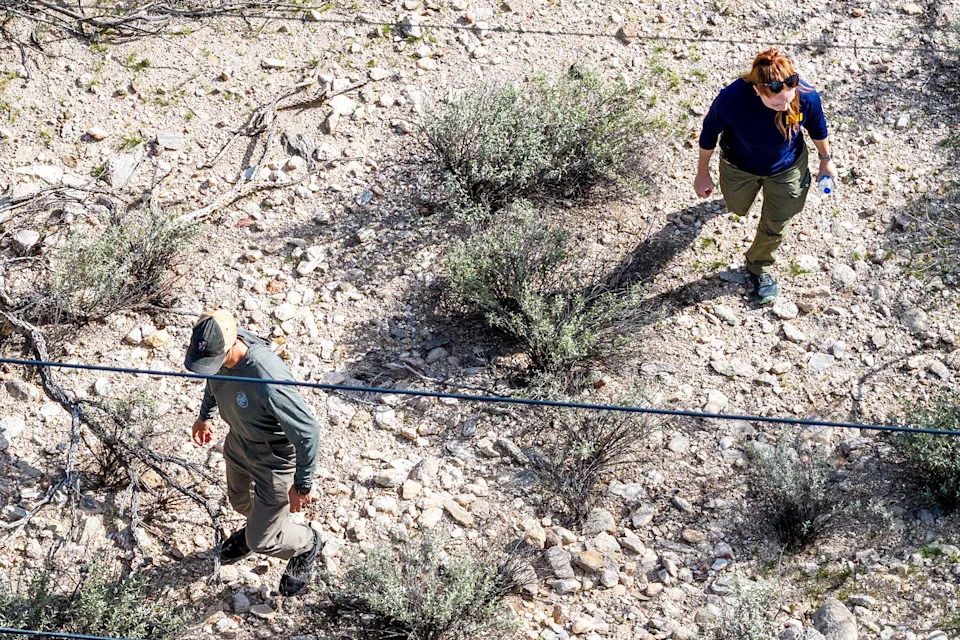
The FBI searches an area around Guthrie's residence on Feb. 11. (Brandon Bell / Getty Images)(Brandon Bell)
Investigators and genealogists typically rely on opt‑in public sites such as GEDmatch and FamilyTreeDNA; major commercial companies like AncestryDNA and 23andMe generally restrict routine law enforcement access except under court order, reducing the pool of profiles searchable for IGG purposes.
Technical Progress and Outlook
Despite current obstacles, improvements in lab methods and bioinformatics have significantly reduced the quantity of DNA needed for a usable profile. Rae‑Venter noted that modern techniques can sometimes work with a thousand‑fold less DNA than earlier methods required. David Mittelman of Othram said that once a profile is built — which can take a day or two in many cases — investigators often get immediate leads ranging from close relatives to potential suspects.
Authorities say there are no public updates on timing. Investigators continue to process evidence and coordinate with federal and state partners while urging patience as laboratories work through technical challenges.
Key context: Nancy Guthrie, mother of NBC "Today" co‑host Savannah Guthrie, was reported missing on Feb. 1. Law enforcement has not identified a suspect publicly and has cleared family members as possible suspects.
Reporting by local and national correspondents. This article summarizes public statements by law enforcement and comments from independent genetic genealogy experts.
Help us improve.