
The Department of Homeland Security entered a partial shutdown after Congress failed to fund the agency by Feb. 13; however, most of DHS’s roughly 272,000 employees are considered essential and will continue working. Key concerns include potential longer TSA lines, the temporary uncertainty around TSA PreCheck and Global Entry, and delays to ICE and CBP procurement and support functions. DHS has access to prior appropriations and large funding transfers that provide short-term flexibility, but a prolonged lapse could increase absences, strain services and delay some FEMA and Coast Guard support activities.
Partial DHS Shutdown: What Travelers and Communities Should Expect
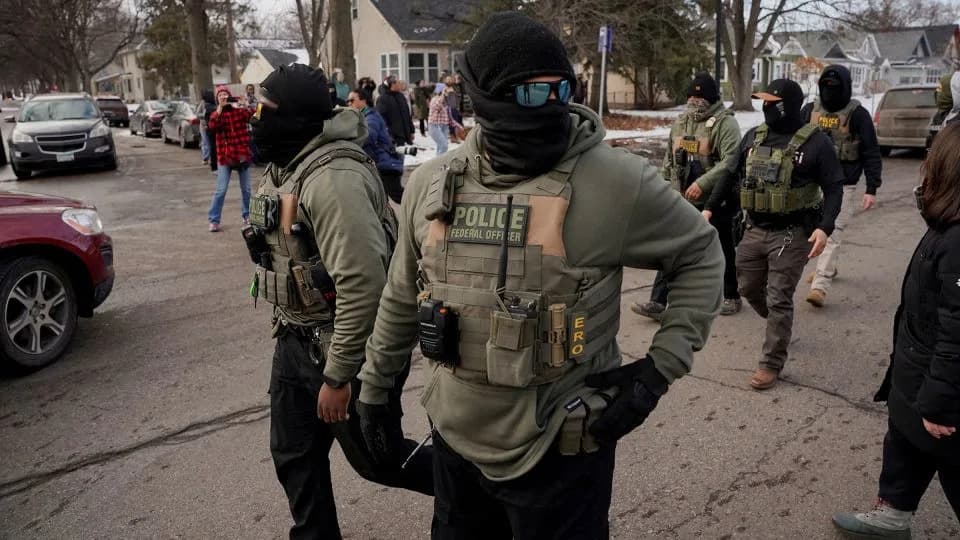
Community members react to federal immigration agents conducting enforcement tasks in Minneapolis, Minnesota, February 5, 2026. - Seth Herald/Reuters
Congress failed to provide funding for the Department of Homeland Security (DHS) by the end of February 13, triggering a partial shutdown for the agency. Although most DHS employees will remain on duty, many may not receive pay until funding is restored — and some services could be strained if the lapse continues.
What Happened
Lawmakers approved funding for nearly every other federal agency for the remainder of fiscal year 2026 (through Sept. 30), but left DHS without a full-year appropriation. A short, two-week stopgap passed in late January was intended to give Congress time to negotiate changes to immigration enforcement policies after two fatal shootings involving DHS immigration agents in Minneapolis prompted Senate Democrats to demand reforms. Negotiations stalled when members left Washington in mid-February; both chambers are scheduled to return Feb. 23 but leaders could reconvene earlier if a deal is reached.
Who Keeps Working — And Who Gets Paid
DHS is a large agency with roughly 272,000 employees. According to the department’s shutdown plans, more than 90% of that workforce — including more than 93% of ICE and Customs and Border Protection (CBP) staff — are considered essential and would be required to remain on the job during a lapse. About 44,500 employees are covered by other appropriations and will continue to be paid, and DHS officials previously indicated that tens of thousands of law-enforcement personnel could receive pay through other funding authorities.
Many frontline workers, especially Transportation Security Administration (TSA) screeners, will be required to work without pay while the shutdown continues. Approximately 61,000 TSA employees operate at more than 430 commercial airports. If the impasse persists, TSA staff would receive a partial paycheck on Feb. 28 and could miss their next full paycheck on March 14.
Travel Impacts
Major flight disruptions tied to air traffic control are unlikely because air traffic controllers are part of the Federal Aviation Administration (Department of Transportation), which has been funded for the year. However, travelers could see longer security lines if TSA call-outs rise during a prolonged funding lapse.
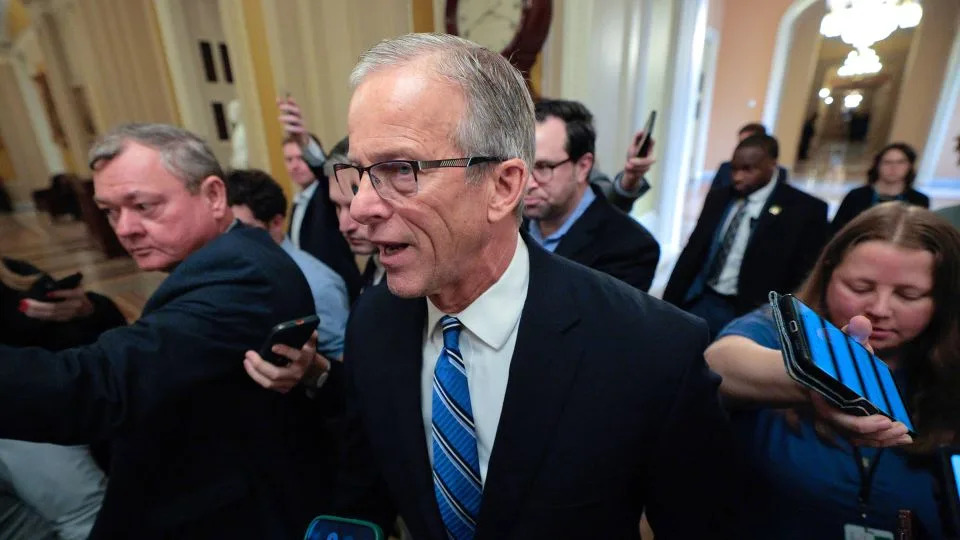
Senate GOP Leader John Thune in the US Capitol, February 9, 2026, in Washington, DC. - Chip Somodevilla/Getty Images
DHS briefly announced plans to pause trusted-traveler programs such as TSA PreCheck and Global Entry to prioritize general screening; it later said decisions would be made on a case-by-case basis as staffing changed. If those programs were suspended, enrolled travelers might face longer passport-control and customs processing times, since many kiosks and expedited lanes depend on normal staffing levels.
Law Enforcement, Border Operations and Resources
ICE and CBP are expected to maintain core operations — including immigration enforcement, inspections at ports of entry and drug-trafficking interdiction — though some procurement and support functions could be delayed. The department has access to previously enacted appropriations and larger spending packages enacted last year that lawmakers allocated to border-enforcement activities; those resources and statutory authorities give DHS some flexibility to sustain operations in the near term.
Officials warn, however, that prolonged uncertainty can increase unscheduled absences and erode morale. “During a shutdown, the ability to pay for rent, bills, groceries, childcare, and gas just to get to work becomes very challenging,” one senior TSA official testified before the funding lapsed, noting that higher call-outs can produce longer wait times and cascading economic effects.
FEMA, Coast Guard and Other Functions
FEMA’s Disaster Relief Fund held nearly $31 billion at the start of the year and is projected to end the fiscal year with several billion remaining, which should cover most immediate disaster responses. Still, administration officials have directed some FEMA deployments and non-disaster grant actions to be paused during the shutdown, even where funding technically exists. The Coast Guard and Secret Service will continue core missions, but non-frontline services — such as vendor payments for housing and utilities on bases — could face delays that affect military families and contractors.
What To Watch
- Whether Congress completes DHS appropriations before key payroll dates (partial pay on Feb. 28, full pay missed after March 14 if unresolved).
- Decisions on TSA PreCheck and Global Entry operations as DHS evaluates staffing levels.
- Any additional guidance on FEMA deployments and Coast Guard family support as the lapse continues.
Short-term impacts are likely to be limited because most DHS employees are deemed essential and some funding tools remain available. But the longer a gap endures, the greater the risk of staff attrition, service delays and broader operational strain.
Note: This article synthesizes reported facts about the DHS funding lapse, agency plans, and potential impacts on travel and emergency services. Details — including payroll timing and program status — can change rapidly as negotiations continue.
Help us improve.





















