
ICE has purchased or scouted large warehouses in more than 20 U.S. towns as part of a planned $45 billion expansion of detention and processing capacity. Many local officials say they were not informed before deals closed; in other cases owners withdrew after public backlash. The purchases have sparked political, legal and community opposition in multiple states and prompted watchdog scrutiny.
ICE Quietly Targets Warehouses Nationwide for Massive Detention Expansion — Some Owners Withdraw
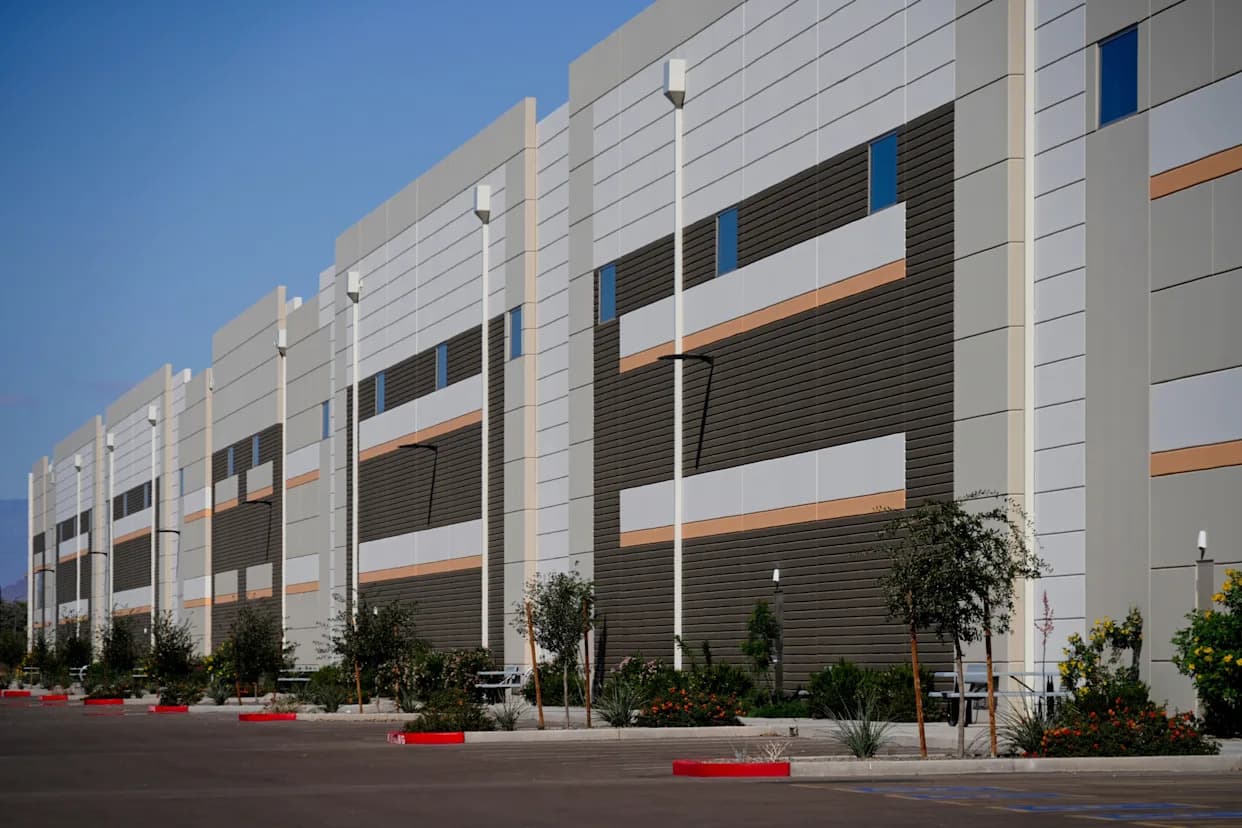
A warehouse purchased by U.S. Immigration and Customs Enforcement in Surprise, Ariz., is seen Saturday, Feb. 14, 2026. (AP Photo/Ty ONeil)(ASSOCIATED PRESS)
Immigration and Customs Enforcement (ICE) has been buying and scouting large industrial warehouses in more than 20 U.S. towns as part of a reported $45 billion effort to expand detention and processing capacity. Communities and local officials say they often learn about acquisitions only after deals close; in other cases, property owners have declined to sell or have pulled back after public pressure.
What Happened
Documents and local reports show a series of purchases and exploratory visits to warehouses across the country. In many cases the Department of Homeland Security (DHS) — which oversees ICE — has not notified local governments until after contracts were completed or publicly disclosed. That lack of advance notice has prompted legal, political and community pushback in multiple states.
Notable Sites And Details
Surprise, Arizona: ICE acquired a 418,000-square-foot warehouse for $70 million. State Attorney General Kris Mayes said local officials were not informed beforehand. DHS documents estimate roughly $150 million would be required to retrofit the site into a 1,500-bed processing facility.
Orlando, Florida: Reporters observed federal contractors touring a 439,945-square-foot building. ICE described the visit as "exploratory." Orlando officials say they were not contacted and have limited legal options to block a potential facility.
Social Circle, Georgia: ICE paid $128.6 million for a warehouse the city says could be configured to house 7,500–10,000 detainees using modular construction that can be scaled up or down.
Other Locations: Purchases or planned conversions have been reported or confirmed near Baltimore (a $102.4 million purchase identified by watchdog Project Salt Box), Romulus, Michigan; Tremont and Upper Bern townships in Pennsylvania ($119.5 million and $87.4 million, respectively); multiple sites in Texas including Socorro (three warehouses totaling 826,780 sq ft bought for $122.8 million) and San Antonio ($66.1 million); and additional sites in New Hampshire, New Jersey, Minnesota suburbs, Kansas City and more.
Owner Withdrawals And Local Pushback
In several communities property owners or developers backed out after public opposition or confirmed they were not negotiating with DHS. Examples include owners in Woodbury and Shakopee, Minnesota; a Kansas City property whose developer, Platform Ventures, declined to proceed; Hutchins, Texas, where Majestic Realty said it would not sell or lease to DHS; and a Richmond, Virginia, transaction that Vancouver-based Jim Pattison Developments said would not proceed after boycott threats.
Local officials and elected leaders — from mayors to governors and members of Congress — have expressed concern, called for greater transparency, and in some cases pledged to oppose conversions through legal or political channels. Disputes over communication and accuracy of federal statements emerged in New Hampshire, where former Gov. Kelly Ayotte disputed ICE testimony about coordination with state officials.
Legal, Political And Community Concerns
Critics point to the speed and secrecy of purchases, the scale of potential detainee populations at some modular facilities, and the lack of clear local consultation. Supporters of the purchases within some localities cite economic or operational reasons for cooperation; in a handful of counties DHS notified officials in advance and obtained formal resolutions of support.
What Comes Next
The controversy is likely to continue as more transactions are disclosed or uncovered by public records and watchdog groups. Communities weighing how to respond will consider legal challenges, zoning and permitting, public pressure on property owners, and state-level pushback. The Associated Press and local reporters continue to track developments and contributions from multiple journalists are noted.
Sources: Local officials, property records, watchdog group Project Salt Box, ICE and DHS statements, and reporting from Associated Press journalists Holly Ramer, Isabella Volmert and Marc Levy.
Help us improve.





















