An Algerian man, Abdelouahid Aouchiche, was detained by ICE at a Dearborn mosque on 6 October 2025 and is being held at the North Lake processing center pending an expected deportation. His lawyers say deportation would violate ongoing appeals; DHS disputes that account and cites a prior removal order. The case has intensified fears across Dearborn’s Arab American community amid reports of arrests at mosques and workplaces, local incidents of anti‑Muslim hostility, and federal policies such as travel bans and proposed TPS terminations that have heightened uncertainty.
Detentions and Disappearances: How ICE Actions Have Stoked Fear in Michigan’s Arab Communities
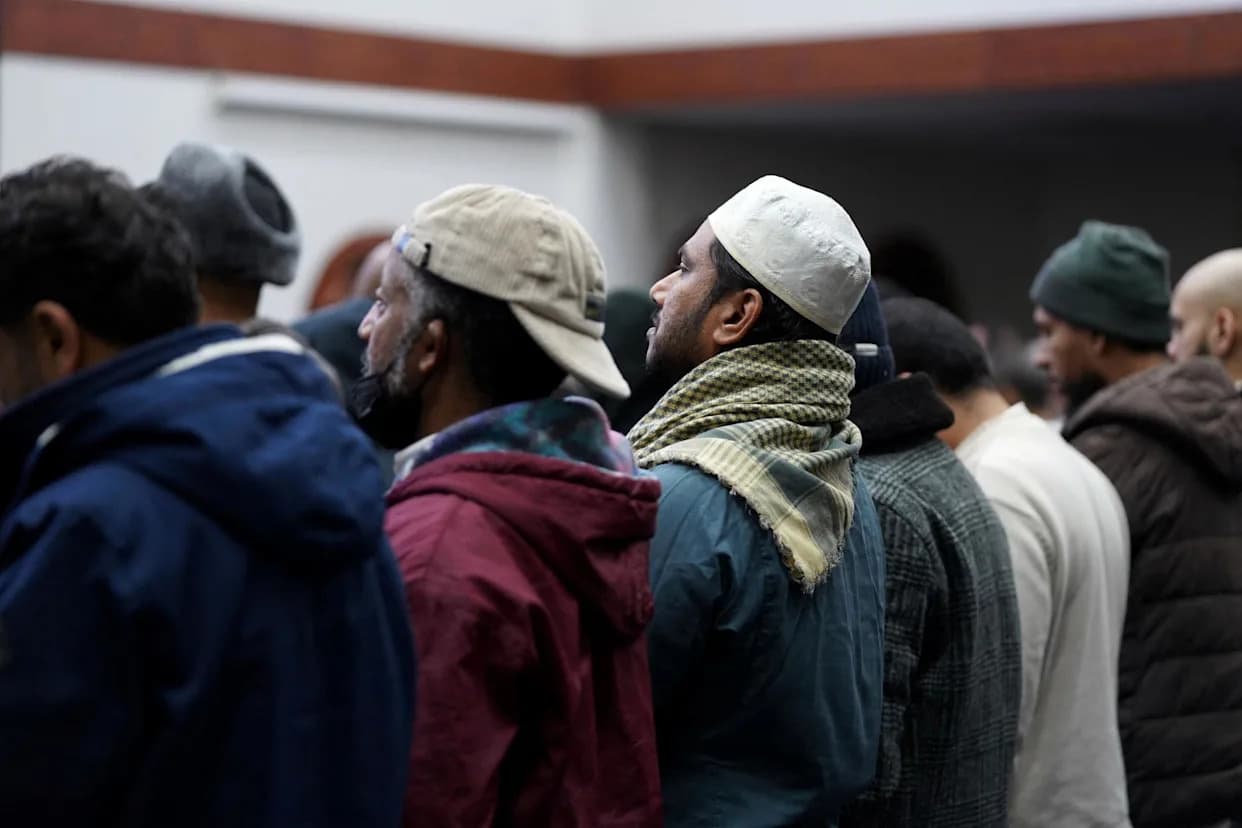
Palestinian Americans pray at a mosque in Dearborn, Michigan, on 4 February 2024.Photograph: Dieu-Nalio Chery/Reuters(Photograph: Dieu-Nalio Chery/Reuters)
Lorenda Lewis can barely keep her eyes open. Seated with her six young children at a Dearborn café, she describes a four‑month nightmare that began when federal agents took her husband, Abdelouahid Aouchiche, an Algerian national.
Shortly before dawn on 6 October 2025, Aouchiche, 61, and his 12‑year‑old son, Abdullah, arrived at the Furqan mosque for morning prayers. Abdullah says two men confronted his father outside the mosque, asked to see his papers and, after a short exchange, allowed the boy to call his mother and return to the mosque. When Lorenda arrived minutes later, her husband and the agents were gone.
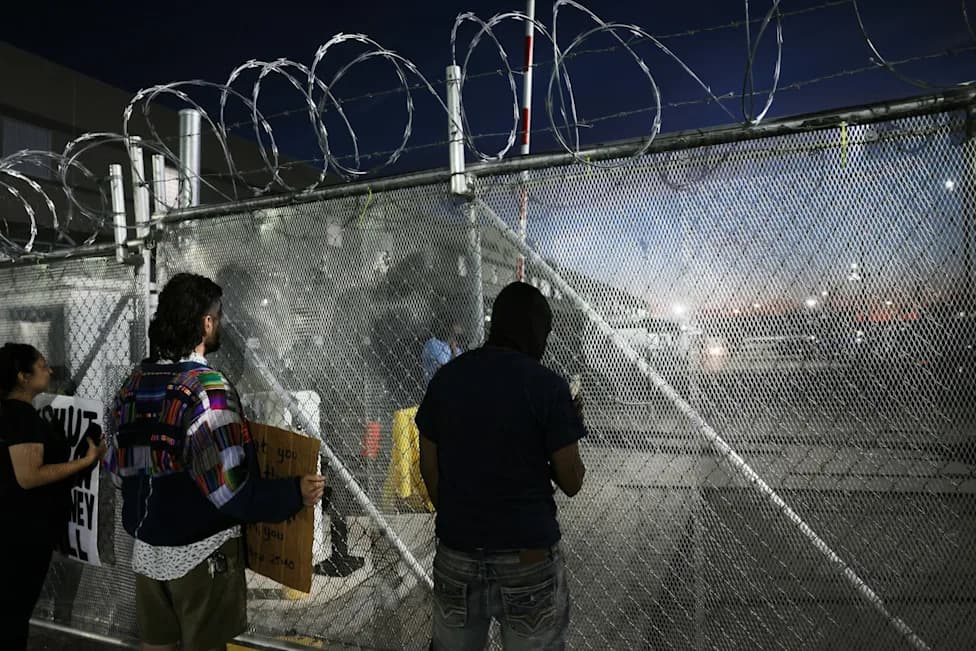
Aouchiche has been held at the North Lake processing center in Baldwin, Michigan, for months. This week Lorenda was told he is scheduled for deportation to Algeria. The family — Lorenda is a U.S. citizen and the couple have six children — faces mounting financial and emotional strain.
“I don’t even know if they told him that he’s going to be deported,” Lorenda says. “Things are going to be really difficult. It’s going to place a bigger financial issue on me.”
Aouchiche’s lawyers say deporting him would be unlawful because he has active appeals pending with the Department of Justice’s Board of Immigration Appeals. “ICE has deported him in violation of immigration laws. It’s a bad faith effort to frustrate his legal claims,” says attorney Jad Salamey.
The Department of Homeland Security (DHS), in a statement attributed to Tricia McLaughlin, disputed that account. The statement said ICE arrested Aouchiche on 6 October 2025 and described him as a person with a prior final order of removal from 2008, alleging past criminal convictions and that he overstayed a 1994 B2 tourist visa. The DHS statement said he had received due process and had not appealed his final order. Salamey counters that Aouchiche pleaded guilty two years ago only to a moving violation that caused a death, resulting in a misdemeanor and probation, and that he was not convicted of vehicular manslaughter nor formally charged with domestic violence.
Data from the Deportation Data Project indicates a person matching Aouchiche’s description was detained on 6 October by ICE’s fugitive operations team under the label “other immigration violator.” DHS’s own glossary defines that label as applying to “immigration violators without any known criminal convictions or pending criminal charges entered into ICE system of record.” The Department of Justice did not respond to requests for comment.
Wider Community Impact
Beyond this family’s ordeal, Dearborn’s large Arab American community reports an uptick in ICE activity at mosques, workplaces and public spaces. Residents say enforcement actions have targeted people from truck drivers to construction workers, and that arrests at places of worship have generated fear and disrupted daily life.
“The level of anxiety among people is at its highest; we’ve never seen something like this,”
— Imad Hamad, executive director of the American Human Rights Council in Dearborn.
Recent local incidents cited by residents include anti‑Islam rallies in November 2025, reports of Islamophobic insults at a city council meeting on 18 November 2025, and an incident on 31 January when a masked person reportedly impersonated an ICE agent and questioned shoppers about immigration status in a Dearborn supermarket. The community also recalls a 2019 case in which an Iraqi national who had lived in Michigan since infancy was deported to a country he had never known and later died after health complications.
Policy Context
Political and policy shifts at the federal level have intensified anxiety. Since returning to office, the administration has imposed travel bans and paused immigrant visa processing for citizens of 12 Arab‑majority countries and territories. Plans to terminate Temporary Protected Status (TPS) for Yemenis have left thousands in the Detroit area fearful of losing legal protection. Community leaders say these measures have undermined trust and left many families feeling targeted.
Abdul‑Galil Ahmed of the Yemen American Cultural Center noted that many who once supported stricter immigration controls now feel alienated. “In the past, [Arab Americans who supported Trump] would say things like: ‘You got to control the border,’” he said. “Now, the mood has changed. This is too much. We have become a target.”
Detention Conditions and Corporate Role
Aouchiche has been held at North Lake, a facility run by Geo Group, the largest private prison operator in the U.S. Geo Group refers questions to ICE; ICE did not respond to requests for comment about facility rules such as dress codes. Former detainees and family members describe humiliating visitation conditions — for example, children denied visits for wearing sweatpants — and long travel times for families making seven‑hour round trips to see loved ones.
Geo Group has faced lawsuits and controversy over allegations such as unpaid forced labor at detention centers. The company reported significant profits last year and has argued for derivative sovereign immunity related to its federal contracts. Separately, a Bulgarian man died at North Lake in December, a development that further alarmed the community.
What’s Next For the Family
For Lorenda, the immediate concern is whether her husband will be deported to a country he has not visited in over three decades. She is now the family’s sole breadwinner, working as a doula, while her children attend therapy to cope with stress. The family continues to pursue legal avenues and awaits clarity on the government’s next steps.
“We would have to travel to visit him; that’s going to be very costly; it’s hard to know what the next decision is,” Lorenda says. “Last Monday, [my son] got up, got dressed and wanted to go to the masjid. He wanted to see his baba.”
This case, and the wider pattern described by residents and advocates, illustrates how immigration enforcement, policy changes and local incidents have combined to produce heightened fear and uncertainty in one of America’s largest Arab communities.
Help us improve.