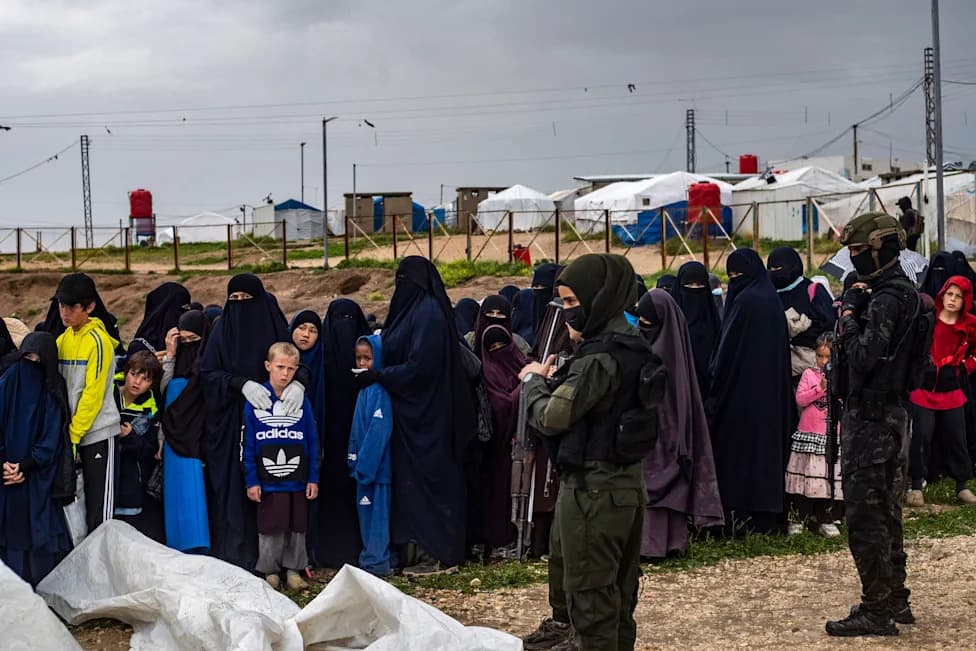
The al‑Hol camp in northeastern Syria, long home to families of suspected Islamic State members, is now largely empty after recent repatriations, transfers and mass departures, UNHCR and Syrian officials say. UNHCR facilitated the return of 191 Iraqi citizens and around 600 Syrians were transferred to Akhtarin camp. Humanitarian groups warn conditions at al‑Hol were dire and urge coordinated, safe repatriation and international support. The camp’s current population is uncertain after recent fighting and movements.
Al‑Hol Camp in Northeastern Syria Largely Emptied After Mass Repatriations and Transfers
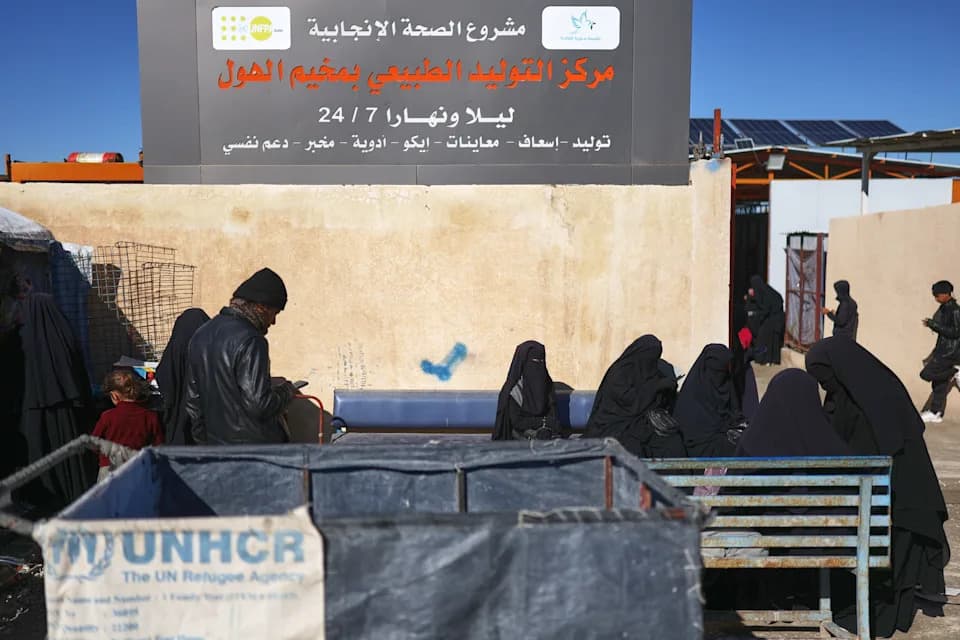
Women wait outside a medical center in the al-Hol camp, one of the detention facilities holding thousands of Islamic State group members and their families, now under the control of the Syrian government following the withdrawal of the Syrian Democratic Forces (SDF), in al-Hassakeh province, northeastern Syria, Wednesday, Feb. 4, 2026. (AP Photo/Ghaith Alsayed)(ASSOCIATED PRESS)
MAARAT AL‑NUMAN, Syria — The al‑Hol camp in northeastern Syria, which for years housed families of suspected Islamic State (IS) members, is now largely empty after a recent wave of repatriations, transfers and mass departures, U.N. and Syrian officials said Friday.
Gonzalo Vargas Llosa, the U.N. refugee agency (UNHCR) representative in Syria, said his office helped facilitate the return of 191 Iraqi citizens from al‑Hol to Iraq on Thursday.
“With this repatriation, and with today’s return of several vulnerable Syrian families supported by UNHCR and partners, Al‑Hol camp will now be practically empty,” Vargas Llosa said in a statement.
A Syrian government official, speaking on condition of anonymity because he was not authorized to comment publicly, told reporters that roughly 600 Syrian nationals were transferred from al‑Hol to the Akhtarin camp in northwestern Aleppo province, and that further transfers are continuing. The official said the decision to evacuate al‑Hol was driven by its isolated desert location — far from basic services and close to areas where authorities lack full control.
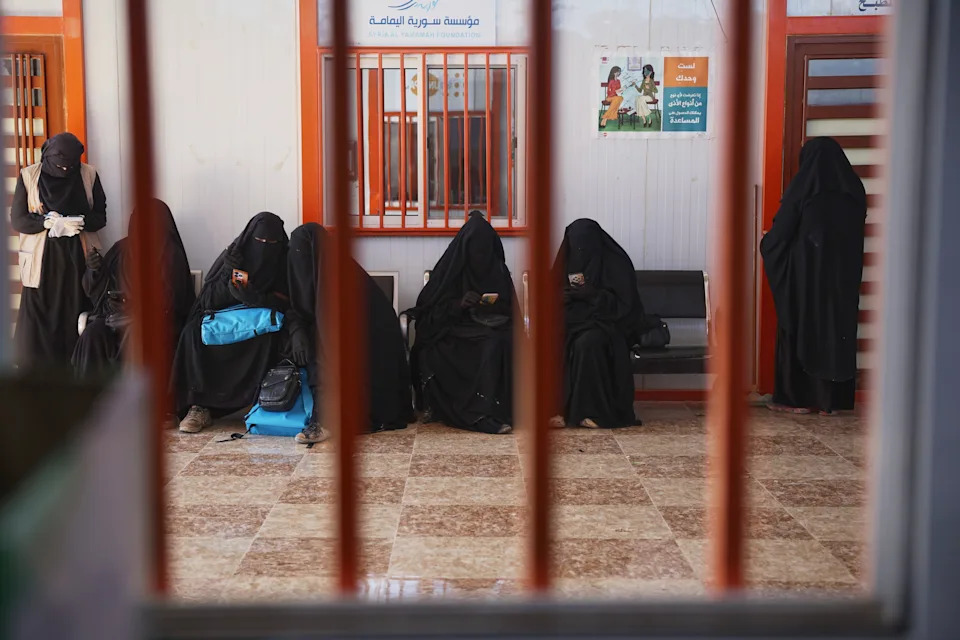
Women wait at a medical center in the al-Hol camp, one of the detention facilities holding thousands of Islamic State group members and their families, now under the control of the Syrian government following the withdrawal of the Syrian Democratic Forces (SDF), in al-Hassakeh province, northeastern Syria, Wednesday, Feb. 4, 2026. (AP Photo/Ghaith Alsayed)(ASSOCIATED PRESS)
At the peak after IS’s territorial defeat in 2019, al‑Hol held about 73,000 people — mostly Syrian and Iraqi nationals as well as thousands from other countries. The population was composed largely of women, many described as wives or widows of IS fighters, and their children. Officials estimated roughly 24,000 remained last month, but the current figure is unclear following recent transfers and reports that many fled during recent clashes.
Camp residents are not formally imprisoned and most have not been charged with crimes, but they have been held in de facto detention within a heavily guarded facility, raising ongoing humanitarian and legal concerns.
Last month, Syrian government forces captured al‑Hol after a weekslong offensive against the Kurdish‑led Syrian Democratic Forces (SDF), which had administered the camp for about a decade near the Iraqi border. A ceasefire has paused major fighting, but officials say many families escaped amid the clashes.
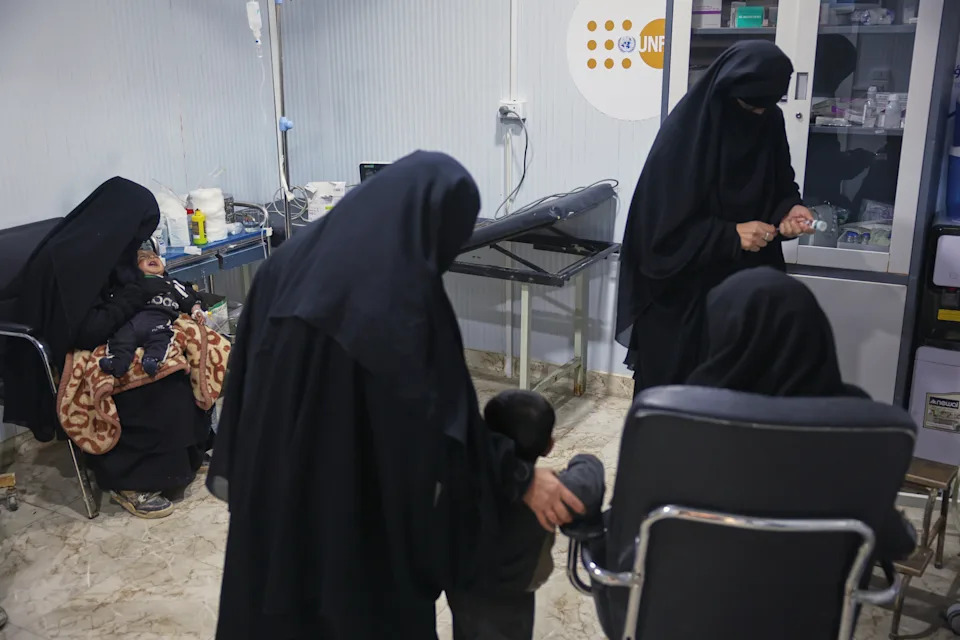
Women receive medication and treatment for their children at a medical center in the al-Hol camp, one of the detention facilities holding thousands of Islamic State group members and their families, now under the control of the Syrian government following the withdrawal of the Syrian Democratic Forces (SDF), in al-Hassakeh province, northeastern Syria, Wednesday, Feb. 4, 2026. (AP Photo/Ghaith Alsayed)(ASSOCIATED PRESS)
Humanitarian groups warn conditions at al‑Hol had long been dire. Save the Children said roughly 70% of residents left the camp in recent weeks and reiterated calls for safe, organized repatriation and international support to address urgent needs such as food, water, shelter and protection.
In a related development, Syrian authorities turned back a group of 34 Australian women and children who left the nearby Roj camp; Australian officials later confirmed they would not repatriate those families. Separately, the U.S. military has transferred thousands of suspected IS militants from Syrian detention facilities into Iraq, where they are expected to face trial.
As large numbers of vulnerable civilians move or are moved from al‑Hol, humanitarian agencies and rights groups are urging coordinated international action to ensure safe returns, legal processes where appropriate, and immediate humanitarian assistance for those affected.
Help us improve.