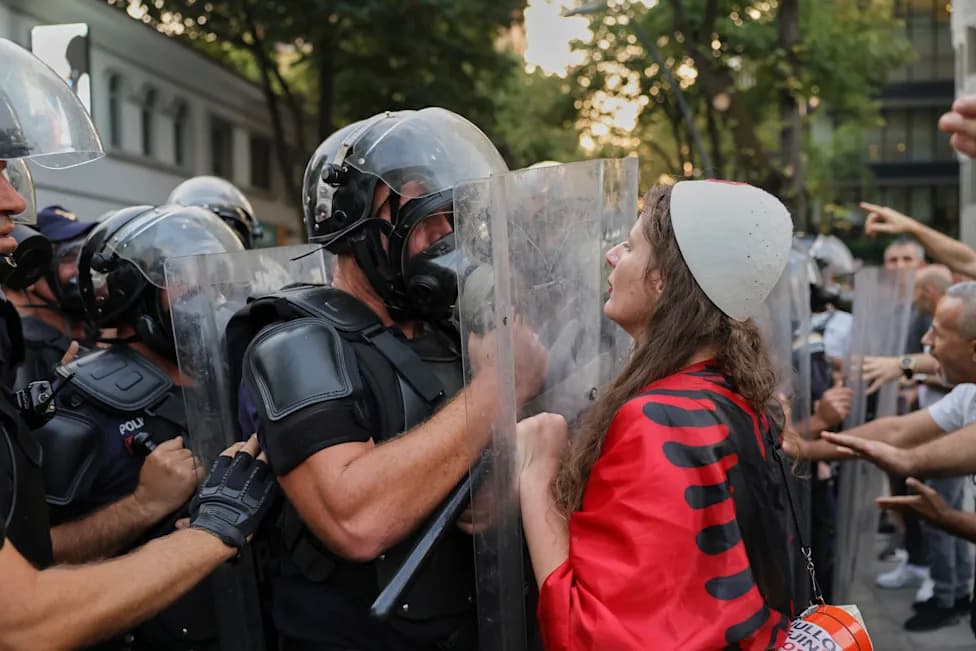
Police used tear gas and water cannon to disperse opposition protesters in Tirana after demonstrators attacked the prime minister's office following corruption allegations against Deputy Prime Minister Belinda Balluku. Balluku, who denies the charges, has been suspended by an anti-corruption court while prosecutors have asked parliament to lift her immunity. The episode tests Prime Minister Edi Rama’s parliamentary majority and adds pressure as Albania seeks EU membership by 2030.
Graft Allegations Fuel Clashes in Tirana — Deputy PM Suspended as Protests Turn Violent
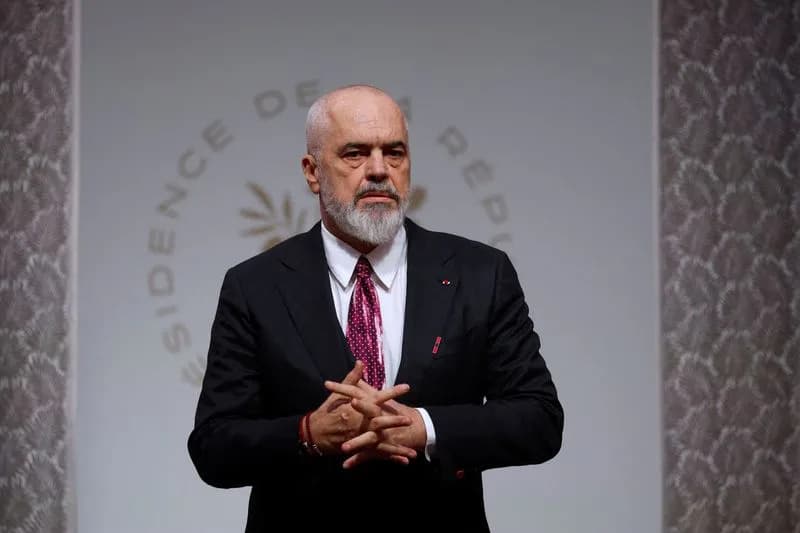
FILE PHOTO: Albanian Prime Minister Edi Rama arrives for the Coalition of the Willing summit at the Elysee Palace in Paris, France January 6, 2026. YOAN VALAT/Pool via REUTERS/File Photo
Police in Tirana fired tear gas and used water cannon to disperse opposition protesters on Friday after demonstrators attacked the office of Prime Minister Edi Rama with petrol bombs and fireworks. The unrest followed corruption allegations against Deputy Prime Minister Belinda Balluku, who was indicted in December.
Violent Street Clashes
Opposition supporters threw petrol bombs and set off fireworks near government buildings, prompting repeated volleys of tear gas and blasts from water cannon as police pushed to reclaim the area. Thousands of demonstrators, waving Albanian and party flags, chanted slogans calling for Rama to step down.
Legal Case and Political Fallout
A special prosecution unit indicted Balluku over alleged interference in public tenders for major infrastructure projects and favouring certain companies — accusations she denies. An anti-corruption court has suspended her from office, and the Special Prosecution Office has formally requested that parliament lift her immunity to allow for arrest.
Sali Berisha: Edi Rama's days are numbered. Let them know that even if they go behind the sun, we will find them and punish them with the full force of the law.
Parliamentary Dynamics and Wider Implications
Rama's Socialist Party, which won a fourth consecutive term last year, holds a comfortable majority in parliament, making it unclear if or when lawmakers will vote to lift Balluku's immunity. The prime minister has accused parts of the judiciary of overreach, particularly regarding pre-trial detentions, further heightening tensions between the executive and judicial branches.
Albania is pursuing European Union membership with an aspirational target of joining by 2030, but EU officials say the country must step up efforts to tackle crime and corruption — a demand that gives added international resonance to the domestic scandal and protests.
(Reporting by Florion Goga; Writing by Fatos Bytyci; Editing by Alex Richardson)
Help us improve.