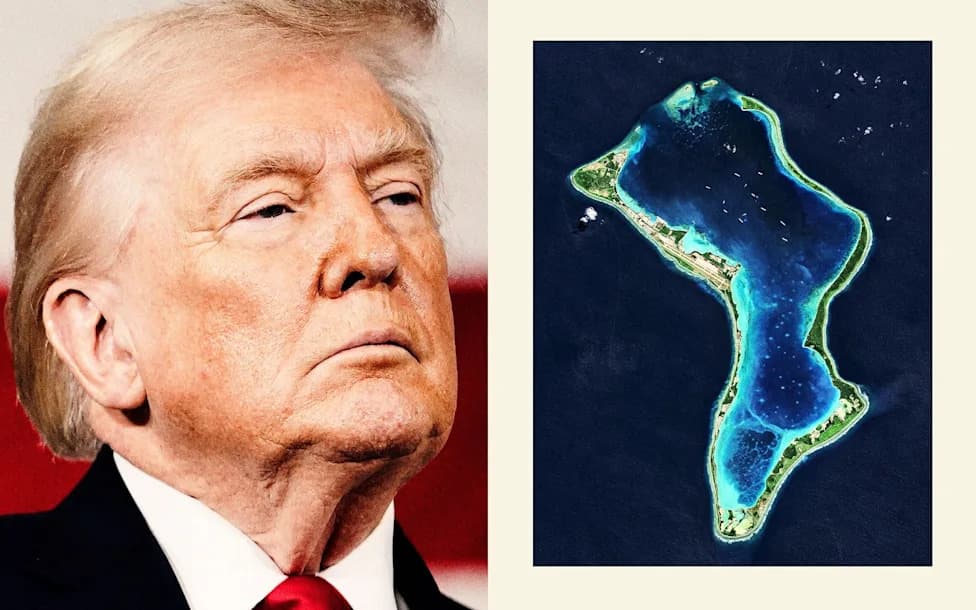
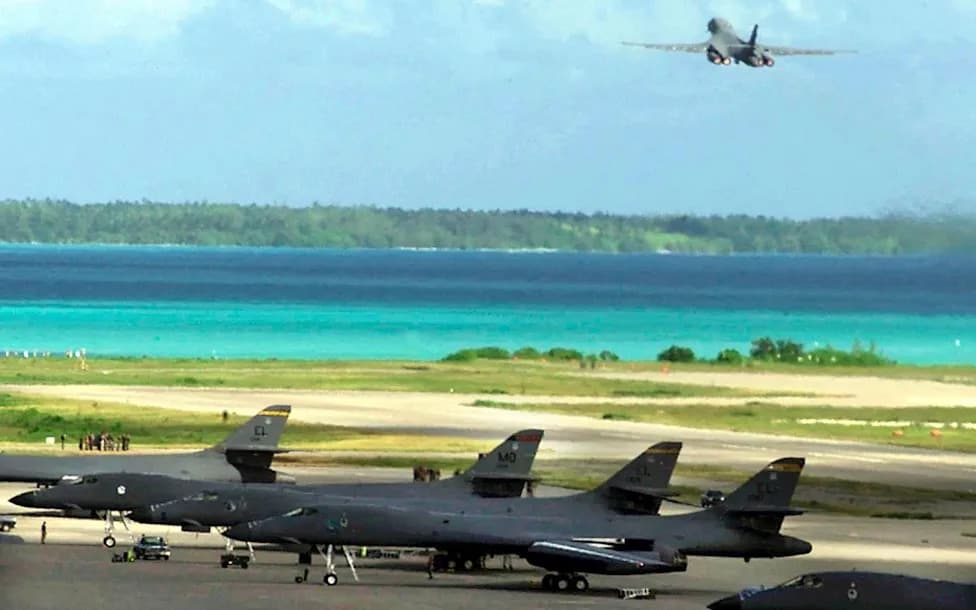
British media report that Prime Minister Keir Starmer has refused a US request to allow use of RAF Fairford and Diego Garcia for potential strikes on Iran, citing concerns that such support could breach international law. The decision intersects with a proposed deal to return the Chagos Islands to Mauritius while retaining a long-term lease for Diego Garcia. Washington’s messaging has been mixed — with the State Department backing the UK agreement while former President Trump criticised it publicly. Analysts warn that basing heavy bombers closer to Iran would speed operations but increase the risk of retaliatory strikes.
Starmer Blocks US Request To Use RAF Fairford And Diego Garcia For Possible Strikes On Iran
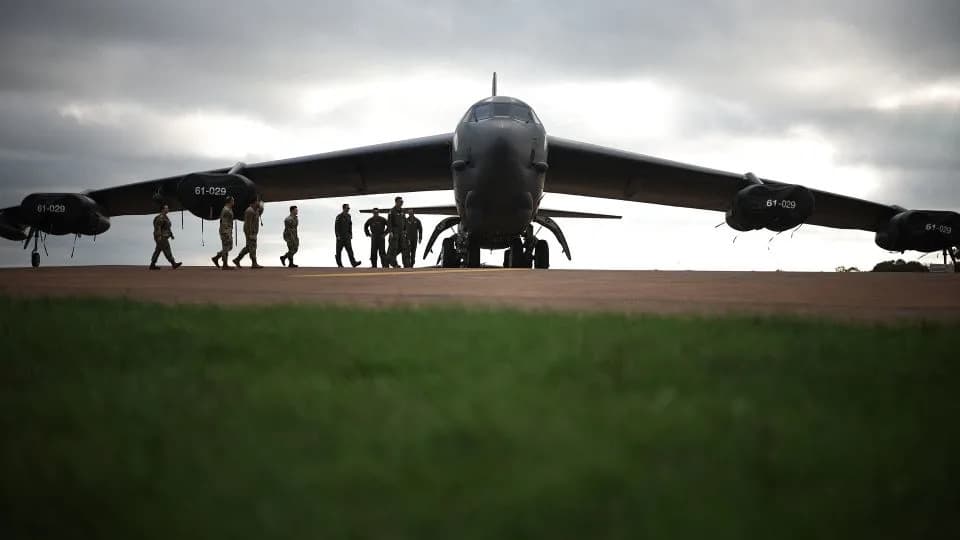
Flight crew from US Air Force 501st Combat Support Wing and 307th Bomb Wing walk towards a B-52 Stratofortress bomber aircraft at RAF Fairford on September 19, 2025. - HENRY NICHOLLS/AFP/AFP via Getty Images
British Prime Minister Keir Starmer has refused a US request — reportedly linked to former President Donald Trump — to allow US forces to use RAF Fairford and the Diego Garcia base for any preemptive strikes on Iran, several British outlets reported, citing government sources.
The Times of London first disclosed the split, saying Starmer denied access to RAF Fairford in England and Diego Garcia in the British Indian Ocean Territory. The BBC, The Guardian and The Telegraph published corroborating accounts attributed to anonymous officials.
Both sites have historically served as important forward bases for US operations far from North America. Diego Garcia has long been a key staging area for the US heavy bomber fleet, while RAF Fairford is a principal forward operating base for strategic bombers in Europe.
According to the reporting, UK officials are concerned that permitting the US to operate from those bases for strikes on Iran could amount to complicity under international law. The Times quoted legal worries that international law "makes no distinction between a state carrying out the attack and those in support if the latter have 'knowledge of the circumstances of the internationally wrongful act.'"
The UK Ministry of Defence declined to discuss operational details. A government spokesperson said: "There is a political process ongoing between the US and Iran, which the UK supports. Iran must never be able to develop a nuclear weapon, and our priority is security in the region."
Requests by the US to use UK military facilities have traditionally been assessed on a case-by-case basis under long-standing arrangements; precise criteria are withheld for security reasons. Veterans Minister Alister Carmichael (reported earlier as 'Al Carns' in some outlets) noted in a written reply to MP Jeremy Corbyn that such decisions "consider the legal basis and policy rationale for any proposed activity."
Separately, the dispute overlaps with debate over the future of the Chagos Islands. London has been negotiating a plan that would return sovereignty of the Chagos archipelago to Mauritius while preserving long-term military access to Diego Garcia via a lease. The International Court of Justice in 2019 advised that the UK should end its administration of the islands "as rapidly as possible" to allow decolonisation, a ruling that has shaped recent diplomacy and legal pressure.
Former President Trump publicly criticised the UK-Mauritius arrangement on his Truth Social platform, while the US State Department issued a statement saying Washington "supports the decision of the United Kingdom to proceed with its agreement with Mauritius." White House press secretary Karoline Leavitt later said the president's social media post should be regarded as his administration's policy.
Trump explicitly referred to Diego Garcia and RAF Fairford in social posts, saying their use "may be necessary for the United States... to eradicate a potential attack by a highly unstable and dangerous Regime." Last June, however, a single B-2 strike on Iranian nuclear sites did not use either Diego Garcia or Fairford; the stealth bombers reportedly flew a roughly 37-hour round trip from their Missouri base.
Analysts say any new US campaign against Iran could be far longer and more complex. Closer basing would shorten turnaround times for heavy bombers such as the B-2, B-1 and B-52, enabling more frequent strikes — but it would also risk exposing those assets to Iranian missile retaliation or other attacks, even if alternative regional bases were available.
CNN has sought comment from the White House. CNN's Christian Edwards contributed reporting to earlier coverage.
Help us improve.