
North Korean leader Kim Jong Un opened the Workers’ Party congress, praising economic gains and an enhanced regional role as he outlines a five‑year political and military agenda. The meeting is expected to reinforce his authoritarian control, highlight advances in nuclear and conventional forces, and could spotlight his daughter, Kim Ju Ae, as a possible successor. Analysts point to closer ties with Russia and China and a reported ~10% economic rebound over five years, though reliable data remain limited.
Kim Touts Economic Gains and Regional Clout as Workers’ Party Congress Begins
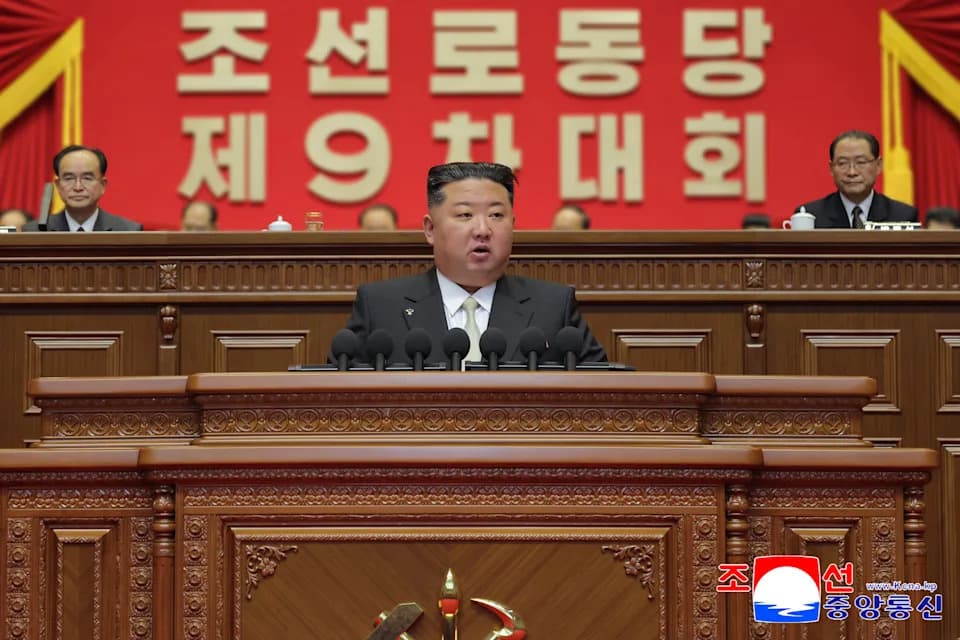
This photo provided on Friday, Feb. 20, 2026, by the North Korean government, North Korean leader Kim Jong Un delivers a speech during the ruling Workers’ Party Congress in Pyongyang, Thursday, Feb. 19, 2026. Independent journalists were not given access to cover the event depicted in this image distributed by the North Korean government. The content of this image is as provided and cannot be independently verified. Korean language watermark on image as provided by source reads: "KCNA" which is the abbreviation for Korean Central News Agency. (Korean Central News Agency/Korea News Service via AP)(ASSOCIATED PRESS)
North Korean leader Kim Jong Un opened the Workers’ Party congress by praising what he called improvements in the country’s economy and a strengthened regional standing. The high-profile gathering in Pyongyang — expected to run for several days — is likely to set the leadership’s political and military priorities for the next five years and further consolidate the Kim family’s authoritarian rule.
Key Themes
The congress will provide a platform for Kim to formalize domestic and foreign policy goals before thousands of ruling-party delegates. Analysts expect him to reaffirm tight internal controls, unveil a new five-year economic plan, and present a parallel military development program that integrates conventional and nuclear forces.
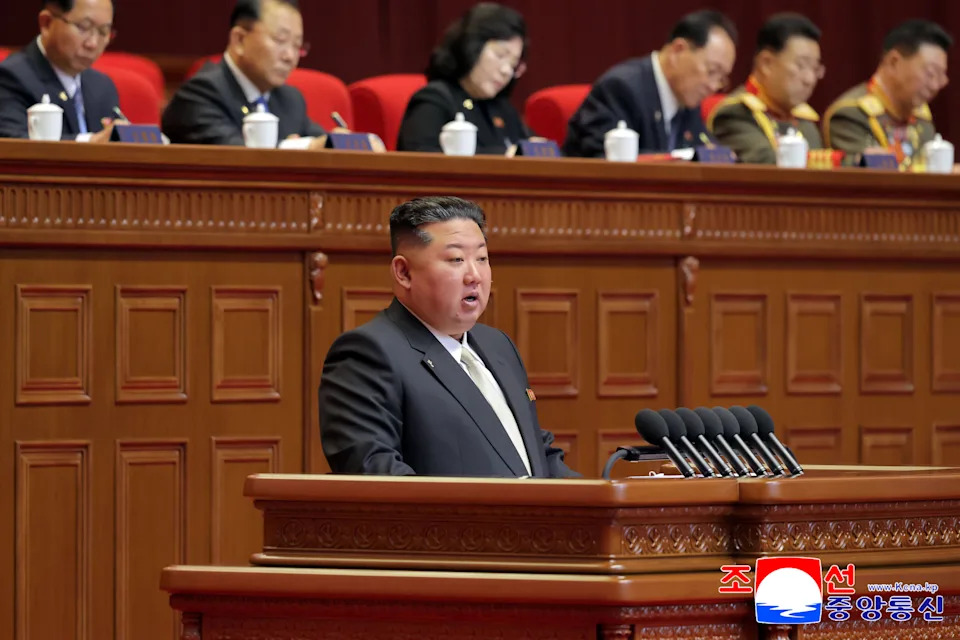
This photo provided on Friday, Feb. 20, 2026, by the North Korean government, North Korean leader Kim Jong Un delivers a speech during the ruling Workers’ Party Congress in Pyongyang, Thursday, Feb. 19, 2026. Independent journalists were not given access to cover the event depicted in this image distributed by the North Korean government. The content of this image is as provided and cannot be independently verified. Korean language watermark on image as provided by source reads: "KCNA" which is the abbreviation for Korean Central News Agency. (Korean Central News Agency/Korea News Service via AP)(ASSOCIATED PRESS)
State media reported the meeting began the previous day but did not immediately publish any detailed remarks from Kim about North Korea’s standoffs with the United States and South Korea or the country’s nuclear program.
Stronger Position Since 2021
Now in his 15th year in power, Kim appears more confident than at the 2021 congress, when he acknowledged economic setbacks amid the COVID-19 pandemic and announced a five-year development plan emphasizing self-reliance. Observers point to closer ties with Russia and China, expanding weapons capabilities and a reported economic rebound as factors that have strengthened his position.
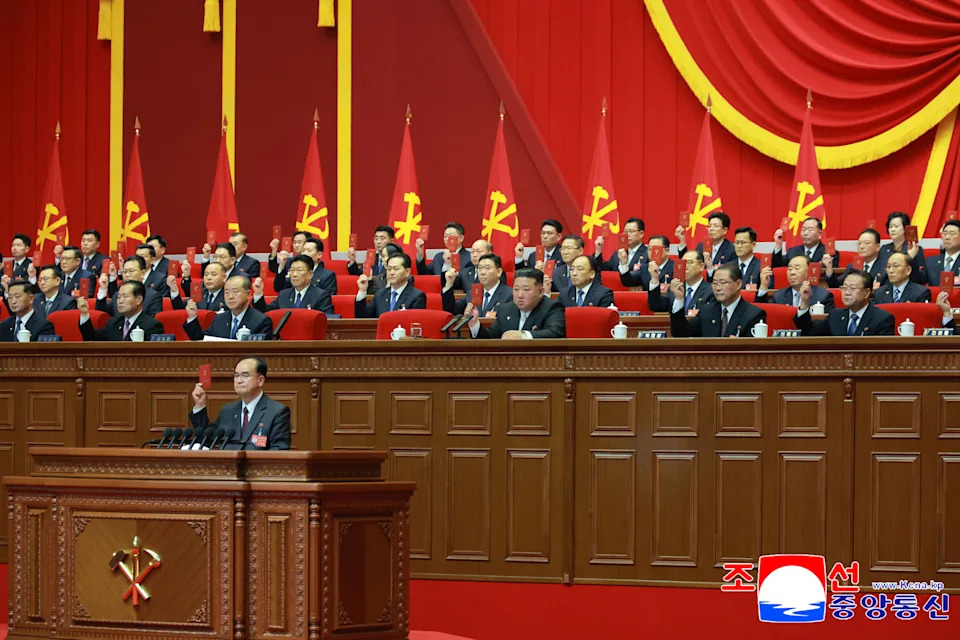
This photo provided on Friday, Feb. 20, 2026, by the North Korean government, North Korean leader Kim Jong Un, center, attends the ruling Workers’ Party Congress in Pyongyang, Thursday, Feb. 19, 2026. Independent journalists were not given access to cover the event depicted in this image distributed by the North Korean government. The content of this image is as provided and cannot be independently verified. Korean language watermark on image as provided by source reads: "KCNA" which is the abbreviation for Korean Central News Agency. (Korean Central News Agency/Korea News Service via AP)(ASSOCIATED PRESS)
Foreign Alignments and Weapons Development
Analysts say Kim has exploited geopolitical upheaval — including Russia’s war in Ukraine — to accelerate weapons development and deepen cooperation with Moscow. Some reports allege transfers of munitions and other military support to Russia, exchanges that outside experts say may have helped North Korea obtain new technologies and hard currency.
Kim has also courted China, attending joint international events with Russian and Chinese leaders and meeting with President Xi Jinping. These diplomatic moves have reinforced Pyongyang’s image of closer alignment with major regional powers.
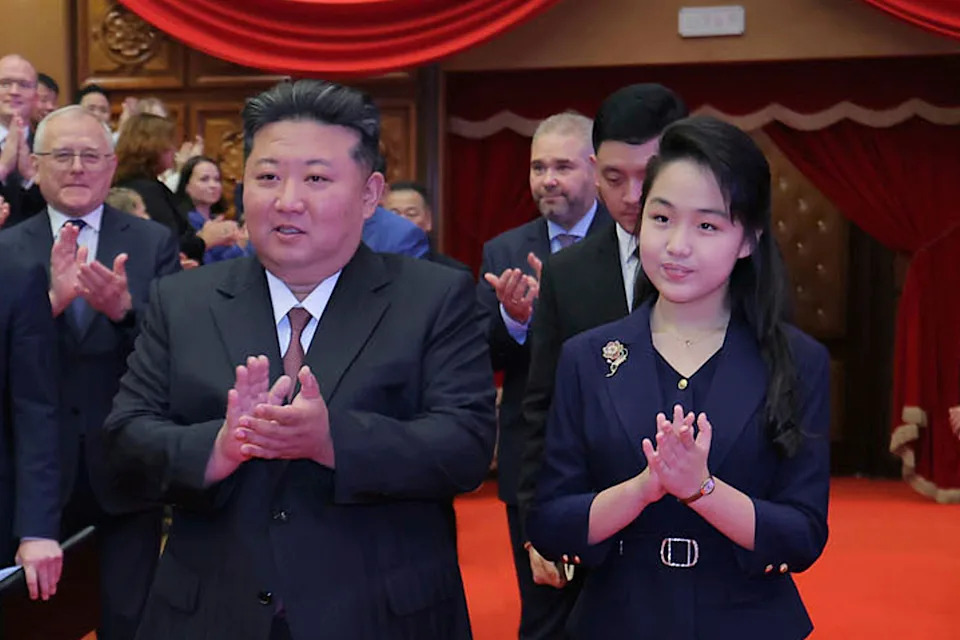
FILE - In this photo provided by the North Korean government, North Korean leader Kim Jong Un, center left, and his daughter, center right, arrive at the East Pyongyang Grand Theatre in Pyongyang, North Korea, June 29, 2025. Independent journalists were not given access to cover the event depicted in this image distributed by the North Korean government. The content of this image is as provided and cannot be independently verified. (Korean Central News Agency/Korea News Service via AP, File)(ASSOCIATED PRESS)
Military Advances And Doctrine
Since 2021, North Korea has claimed progress on a range of weapons systems, including solid-fuel intercontinental ballistic missiles, tactical nuclear-capable systems, a 2023 military satellite and reported work on a nuclear‑propelled submarine. The leadership is now placing greater emphasis on conventional capabilities — new warships, anti-air systems and attack drones — and on integrating these with nuclear forces. Analysts warn this approach could lower the threshold for nuclear use by blurring distinctions between conventional and nuclear operations.
Economy And Domestic Control
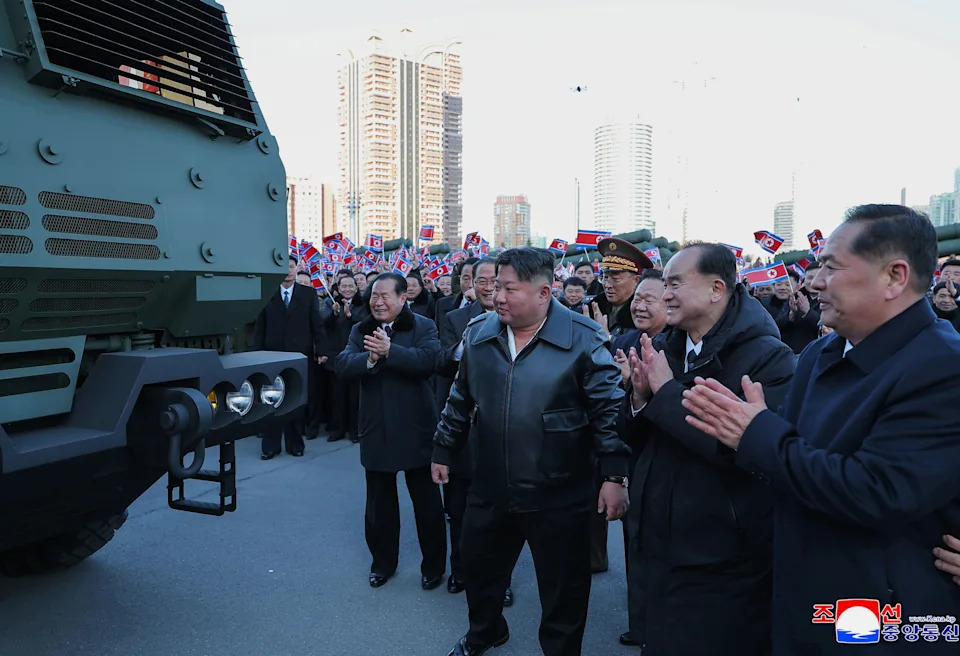
In this photo provided by the North Korean government, its leader Kim Jong Un attends a military ceremony in Pyongyang, North Korea, Wednesday, Feb. 18, 2026. Independent journalists were not given access to cover the event depicted in this image distributed by the North Korean government. The content of this image is as provided and cannot be independently verified. Korean language watermark on image as provided by source reads: "KCNA" which is the abbreviation for Korean Central News Agency. (Korean Central News Agency/Korea News Service via AP)(ASSOCIATED PRESS)
Reliable economic data from North Korea are scarce due to strict information controls, long-standing policy failures and international sanctions. Still, some South Korean analysts estimate roughly 10% growth over the past five years, citing a post-pandemic rebound in trade with China and reported weapons exports. Kim’s rhetoric at the congress framed the gains as "irreversible" progress for the state, even as poverty and structural economic weaknesses persist.
Succession And Inter‑Korean Relations
Observers note the congress could also be used to bolster dynastic succession: some analysts expect Kim may elevate his young daughter, widely believed to be Kim Ju Ae (around 13 years old), to a more visible role. On inter‑Korean relations, Kim has abandoned earlier rapprochement efforts and in 2024 declared Seoul a permanent enemy; the congress is likely to formalize a hard-line stance that views the two Koreas as hostile states.
Outlook
While Kim may maintain a confrontational posture toward South Korea, he could adopt a more measured tone toward the United States to preserve future diplomatic options aimed at sanctions relief or tacit recognition of Pyongyang’s nuclear status. Analysts emphasize that North Korea’s heavier reliance on Russia presents both opportunities and risks for the regime should Moscow’s priorities change.
Note: Where claims about military support to Russia or specific technological transfers are reported, outside verification is limited and often based on intelligence and open-source analysis rather than official North Korean confirmation.
Help us improve.





















