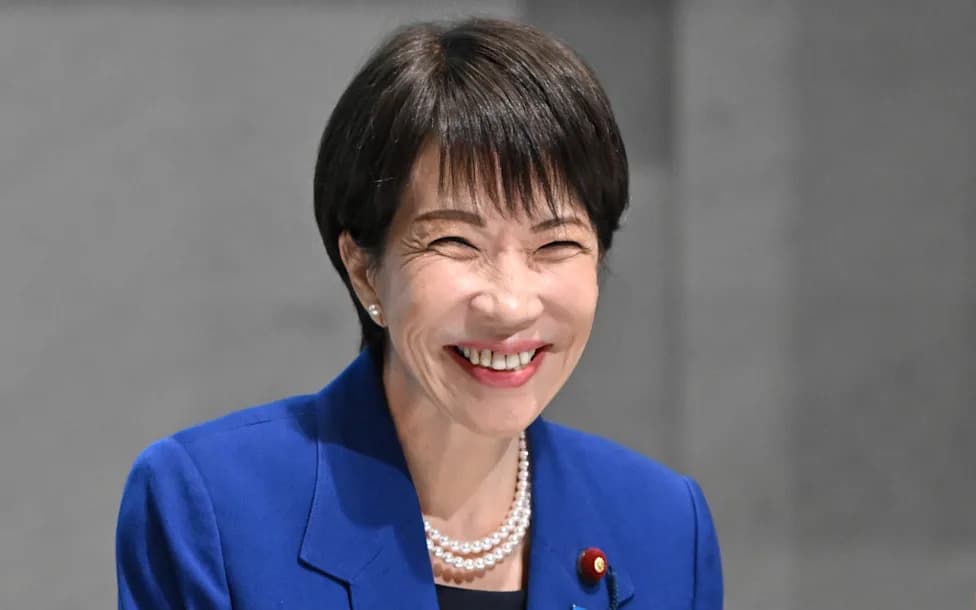
In her first post-election parliamentary address, Prime Minister Sanae Takaichi warned of growing Chinese "coercion" and unveiled an ambitious security overhaul. Her government will revise Japan's core security documents, relax military export rules, and accelerate defence spending to 2% of GDP by the end of March. Takaichi also proposed a national intelligence council, a CFIUS-style investment screen, supply-chain diversification including rare earths near Minamitori, and faster restarts of nuclear reactors.
Japan's PM Takaichi Warns Of Chinese 'Coercion', Announces Major Defence Overhaul
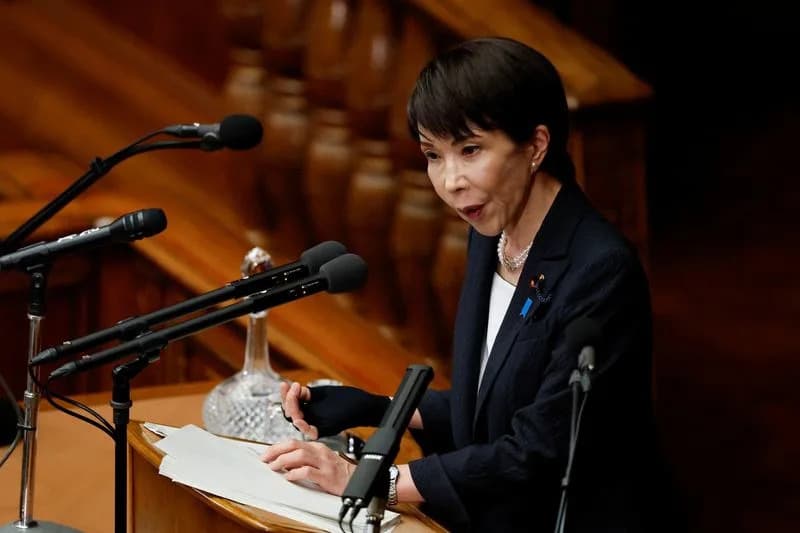
Japan's Prime Minister Sanae Takaichi delivers her policy speech in the parliament, in Tokyo, Japan, February 20, 2026. REUTERS/Kim Kyung-Hoon
Japanese Prime Minister Sanae Takaichi used her first post-election address to parliament on Friday to warn of escalating Chinese "coercion" and to outline a broad security and economic resilience agenda aimed at countering regional threats.
After turning a fragile majority into a landslide in this month’s lower house election, Takaichi’s ruling coalition now controls more than two-thirds of seats, giving her significant leeway to implement changes quickly.
Pointing to what she described as "the most severe and complex security environment since World War Two," Takaichi cited increased Chinese military activity, Beijing's closer security ties with Russia, and North Korea’s growing nuclear and missile capabilities as drivers for the shift.
Key Policy Moves
Defence Strategy: The government will revise Japan’s three core security documents this year to set out a new defence strategy. Takaichi reiterated plans to accelerate a military build-up begun in 2023, targeting defence spending equal to 2% of GDP by the end of March.
Military Exports and Industry: Rules on arms exports will be reviewed and relaxed to expand overseas sales and bolster domestic defence companies.
Intelligence and Investment Screening: Takaichi proposed a national intelligence council, to be chaired by the prime minister, to centralise information from police, the defence ministry and other agencies. She also proposed a Japanese equivalent of the U.S. Committee on Foreign Investment (CFIUS) to vet inbound investment in sensitive sectors and said land-purchase rules for foreigners would be reviewed.
Supply Chains and Resources: The government pledged to diversify supply chains and reduce dependence on "specific countries," working with allies to secure critical materials — including rare earths near Minamitori, a remote Pacific island.
Energy: Takaichi said she would speed the restart of nuclear reactors idled after the 2011 Fukushima disaster to strengthen energy security.
"A nation that does not take on challenges has no future. Politics that only seeks to protect cannot inspire hope," she told lawmakers, underscoring the urgency of her agenda.
Her tenure so far has been marked by heightened tensions with China, including a controversial comment that Japan could use military force to counter any attack on Taiwan that also threatened Japanese territory. The new measures reflect a shift toward a more proactive security posture despite Japan’s pacifist constitution.
Help us improve.