The USS Gerald R. Ford briefly revealed its location about 175 miles off Morocco as it heads into the Mediterranean, suggesting an earlier arrival than expected. The carrier is the second President Trump ordered toward waters near Iran amid a major U.S. naval buildup, which has coincided with a visible redeployment of more than 50 U.S. military aircraft to Europe and the Middle East. Officials say forces could be ready to strike on a short timeline, but no final decision has been made.
U.S. Warplanes Surge as USS Gerald R. Ford Heads Into Mediterranean Amid Iran Standoff
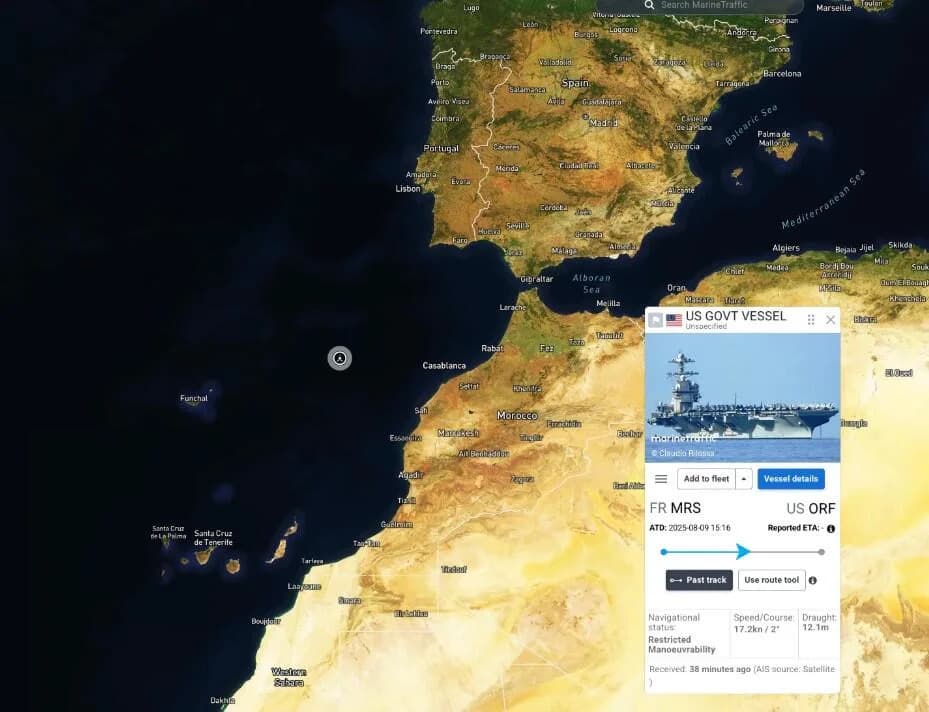
The USS Gerald R Ford was temporarily visible on Feb. 18, 2026, on open-source maritime tracking website MarineTraffic, off the northwest coast of Africa heading toward the Strait of Gibraltar and the Mediterranean beyond. / Credit: MarineTraffic.com
The U.S. Navy's 1,000-foot aircraft carrier USS Gerald R. Ford briefly activated its Automatic Identification System (AIS) on Wednesday, revealing its position about 175 miles off Morocco as it steamed toward the Strait of Gibraltar and into the Mediterranean. That public tracking suggested the carrier could reach the Eastern Mediterranean several days earlier than analysts had expected.
Carrier Movement and Signaling
The Ford is the second U.S. carrier President Donald Trump ordered toward waters near Iran as part of a broad military buildup aimed at pressuring Tehran over its nuclear program. Activating the Ford's AIS so it would appear on public maritime trackers was widely interpreted as a deliberate signal — visible to journalists, ship‑spotters and, importantly, to Iran.
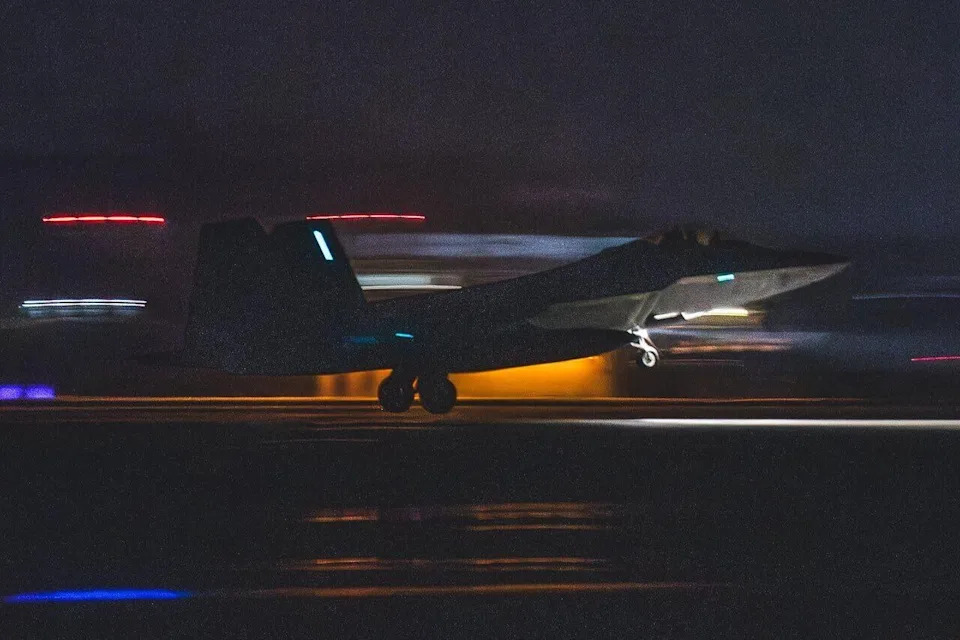
A U.S. F-22 Raptor fighter jet is seen landing at RAF Lakenheath, a U.S. Air Force base in eastern England, Feb. 17, 2026. / Credit: Jack Austin(Jack Austin)
Airpower Redeployment
Alongside the naval deployment, a substantial and highly visible redeployment of U.S. airpower has been underway. Over an eight‑hour window, a CBS News analysis identified more than 50 U.S. Air Force and Navy aircraft flying east from bases on both U.S. coasts to the U.K., continental Europe and onward into the Middle East. Most flights were tankers, transport and surveillance aircraft; civilian plane‑spotter photos also showed F‑15s, F‑22s and F‑35s moving through U.K. bases this week, indicating that strike aircraft are being repositioned as well.
Readiness and Timing
Senior national security advisers have told the president that U.S. forces could be prepared to carry out strikes on Iran on a short timeline, with some officials briefing readiness as early as Saturday. Multiple sources said, however, that any decision would likely extend beyond that immediate window and that President Trump had not yet made a final determination.
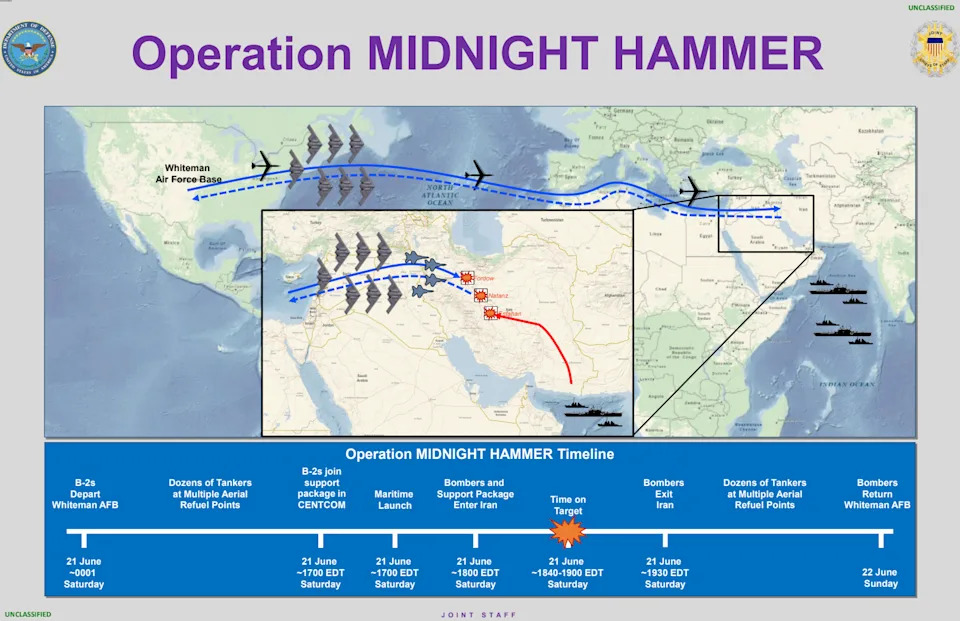
A graphic released by the Pentagon shows the flight path and timeline of Operation Midnight Hammer, the U.S. operation to strike nuclear sites in Iran, June 21, 2025. / Credit: Defense Department
Regional Force Disposition
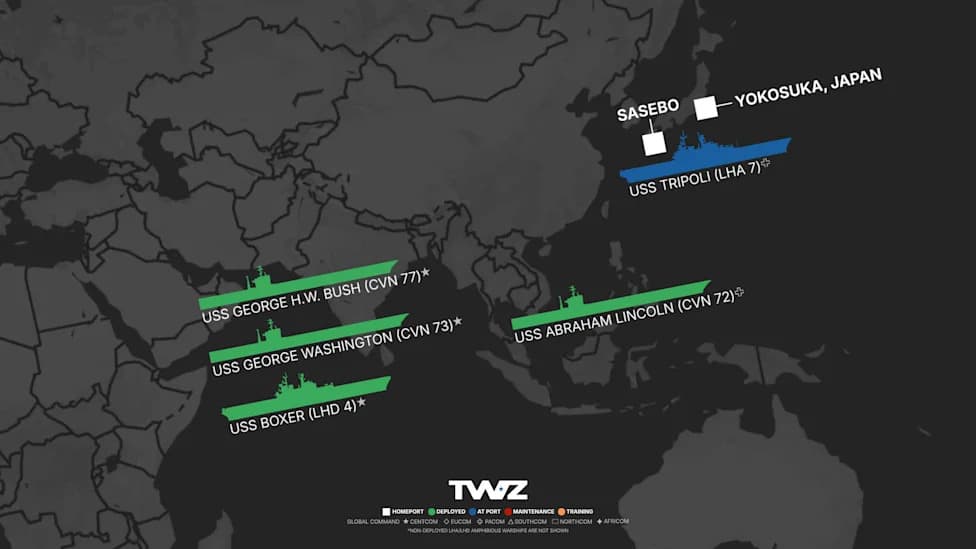
If the Ford continues into the Mediterranean it would join the USS Abraham Lincoln carrier strike group, which has been operating in the Arabian Sea since January and was last publicly observed roughly 200 miles off Oman's coast on Feb. 15. Each carrier is the centerpiece of a larger strike group of warships, fighter aircraft and helicopters. The Ford appears to have moved ahead of some of its escort vessels after departing the Caribbean, while the Lincoln group has remained in the region for weeks.
Additional guided‑missile destroyers are deployed independently across the region, including the USS Roosevelt and USS Bulkeley in the Mediterranean, the USS Delbert D. Black in the Red Sea, and the USS Mitscher in the Persian Gulf.
International Basing And Speculation
Observers have pointed to increased activity at logistics and staging hubs — including bases in the Azores and on Crete — as one reason for speculation about possible strikes. Those locations have been used historically as transit and support points during past operations in the region. The large numbers of tankers and other support aircraft arriving at forward bases have intensified debate among analysts about the U.S. military's intentions.
Risk Of Escalation: Officials and analysts note that while movements by carriers and aircraft signal readiness, they do not by themselves constitute an order to strike. Diplomacy, further intelligence, and presidential direction would determine whether kinetic action occurs.
Help us improve.