Key Takeaway: Calls to protect American "heritage" often serve as coded efforts to restore racial privilege rather than neutral cultural preservation. Historical immigration policy, like the Johnson-Reed Act of 1924, helped create a mid-20th-century population that appeared uniquely "white," but this was the result of political decisions, not a timeless norm. Groups once treated as outsiders — Irish, Italian, Greek and Eastern Europeans — were later absorbed into whiteness, while the profound role of enslaved Black people in shaping the nation is frequently minimized. Debates about heritage are therefore political acts that shape who is seen as truly American.
“Heritage” As Code: How Calls To Protect American Heritage Are Really About Reclaiming Whiteness
The right’s obsession with American ‘heritage’ is all about who get to be seen as ‘white’
Recent appeals to protect American "heritage" are often less about neutral cultural preservation than an effort to reinscribe privilege along racial lines. What is presented as nostalgia or patriotism can function as repackaged racism: a call to restore a narrowly defined vision of Americanness that privileges white men and erases the long, multiracial history of the United States.
Heritage As Political Language
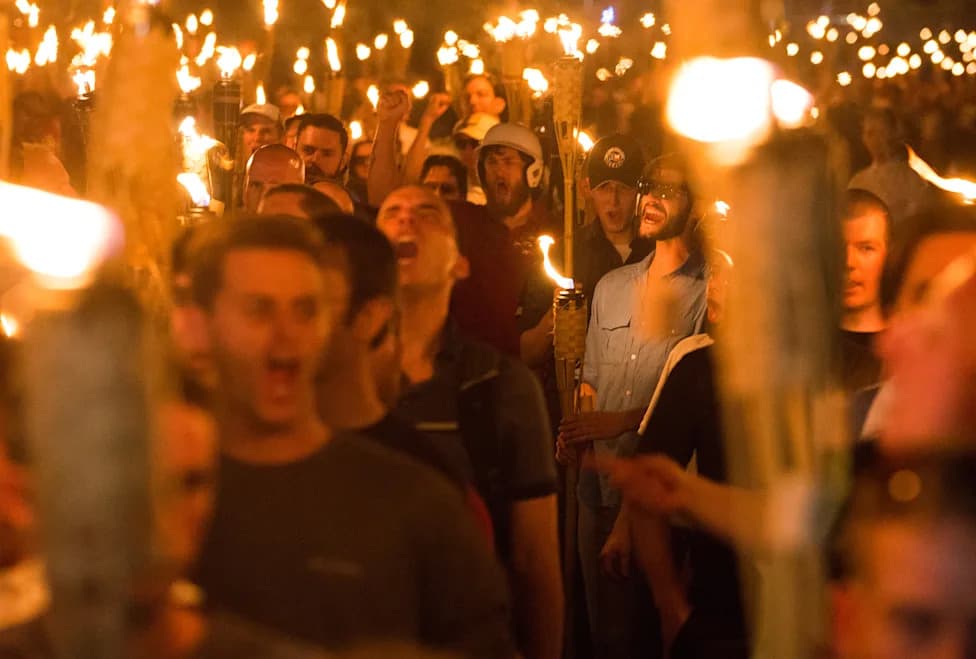
When a White House-affiliated social media account associated with President Donald Trump proclaims being "unapologetic in our heritage," or when public figures invoke a supposed Anglo-Scots-Irish origin of American culture, those messages must be read as political signals. They echo the "Make America Great Again" aim of rolling back demographic and cultural change by legitimizing an idea of national belonging tied to whiteness.
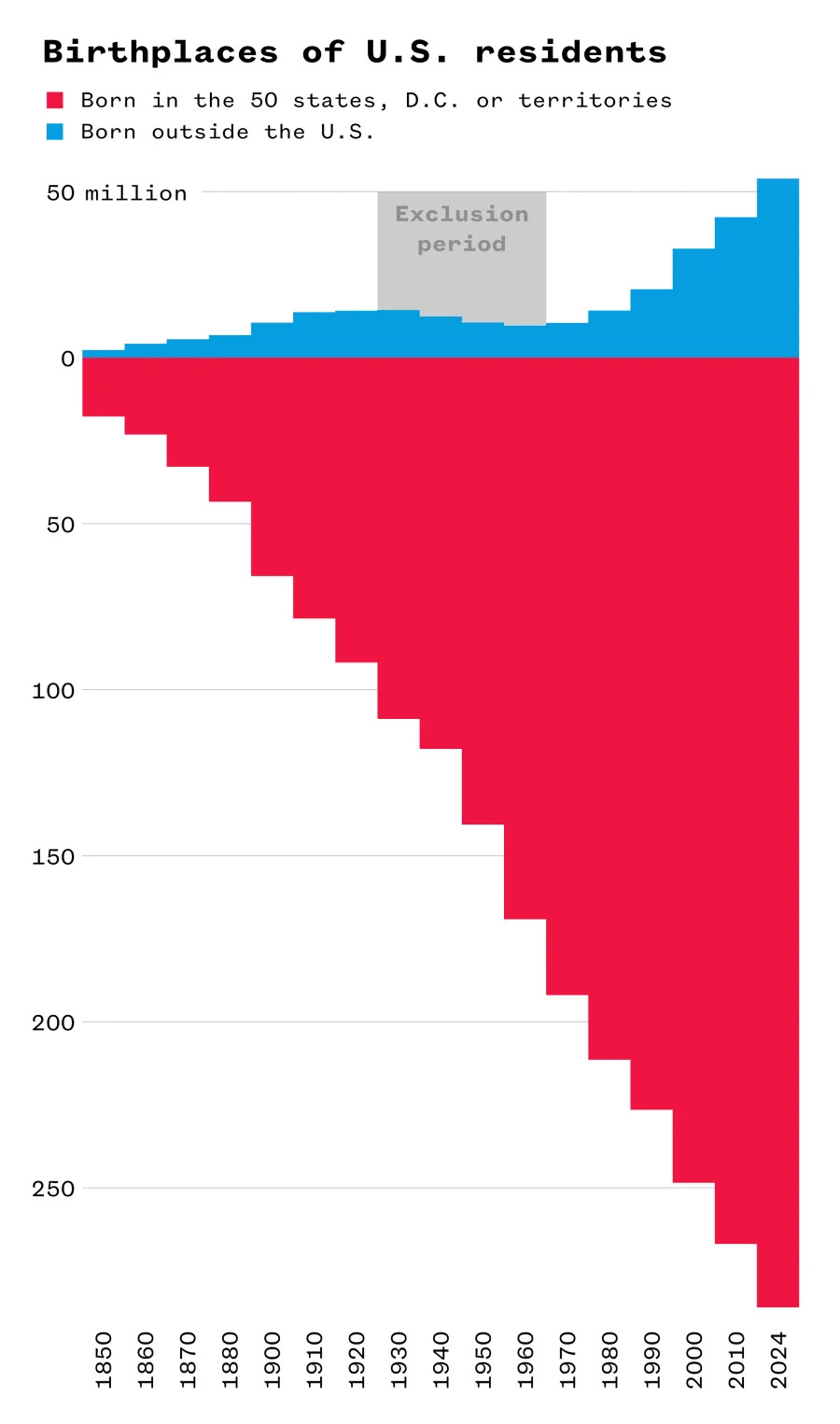
An analysis of data from the U.S. Census via IPUMS.Philip Bump / MS NOW
How Whiteness Has Been Constructed
Being treated as "American" has often meant being treated as white, but the boundaries of whiteness have shifted dramatically over time. The 20th-century moment when the United States looked predominantly European was not the historical norm — it was a consequence of deliberate policy choices.
Demographer Douglas Massey noted that "the baby boom grew up in the whitest, most native-origin population in U.S. history," and pointed to the 1970 low of 4.7% foreign-born residents, driven largely by the restrictive Johnson-Reed Act of 1924. That law explicitly limited immigration from Asia and from Eastern and Southern Europe — places whose peoples were not then universally categorized as white.
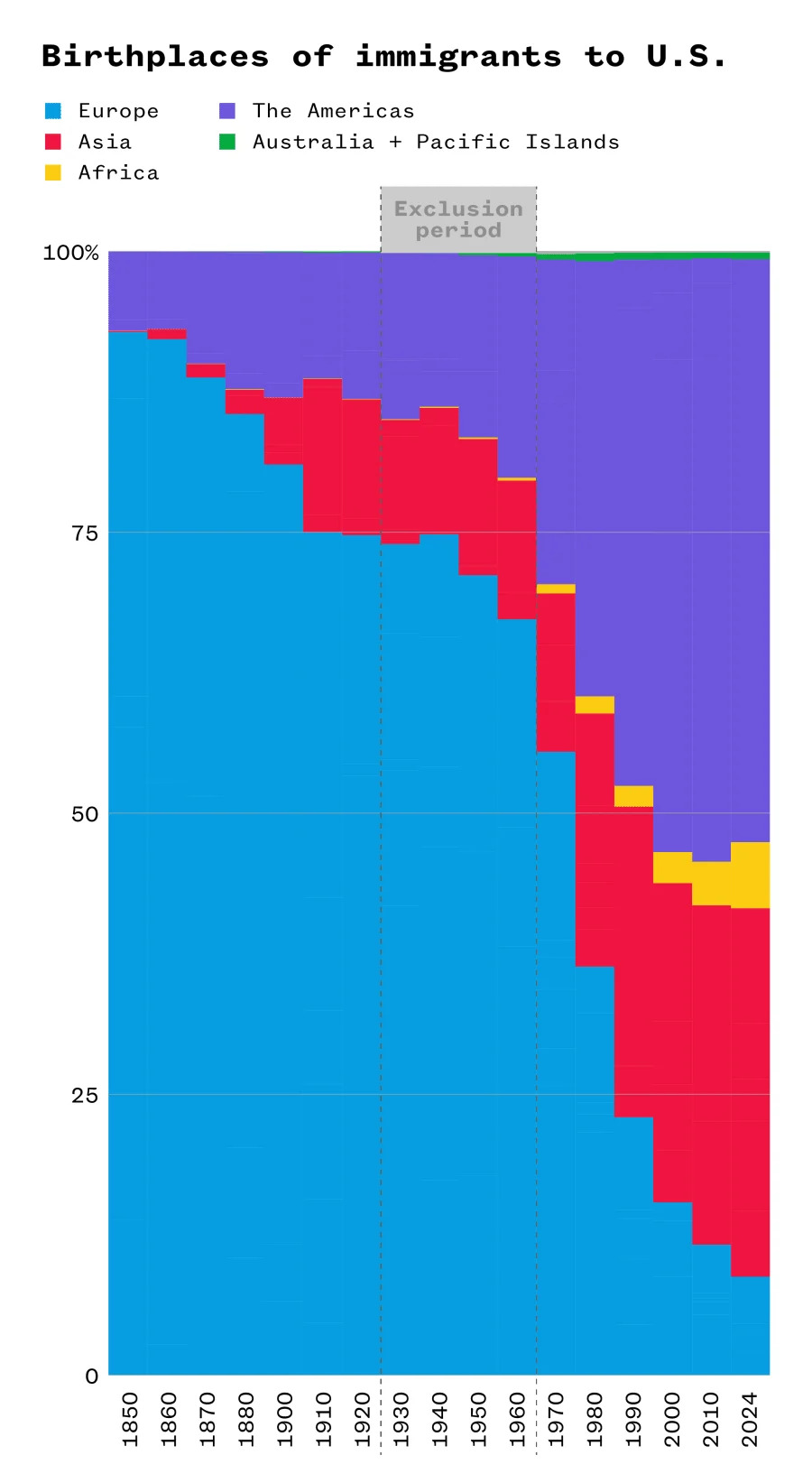
An analysis of data from the U.S. Census via IPUMS.Philip Bump / MS NOW
Who Was Excluded — And Why It Matters
In the 1920s, social and legal distinctions separated "Anglo-Saxon" Americans from Italians, Poles, Russian Jews and others. Those lines underpinned immigration quotas that remained in place for decades. Anti-immigrant movements of the era, including a resurgent Ku Klux Klan, targeted Catholic and Jewish newcomers with xenophobic rhetoric and public intimidation.
“The Greeks control the restaurant and confectionery business, the Italians the fruit and produce business… The Irish Catholics control us politically and are trying to control us religiously.” — Flyer For A 1925 Klan Rally (contemporary example of anti-immigrant rhetoric)
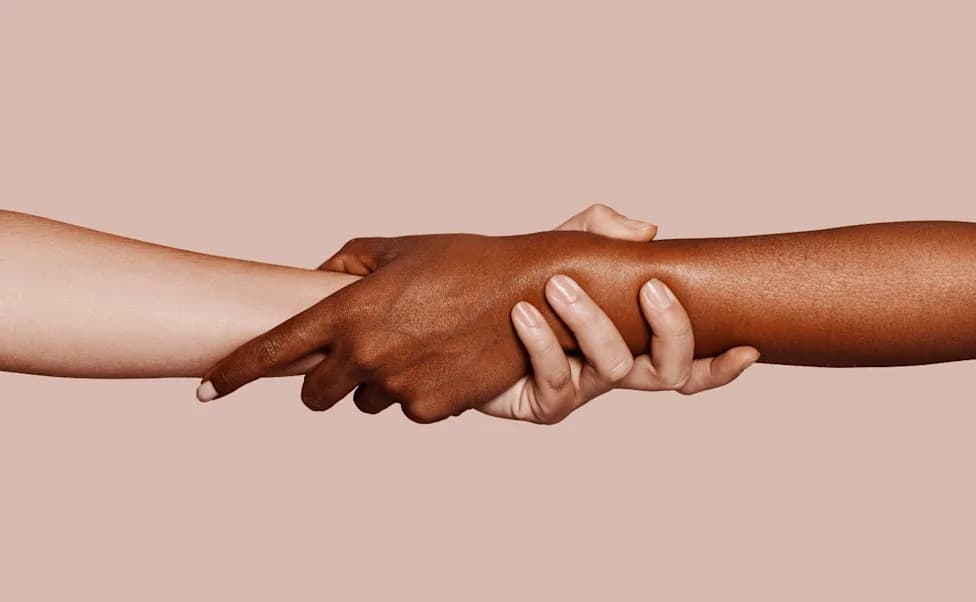
Groups once treated as outsiders — Irish, Italian, Greek and Eastern European immigrants — were gradually absorbed into a broader category of "white" through intermarriage, assimilation, and changing political definitions. That historical fluidity undercuts claims that whiteness is a fixed or natural descriptor for Americanness.
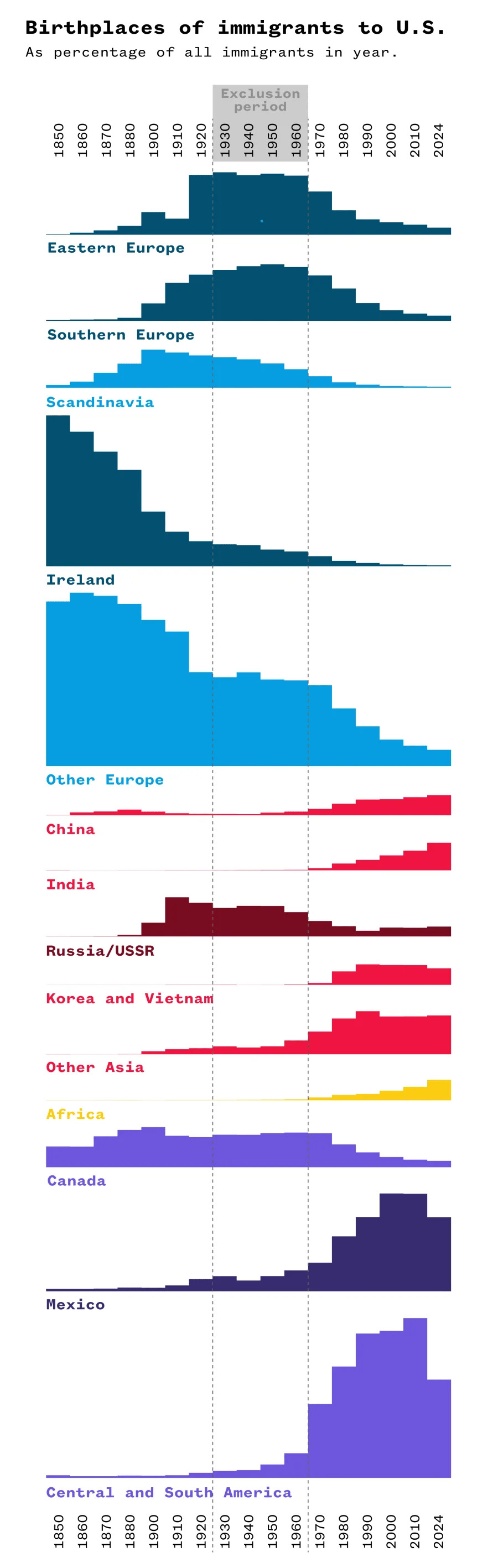
An analysis of data from the U.S. Census via IPUMS.Philip Bump / MS NOW
New Targets, Old Arguments
Today, much of the anti-immigrant energy focuses on Hispanic communities. The complaints echo earlier waves: "They don't speak English," "They're taking our jobs," "They're changing what it means to be American." Yet "Hispanic" is itself a flexible category, and the racial lines between Hispanic and white have long been ambiguous — especially in regions such as the U.S. Southwest and Texas, where communities of Mexican and Central American descent have deep, centuries-old ties to the land.
Moreover, Americans are already more ethnically and racially blended than some narratives allow. Changes to how race and heritage are collected in the Census have produced a large increase in people identifying as multiracial, and many later-generation Hispanic Americans identify simply as American.
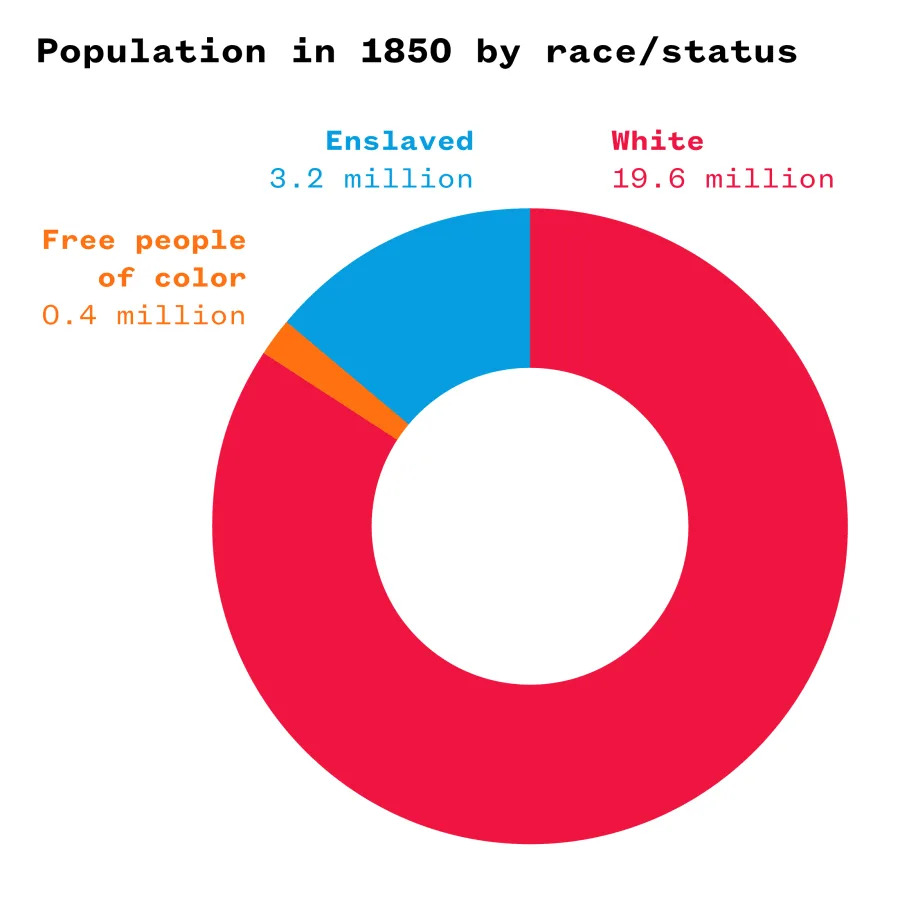
An analysis of data from the U.S. Census.Philip Bump / MS NOW
What This Erases: The Centrality Of Enslavement
Telling the nation's story as if it were shaped only by a single, white culture ignores the enormous influence of enslaved Africans and the system of slavery on American development. In 1850, immigrants made up about 11% of U.S. residents while roughly 15% were Black — eight in nine of them enslaved. To exclude that history from accounts of American culture is to erase an essential part of how the country was built.
“The answer to whether there might be 77 million, or fewer, or three times that many, Latinos in 2100… will be decided historically and politically, not just demographically.” — Historian David Roediger
Conclusion
Debates over "heritage" and national identity are inherently political. Framing heritage as a narrowly defined, racially exclusive legacy is not a neutral cultural argument but a deliberate effort to recast history in ways that exclude groups who are now demographically and politically ascendant. Understanding heritage as contested and constructed — not fixed — makes it easier to see these debates for what they are: struggles over who counts as American.
Help us improve.