
Key takeaways: Iran and the US made "good progress" in indirect Geneva talks mediated by Oman and agreed guiding principles to be drafted into potential agreements. Washington signalled cautious engagement but stressed that presidential "red lines" remain and military options persist. The talks coincided with heightened Gulf tensions — two US carrier groups deployed and IRGC drills in the Strait of Hormuz — complicating prospects for a comprehensive deal.
Iran Says 'Good Progress' in Geneva Nuclear Talks With US as Gulf Tensions Escalate
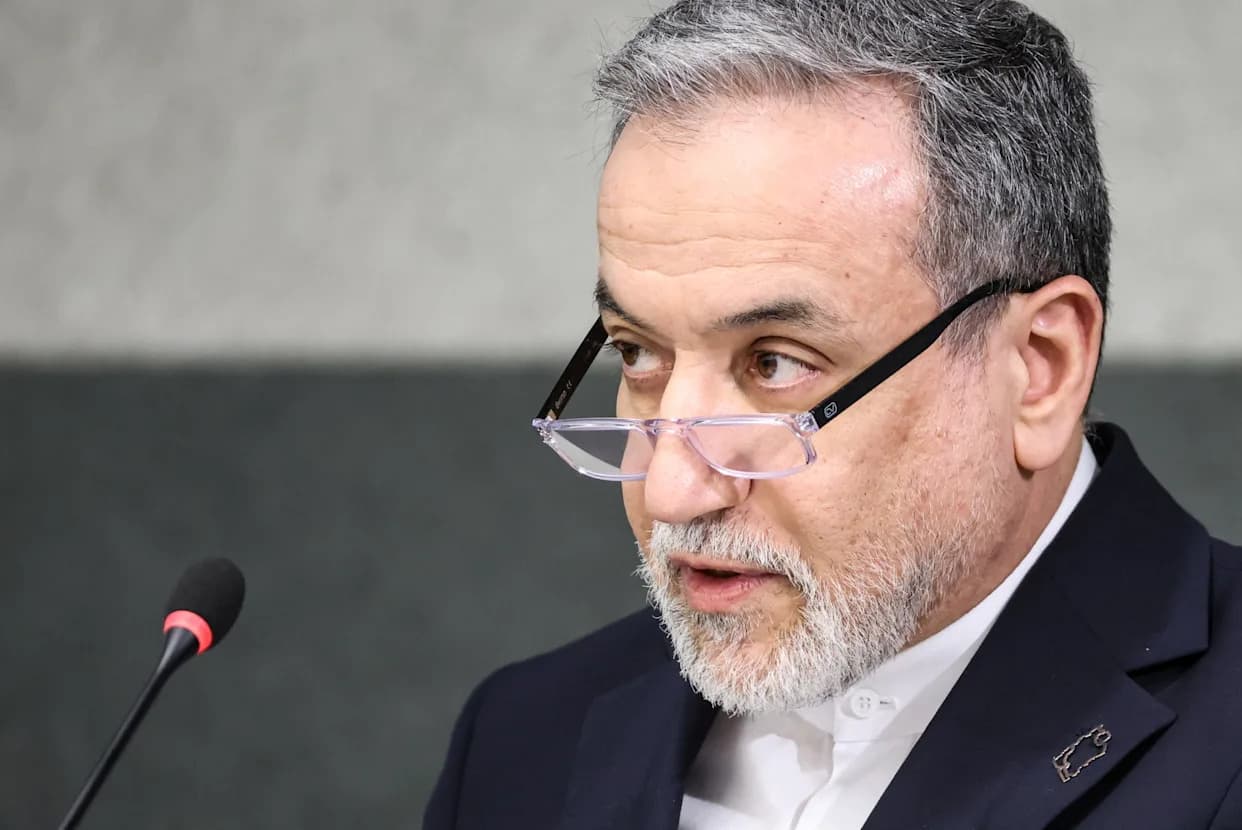
Iranian Foreign Minister Abbas Araghchi addresses a special session of the Conference on Disarmament at the United Nations, on the sidelines of the US-Iran talks in Geneva, Switzerland, February 17, 2026 [Pierre Albouy/ Reuters]
Iranian Foreign Minister Abbas Araghchi said indirect nuclear talks with the United States in Geneva produced "good progress," with both sides agreeing on a set of guiding principles to be turned into draft agreement texts. The meeting, mediated by Oman, took place amid heightened military posturing across the Gulf.
Path Forward
Araghchi told state television that negotiators reached broad agreement on guiding principles and will now begin working on the language of a potential deal. He said narrowing remaining gaps "will take time," and that once each side produces draft texts the documents will be exchanged and a date set for a third round of talks.
"Ultimately, we were able to reach broad agreement on a set of guiding principles, based on which we will move forward and begin working on the text of a potential agreement." — Abbas Araghchi
Washington's Response
In Washington, US Vice President J.D. Vance characterized the meeting as mixed: he signaled a preference for diplomacy but underscored that the White House has set "red lines" Iran has not yet accepted. Vance warned that the administration reserves the option to end diplomatic efforts and that military action remains on the table if talks fail.
Security Context
The talks unfolded against a backdrop of rising tensions in the Gulf. The US deployed two aircraft carriers to the region, including the USS Abraham Lincoln — reported to be positioned roughly 700 km (435 miles) from Iran's coast with nearly 80 aircraft on board — putting a number of long-range strike aircraft within reach. Iran's Supreme Leader, Ayatollah Khamenei, warned Tehran had the capability to sink a US warship, and the Islamic Revolutionary Guard Corps (IRGC) launched war games in the Strait of Hormuz.
State media said parts of the Strait of Hormuz were temporarily closed during IRGC drills for "security precautions." Tehran has repeatedly threatened to shut the waterway in retaliation for an attack — a move that would disrupt about a fifth of global oil flows and send crude prices higher.
Key Disputes
Tehran insists any agreement must protect its sovereignty, deliver tangible economic relief from sweeping US sanctions and allow Iran to pursue civilian nuclear science, including uranium enrichment. Washington has pushed for limits on Iran's enrichment activities and has sought to expand talks to non-nuclear issues such as missile programs and regional activities. Iran has stated it will not accept zero enrichment and considers its missile capabilities off the negotiating table.
Analysts and Background
Ali Vaez of the International Crisis Group suggested there is room for compromise on the nuclear file because Iran's program was physically degraded after last year's conflict, when Israel launched strikes and a 12-day war followed. Vaez said this degradation may make temporary limits on enrichment more acceptable to Tehran, but he warned Iran is unlikely to make deep concessions on non-nuclear issues.
President Masoud Pezeshkian reiterated that Iran is "absolutely not seeking nuclear weapons" and said Tehran is open to verification, while also defending Iran's right to pursue civilian nuclear technology for medicine, industry and agriculture. Iran remains a signatory to the Nuclear Non-Proliferation Treaty (NPT); Israel, which has not signed the NPT, maintains a long-standing policy of ambiguity about its nuclear capabilities.
Outlook
Negotiators now face the harder task of converting agreed principles into text. The next phase — exchanging draft texts and scheduling a third round — will determine whether the "good progress" reported in Geneva yields a durable agreement or whether diplomatic momentum stalls under the weight of broader regional and military tensions.
Help us improve.





















