Maryland Governor Wes Moore signed a law banning local agencies from entering into ICE immigration-enforcement agreements, immediately ending Frederick County’s participation in the 287(g) program. The change is part of a broader Democratic-led push: ten states now restrict local cooperation with 287(g) amid concerns about aggressive federal tactics and recent deadly encounters involving agents. Supporters call the bans civil-rights protections; opponents and DHS warn they may shift enforcement responsibilities and affect public safety.
Maryland Bans Local ICE Agreements, Ending Frederick County’s 287(g) Program as Democrats Push Back

Maryland Gov. Wes Moore, center, smiles before signing legislation that prohibits immigration enforcement agreements with the federal government during a bill-signing ceremony Tuesday, Feb. 17, 2026, in Annapolis, Md. He is joined, from left, by Maryland Secretary of State Susan Lee, Lt. Gov. Aruna Miller, House Speaker Peña-Melnyk and Senate President Bill Ferguson. (AP Photo/Brian Witte)(ASSOCIATED PRESS)
Maryland Gov. Wes Moore signed a law this week that immediately prohibits local agencies from entering into agreements with U.S. Immigration and Customs Enforcement (ICE) to carry out federal immigration enforcement. The move ends Frederick County’s long-running participation in ICE’s 287(g) program — a relationship that Sheriff Charles Jenkins says led to 1,884 transfers to ICE since 2008.
What the Law Does
The new statute bars state and local governments from entering into contracts or agreements that deputize local officers to perform federal immigration functions. Nine Maryland counties with Republican sheriffs that had active 287(g) pacts will have those agreements terminated under the law, which passed with broad support in the Democratic-led General Assembly.

FILE - A federal agent wears a U.S. Immigration and Customs Enforcement badge in New York, June 10, 2025. (AP Photo/Yuki Iwamura, File)(ASSOCIATED PRESS)
Why Democrats Support It
Supporters framed the bill as a civil-rights and public-safety measure. Maryland House Speaker Joseline Peña-Melnyk — who immigrated from the Dominican Republic as a child — said the law reflects the state’s commitment to the Constitution, empathy, and protection of civil rights.
“There needs to be accountability for this organization, because right now the Trump-Vance ICE operation is not moving with proper accountability measures,” Gov. Moore said after signing the bill.
Opposition and Concerns
Republican sheriffs and the Department of Homeland Security (DHS) warned that ending local cooperation could shift enforcement tactics. Frederick County Sheriff Charles Jenkins and others say losing 287(g) partnerships will make it harder to identify and hand over people suspected of being in the country unlawfully — and could put public safety at risk.
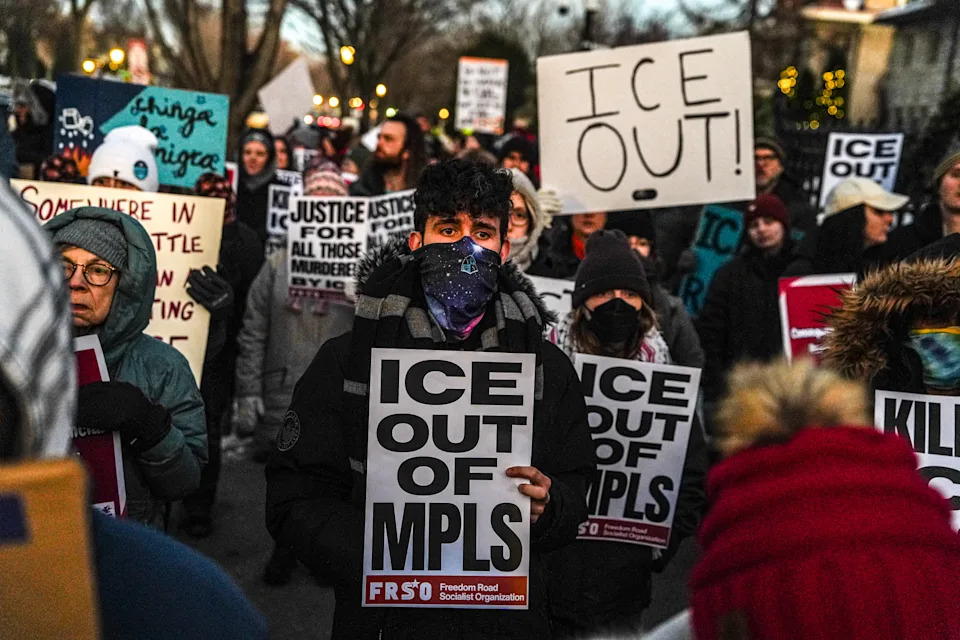
People participate in an anti-ICE protest outside of the Governors Residence, Friday, Feb. 6, 2026, in St. Paul, Minn. (AP Photo/Ryan Murphy)(ASSOCIATED PRESS)
DHS said the law “will make Maryland less safe,” arguing that when local law enforcement is barred from working with federal agencies, federal agents must take a more visible role to locate and apprehend individuals released from jails.
National Context
The Maryland measure is part of a broader Democratic-led backlash to the Trump administration’s expansion of the 287(g) program. When President Trump took office he broadened the program — which dates to a 1996 law — from use largely in jails to include local task forces that can operate in the community. Participation surged from roughly 135 agreements in 20 states to more than 1,400 agreements across 41 states and territories.
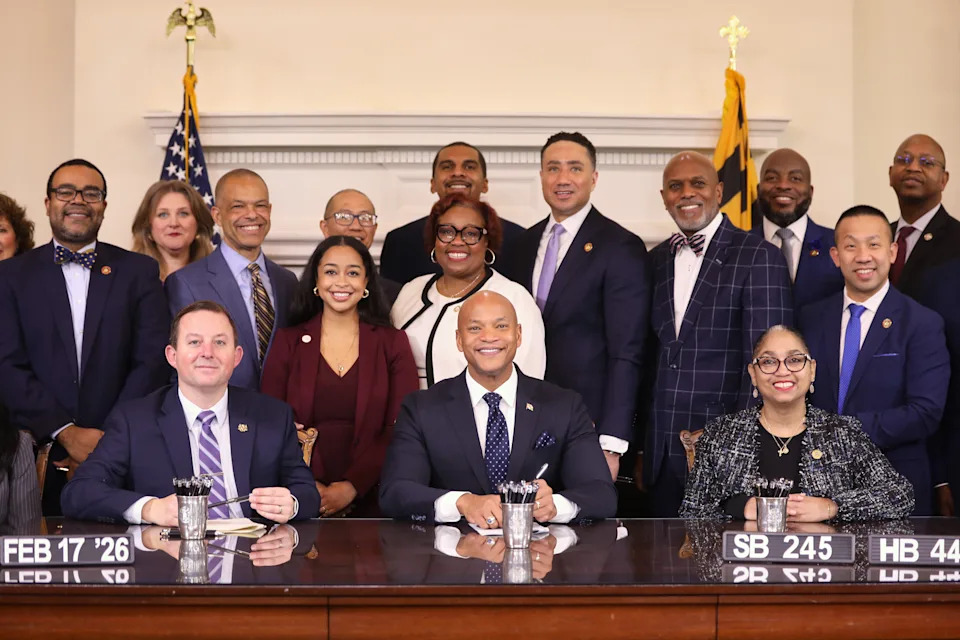
Maryland Gov. Wes Moore, seated center, signs legislation that prohibits immigration enforcement agreements with the federal government during a bill-signing ceremony Tuesday, Feb. 17, 2026, in Annapolis, Md. He is joined by state lawmakers, including Senate President Bill Ferguson, seated left, and House Speaker Joseline Peña-Melnyk, seated right. (AP Photo/Brian Witte)(ASSOCIATED PRESS)
ICE has incentivized participation with financial support: agencies that sign task force agreements may receive up to $100,000 for vehicles, while ICE covers salary and benefits for trained task force officers and provides about $7,500 per officer for equipment. At the same time, a major federal spending package signed last year allocated roughly $150 billion for immigration enforcement initiatives, including funding to hire additional ICE agents and expand detention capacity.
Legislative Ripples
Ten states led by Democrats now have statewide policies limiting local participation in 287(g) or similar programs. New statewide bans recently took effect in New Mexico and Maine; New York’s governor is backing legislation to bar local deputization by ICE; and Virginia has moved to rescind or tightly restrict state-level 287(g) pacts. Lawmakers in several states pointed to high-profile enforcement actions and recent deadly encounters involving federal agents — including the shootings of Renee Good and Alex Pretti in Minnesota — as part of the impetus for change.
Local Perspectives
Republican sheriffs in Maryland, such as Harford County’s Jeffrey Gahler, contend that local 287(g) programs were the most effective and secure means of identifying people in the country unlawfully, and warn the end of such programs could lead to more federal agents operating in communities. Supporters of the bans say the measures protect civil liberties and reduce the risk of racial profiling and community fear.
Looking Ahead
As other states weigh restrictions, the debate is likely to continue: proponents of bans emphasize civil-rights protections and community trust, while opponents stress enforcement capacity and public-safety trade-offs. Several related bills and measures remain under consideration in state legislatures across the country.
Associated Press reporting contributed to this article.
Help us improve.