
Iran says the US stance on its nuclear programme "has moved towards a more realistic one" as its diplomats prepare for a second round of Oman-mediated indirect talks in Geneva. The IRGC has begun drills in the Strait of Hormuz amid warnings it could disrupt a waterway carrying about 20% of global oil. Tehran's Abbas Araghchi held technical discussions with IAEA chief Rafael Grossi ahead of negotiations, while Washington has sent senior envoys including Jared Kushner. Iran has hinted at possible uranium concessions if sanctions are lifted, but Israel insists any deal must remove enriched stockpiles.
Iran Says US Has Adopted 'More Realistic' Stance As IRGC Drills Begin Near Strait Of Hormuz
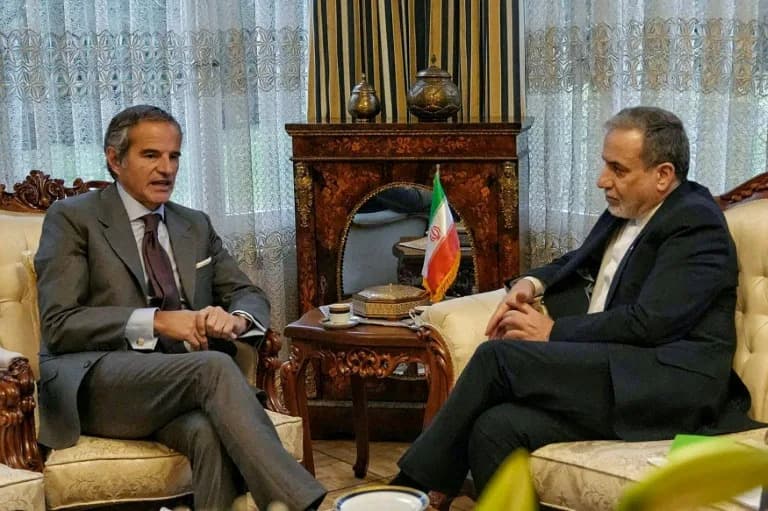
In this handout photo released by the Iranian Ministry of Foreign Affairs, Iran's Foreign Minister Abbas Araghchi holds a meeting with International Atomic Energy Agency head Rafael Grossi in Geneva (-)(-/Iranian Ministry of Foreign Affairs/AFP)
Iran said on Monday that the United States' approach to Tehran's nuclear programme "has moved towards a more realistic one," a comment made as senior Iranian diplomats arrived in Geneva for a second round of indirect, Oman-mediated talks with Washington.
Diplomatic Preparations
Tehran's foreign ministry spokesman, Esmaeil Baqaei, told state news agency IRNA that, based on discussions held in Muscat, Washington's position on the nuclear issue appeared to have shifted toward what Iran describes as a more pragmatic line. Iranian deputy foreign minister Abbas Araghchi travelled to Geneva for preparatory technical meetings and said he had held an "in-depth" discussion with International Atomic Energy Agency (IAEA) director Rafael Grossi ahead of the next round.
Military Drills and Regional Tensions
At the same time, the Islamic Revolutionary Guard Corps (IRGC) began military exercises in and around the Strait of Hormuz. State television said the drills were intended to prepare forces for "potential security and military threats" in the vital shipping lane through which roughly 20% of global oil passes. Iranian officials have repeatedly warned they could disrupt traffic through the strait if tensions escalate.
"What is not on the table: submission before threats," Abbas Araghchi wrote on the social platform X, underlining Tehran's insistence on negotiating from a position of sovereignty.
Topics On The Table
Washington has indicated it wants to broaden talks beyond Iran's nuclear activities to include concerns about ballistic missiles and Tehran's support for armed groups in the region. Washington has dispatched envoys to the region, including senior advisers such as Jared Kushner, according to US and Iranian statements.
Domestic Unrest And Pressure
The revival of talks comes against the backdrop of a deadly crackdown on anti-government protests in Iran. US President Donald Trump has repeatedly warned of military options and said a change of government in Tehran would be "the best thing that could happen," while ordering additional naval assets to the region — remarks that have heightened tensions and prompted demonstrations both inside Iran and among Iranian communities abroad.
Negotiation Prospects
Iran has signalled it may consider concessions on its enriched uranium stockpile if international sanctions that have severely damaged its economy are lifted. Majid Takht-Ravanchi, a senior Iranian diplomat, told the BBC that Tehran could be prepared to compromise on uranium limits if it sees sincerity from the United States. Israeli Prime Minister Benjamin Netanyahu has said any agreement should require the removal of all enriched uranium and restrict Iran's ability to resume enrichment.
Uncertainty Over Enriched Material
International inspectors last reported seeing roughly 400 kilograms of uranium enriched to 60% in June; Iran's current location of that material is not publicly known, a point of concern for Western governments and the IAEA.
As negotiators prepare to meet, officials on both sides stressed the talks would be complex. Observers say any breakthrough will require sustained diplomacy, clarity on verification measures and concessions that address both nuclear and regional security concerns.
Help us improve.





















