
Iran’s Foreign Minister Abbas Araghchi traveled to Geneva for a second round of indirect nuclear talks with the U.S., with Oman serving as mediator. The meetings follow a previous round in Oman and come amid elevated tensions after last year’s 12-day confrontation and strikes on Iranian nuclear sites. Washington insists on sharply limiting Iran’s uranium enrichment, while Tehran maintains its program is peaceful and resists demands to end enrichment entirely. The talks occur against a backdrop of U.S. military deployments and regional warnings about possible escalation.
Iran’s Foreign Minister Heads to Geneva for Second Round of Indirect Nuclear Talks With the U.S.
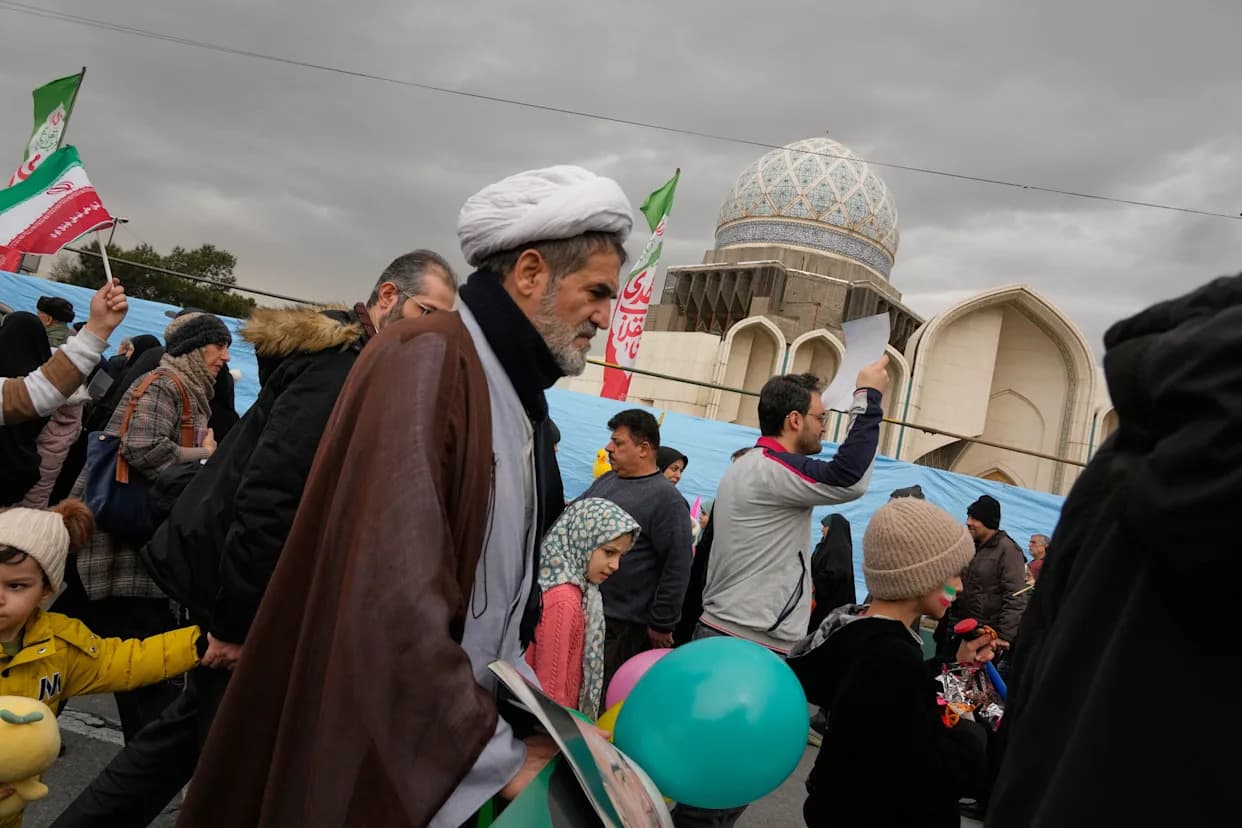
A cleric and other people attend an annual rally marking 1979 Islamic Revolution in Tehran, Iran, Wednesday, Feb. 11, 2026. (AP Photo/Vahid Salemi)(ASSOCIATED PRESS)
Iran’s foreign minister, Abbas Araghchi, departed Tehran for Geneva on Sunday to participate in a second round of indirect nuclear negotiations with U.S. representatives, Iranian state media reported. Oman, which hosted the first round last week, is again acting as mediator for the Geneva meetings.
According to IRNA, similar discussions last year collapsed after a 12-day confrontation that included strikes on Iranian nuclear sites. The trip comes amid heightened tensions across the region, with the United States repositioning military assets and Iranian officials warning of possible retaliation if attacked.
Diplomatic and Security Context
The Trump administration has repeatedly said it could use force to pressure Iran into accepting strict limits on its nuclear program; Iran has warned it would respond militarily to any strike. Gulf Arab states have cautioned that any military action could spark a broader regional conflict.
Washington has pushed for an agreement that would sharply curtail — or eliminate — Iran’s uranium enrichment capabilities. Tehran maintains its nuclear program is for peaceful purposes, but some officials have signaled openness to advancing capabilities that would shorten the technical path to a weapon. Before the June conflict, Iran had been enriching uranium to as high as 60% purity, a level close to weapons-grade material by technical measures.
Araghchi is expected to meet Swiss and Omani counterparts and hold talks with the director general of the International Atomic Energy Agency (IAEA) during the Geneva visit.
Statements and Regional Reactions
Sen. Marco Rubio said Washington remains interested in a diplomatic resolution with Tehran and that some of President Trump’s advisers, including Jared Kushner, were reported to be traveling in connection with the new round of talks. On Friday, President Trump announced that the USS Gerald R. Ford would be redeployed from the Caribbean to the Middle East to join other U.S. forces in the region. He also said a change in Iran’s leadership "would be the best thing that could happen."
Rubio described recent U.S. deployments as defensive measures meant to protect American facilities and interests. Reports say Iran threatened to strike U.S. bases if Washington launched an attack; media also reported an incident in June involving damage near Al Udeid Air Base in Qatar, though no U.S. or Qatari personnel were reported injured.
Israeli Prime Minister Benjamin Netanyahu has pressed for any deal to do more than limit enrichment: he seeks restrictions on Iran’s ballistic missile program and an end to financial and military support for proxy groups such as Hamas and Hezbollah. Netanyahu said any agreement must ensure that "all enriched material has to leave Iran." It remains unclear how much influence he will have over U.S. policy.
The Geneva talks will test whether diplomacy can bridge deep differences over Iran’s nuclear activities and broader regional behavior — even as military posturing and political pressure continue to shape the backdrop for negotiations.
Help us improve.





















