
European leaders are intensifying debate over whether to strengthen nuclear deterrence amid concerns about Russia and doubts over US commitments. A Munich Security Conference report lays out five difficult paths, warning there is no low-cost, risk-free solution. France and the UK are central to discussions, while NATO and US officials insist America's nuclear umbrella remains the main guarantee. Experts welcome the debate but stress steep costs, command-and-control issues, and proliferation risks.
Europe Reconsiders Nuclear Deterrence as Leaders Weigh Tough Choices
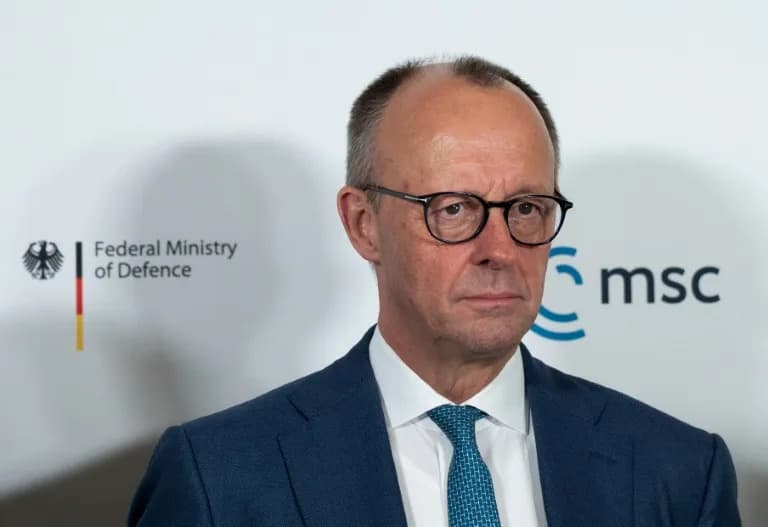
Merz said he was already holding 'confidential talks' with Macron about 'European nuclear deterrence' (Michael BIHLMAYER)(Michael BIHLMAYER/POOL/AFP)
European leaders are openly debating whether the continent should bolster its nuclear deterrent amid concerns about a nuclear-armed Russia and uncertainty over long-term US security guarantees. The discussion, driven in part by a Munich Security Conference report, has pushed a previously taboo topic into mainstream politics.
Background
While the United States and Russia each possess thousands of nuclear warheads, only France and the United Kingdom maintain nuclear arsenals located in Europe, with combined stockpiles in the low hundreds. Remarks by former US President Donald Trump about NATO and his transactional approach to foreign policy fueled anxiety among some European allies about the reliability of Washington's commitments.
What Experts and Leaders Are Saying
An expert group convened for the Munich Security Conference warned that "Europeans can no longer outsource their thinking about nuclear deterrence to the United States" and urged Europe to "urgently confront a new nuclear reality" in the face of what they called "Russia's nuclear-backed revisionism." At the conference, German Chancellor Friedrich Merz said he has held "confidential talks with the French president about European nuclear deterrence." British Prime Minister Keir Starmer said the UK's deterrent helps protect NATO partners and that he is "enhancing our nuclear cooperation with France." Starmer added that "any adversary must know that in a crisis they could be confronted by our combined strength."
"The era in which Europe could afford strategic complacency has ended," the Munich Security Conference report said, urging policymakers to confront the role of nuclear weapons directly and without delay.
NATO And US Position
NATO Secretary General Mark Rutte stressed that no one in NATO is proposing to replace the US nuclear umbrella, which remains "the ultimate guarantor" of European security. US officials, including Under Secretary of Defense Elbridge Colby, have reiterated that the US extended nuclear deterrent continues to apply to Europe while signalling a receptivity to greater European contributions — but they caution that any moves must be "sober" and deliberate because of proliferation and stability risks.
Five Options — And No Easy Answers
The MSC report outlined five broad options for Europe: continue to rely on the American deterrent; strengthen the role of British and French nuclear forces in a European framework; jointly develop a European nuclear capability; expand the number of European states with their own arsenals; or intensify and expand conventional forces to provide a more intimidating non-nuclear deterrent. The authors warned that none of these options are free of major costs, strategic risks or political complications, and that in the short term the status quo remains the most credible and feasible path.
Practical Challenges
Expanding nuclear roles in Europe would involve huge financial burdens, complicated command-and-control and legal questions (including who would have final launch authority), and serious proliferation risks. Even close partners face thorny decisions about sharing capabilities, decision rights and nuclear doctrine.
What Comes Next
Experts welcomed the shift from quiet planning to open political debate but urged concrete steps. Heloise Fayet of the French Institute of International Relations (Ifri) — a contributor to the MSC report — said the debate is "very positive, but now we need action." French President Emmanuel Macron, who has previously floated the idea of a broader French umbrella, is scheduled to deliver a major speech on French nuclear doctrine at the end of February, and may outline options such as special cooperation, joint exercises and shared security arrangements with key partners.
Bottom line: Europe is confronting hard choices about deterrence. While leaders explore closer UK–France cooperation and other approaches, NATO and US officials emphasize that Washington's deterrent remains central — and any European changes will carry major costs and risks.
Help us improve.





















