The ancient craft of katana-making is experiencing a modern revival as pop-culture hits like Touken Ranbu, Demon Slayer and Shogun draw younger, largely female audiences to museums and workshops. Museums such as Bizen Osafune report visitor spikes — about 80% female — when famous swords like the national treasure "Sanchomo" are shown. Yet the number of active swordsmiths in Japan has halved to roughly 160, and unpaid five-year apprenticeships and low returns deter new entrants. Craftspeople like Akihira Kawasaki hope reframing swordmaking as contemporary art — "artists of steel" — will boost recognition and income for living makers.
Artists of Steel: How Pop Culture Is Reviving Japan's Katana Craft
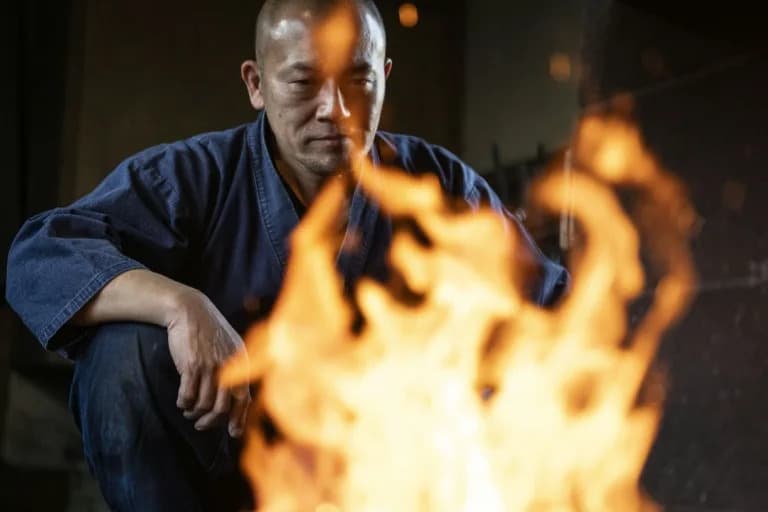
Blade maker Akihira Kawasaki in his workshop in Misato, Saitama prefecture (Yuichi YAMAZAKI)(Yuichi YAMAZAKI/AFP/AFP)
Sparks fly across the soot-darkened workshop as master swordsmith Akihira Kawasaki watches his apprentice drive a heavy hammer into glowing steel — a vivid display of a craft that stretches back a thousand years and is now enjoying renewed public attention.
A New Generation Of Fans
Even as Japan's community of blademakers ages and contracts, the katana — the lightweight, razor-sharp curved sword forged from folded steel — is drawing fresh audiences, particularly younger women energized by modern pop culture. Media such as the 2015 game Touken Ranbu, anime like Demon Slayer, and international dramas such as the U.S. series Shogun have turned historic swords into contemporary icons.
From Fandom To Scholarship And Museums
"It's really encouraging to see more young people who genuinely love swords and engage with them so deeply," Kawasaki, 57, told AFP. Some fans move beyond cosplay and collecting to study real blades and swordmaking techniques. Minori Takumi, 25, began comparing museum swords with their game counterparts and became fascinated by the hamon — the milky, cloud-like temper line along a katana's edge. Her interest led her to become a full-time curator at the Bizen Osafune Sword Museum in Setouchi, which reports visitor spikes — roughly 80 percent female — when famed swords like the nationally designated treasure "Sanchomo" are displayed.
Pop culture has also inspired a global DIY movement: craftsmen and hobbyists post videos recreating dramatic on-screen katanas, often drawing millions of views.
The Daily Grind Behind The Beauty
Despite growing public enthusiasm, the number of active swordsmiths in Japan has fallen by about half over roughly four decades to around 160, and many are now in their 70s or 80s, according to the All Japan Swordsmith Association. Tetsuya Tsubouchi, 66, who leads the association's business unit, says mandatory unpaid apprenticeships of at least five years deter many young people. The work is physically demanding — long hours hammering and tending a forge — and economic returns are often limited because collectors and parts of the industry tend to value ancient blades over newly forged work.
Still, exceptions exist. Kawasaki's swords sell for tens of thousands of dollars, attracting both pop-culture devotees seeking faithful replicas and martial artists, such as iaijutsu practitioners, who prize functional blades. The city of Setouchi purchased Sanchomo in 2020 for more than $3 million via crowd-funding, a sign of strong public interest in specific historic pieces.
The Future: Artists Of Steel
Kawasaki argues that to secure recognition and fair value, contemporary swordmakers must embrace creativity and present their craft as a form of modern art. "Unless we declare ourselves artists of steel, I doubt swordsmiths will ever be properly recognised," he says. Many peers, he warns, still produce technically excellent but conservative work — and that mindset, he believes, holds the craft back.
Pop culture has opened the door. The challenge now is to translate interest into sustainable careers and renewed respect for living artisanship.
Reporting credits: tmo/aph/fox/abs — Interviewees include Akihira Kawasaki, Minori Takumi and Tetsuya Tsubouchi; museum: Bizen Osafune Sword Museum, Setouchi.
Help us improve.