Malaysia's High Court on Tuesday acquitted 34-year-old Tom Felix of eight drug-related charges, finding prosecutors had not proven he had "control, custody or possession" of the drugs. Felix, who has denied the allegations, was released after nearly two and a half years in detention and is expected to return to France soon. His family, lawyer and French President Emmanuel Macron publicly expressed relief at the verdict.
Malaysian High Court Acquits Frenchman Tom Felix After Nearly 2½ Years in Custody

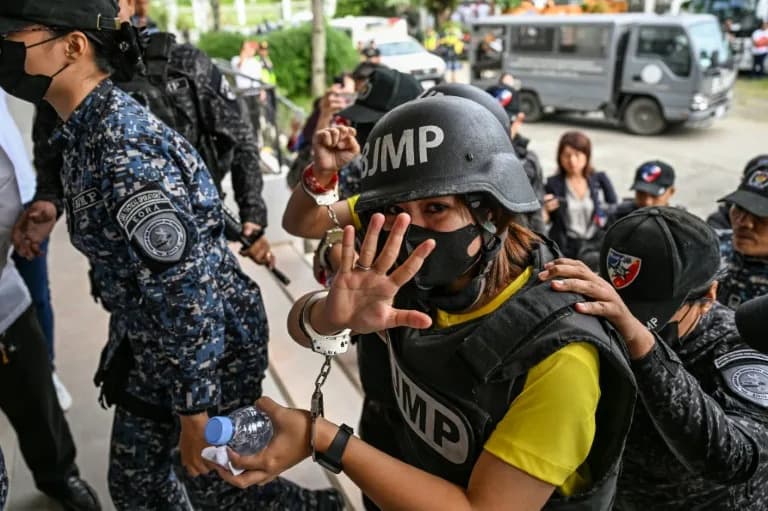
French national Tom Felix walks with Malaysian immigration officers after he was acquitted on eight drug-related charges in Malaysia (Hakim Mustapha)(Hakim Mustapha/AFP/AFP)
A Malaysian High Court on Tuesday acquitted French national Tom Felix, releasing him after nearly two and a half years in detention. The judge concluded prosecutors had not proven Felix had "control, custody or possession" of the drugs at the centre of the case.
Court Ruling
"The accused is, therefore, released and acquitted," Judge Evawani Farisyta Mohammad said in delivering the verdict.
Felix, 34, a former Veolia executive, appeared in court wearing a white shirt and trousers with his hands cuffed and visibly brightened when the judge read the decision. Shortly after the ruling he told AFP, "I'm happy to be out."
Police detained Felix and a Malaysian business partner in 2023 after officers found 1.86 kilograms of cannabis in the common area of the home they shared. Authorities later said Felix was found with 11.7 grams of the drug; he has consistently denied the allegations.
Family, Lawyer and Official Reactions
His parents, Jean Luc and Sylvie Felix, embraced following the verdict. "We are very happy, relieved. It's finally the end of a nightmare," Sylvie Felix told AFP. Felix's lawyer, Francois Zimeray, described the acquittal as "the end of a very long nightmare" and praised the family's resilience.
French President Emmanuel Macron posted on X that he felt "immense relief" and expressed his thoughts for Felix's parents, whom he had met. Felix remained under Malaysian immigration custody on Tuesday but is expected to be released and fly back to France in the coming days.
Legal Context
Had he been convicted, Felix faced extremely severe penalties under Malaysian law — potentially the death penalty, or a cumulative sentence of up to 104 years in prison, 54 strokes of the cane and a substantial fine. Malaysia retains capital punishment for certain large-scale drug offences, though death sentences are no longer mandatory and no executions have been carried out since 2018.
This ruling highlights the high burden of proof required in possession and trafficking cases and will likely be closely watched by international observers and human-rights advocates.
Help us improve.