Deputy Attorney General Todd Blanche said a 5-year-old boy, Liam Conejo Ramos, and his father did not file for asylum, contradicting lawyers who say an active asylum application is pending. A federal judge ordered the family released from a Dilley, Texas, detention center; they were freed Saturday. The case has sparked political backlash after the child was detained when his father picked him up from school on Jan. 20, and it highlights broader debates over detention for unauthorized entry and how asylum filings are processed.
Deputy AG Says 5-Year-Old and Father Did Not File Asylum; Judge Orders Family Released From ICE Detention

Deputy AG denies 5-year-old, father has asylum claim after family released from ICE detention
Deputy Attorney General Todd Blanche said Sunday that a 5-year-old boy and his father who were detained by U.S. Immigration and Customs Enforcement (ICE) in Minneapolis last month did not file for asylum, even as officials confirmed the family was released over the weekend.
Blanche addressed conflicting accounts about the legal status of the child, publicly identified as 5-year-old Liam Conejo Ramos, and his father, Adrian Alexander Conejo Arias, who reporters say entered the United States in 2024. The deputy attorney general and the Department of Homeland Security (DHS) have disputed the family’s and their lawyers’ descriptions of how the family's entry and any asylum processing were handled.
Lawyers for the Ecuadorian family say an active asylum application is being processed, which they contend permits the two to remain in the country while a court considers their case. Blanche rejected that characterization, reiterating the department’s position that no pending asylum filing exists for the pair.

U.S. Deputy Attorney General Todd Blanche arrives for a press conference on August 11, 2025, in Washington, D.C.(Getty Images)
“That is not true. There’s a very meaningful dispute about whether they had properly applied for asylum,” Blanche said during an appearance on ABC’s This Week. “I cannot get into the … specifics of this litigation, but you can read the same briefs I can. And what you just said is not true.”
Blanche also defended the administration’s view that unauthorized entry into the United States can constitute a crime and may justify detention. He said the government distinguishes between immigrants with separate criminal histories and those detained primarily for lacking lawful status, and noted ongoing appellate litigation over whether people who entered without authorization can be held pending removal proceedings or must be released on bond.
The deputy attorney general’s remarks followed several days of public criticism after the child was detained when his father picked him up from school on Jan. 20. A federal judge ordered the family released earlier Saturday, and officials said they were freed from a detention center in Dilley, Texas, later that day.
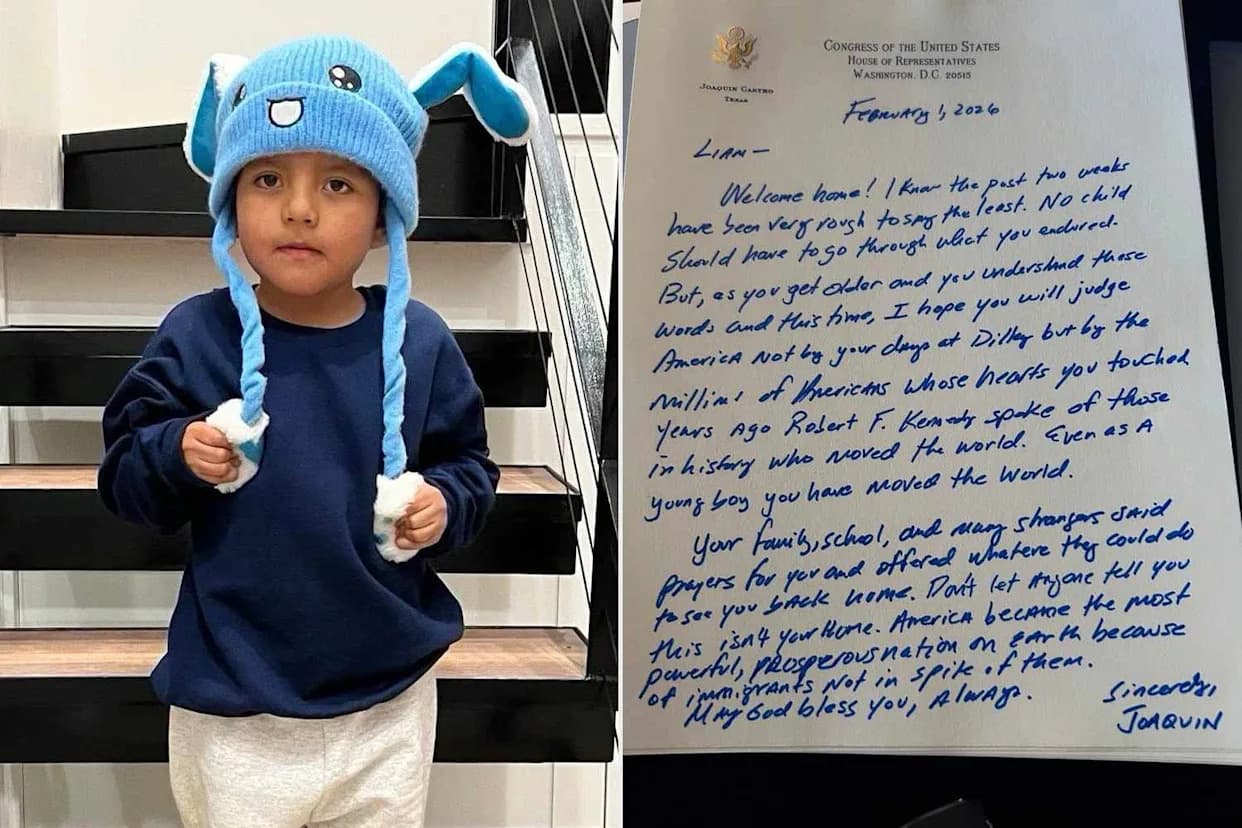
Representative Joaquin Castro (D-Texas) said he met the family and drove them back to Minnesota the following morning. In a letter shared publicly, Castro wrote to the boy: “Don’t let anyone tell you this isn’t your home. America became the most powerful, prosperous nation on earth because of immigrants not in spite of them.” Representative Ilhan Omar (D-Minn.) posted a photo with the family and Castro, writing, “Liam is home now and we are grateful to Joaquin Castro for traveling to Minneapolis with him and his dad. Welcome home Liam.”
The case underscores broader tensions in U.S. immigration policy: how officials determine whether asylum claims were properly submitted, how DHS defines unlawful presence, and when detention is appropriate for those without lawful status. Legal teams for the family maintain that their asylum claim is active and being processed; DHS and the deputy attorney general maintain it is not.
Help us improve.