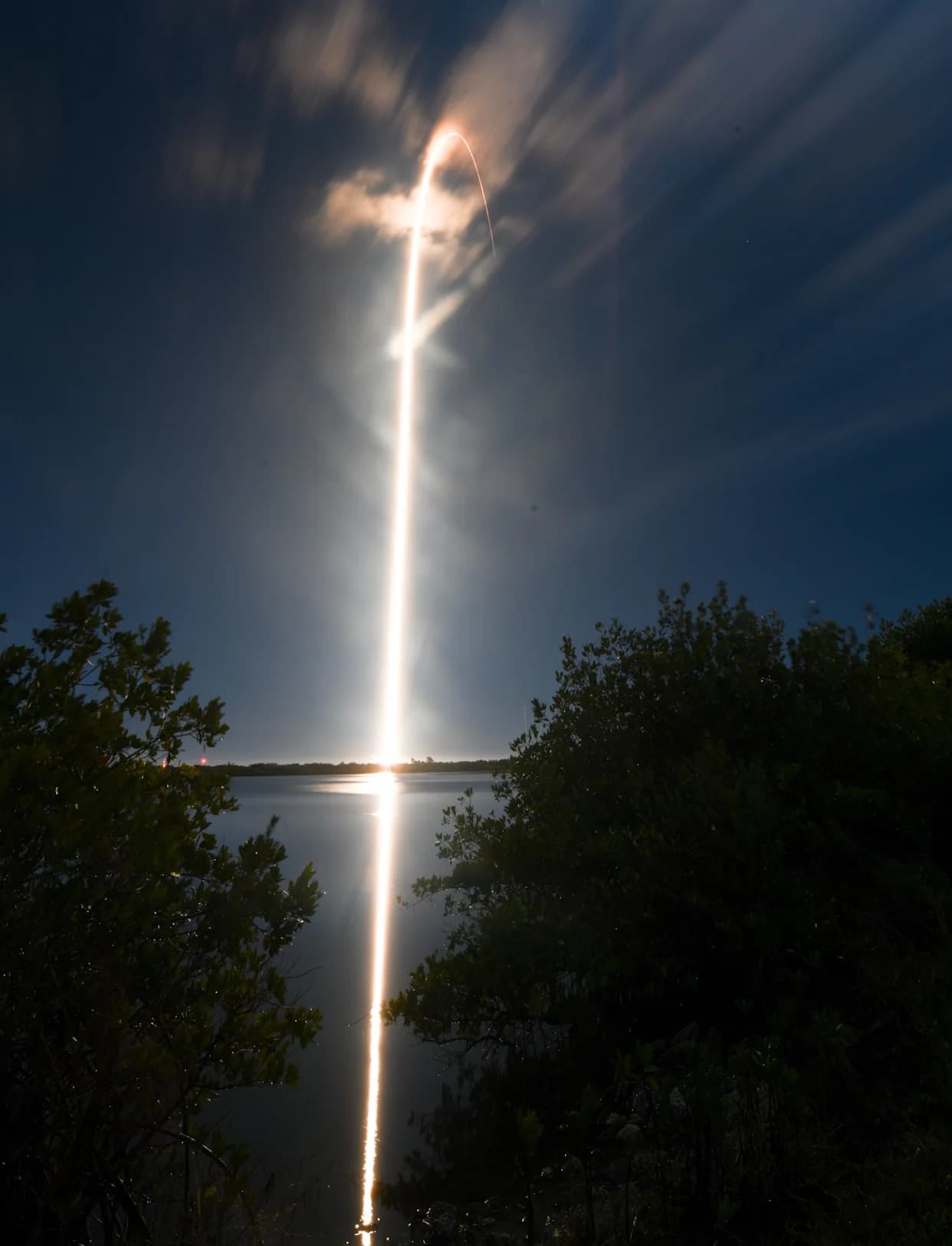
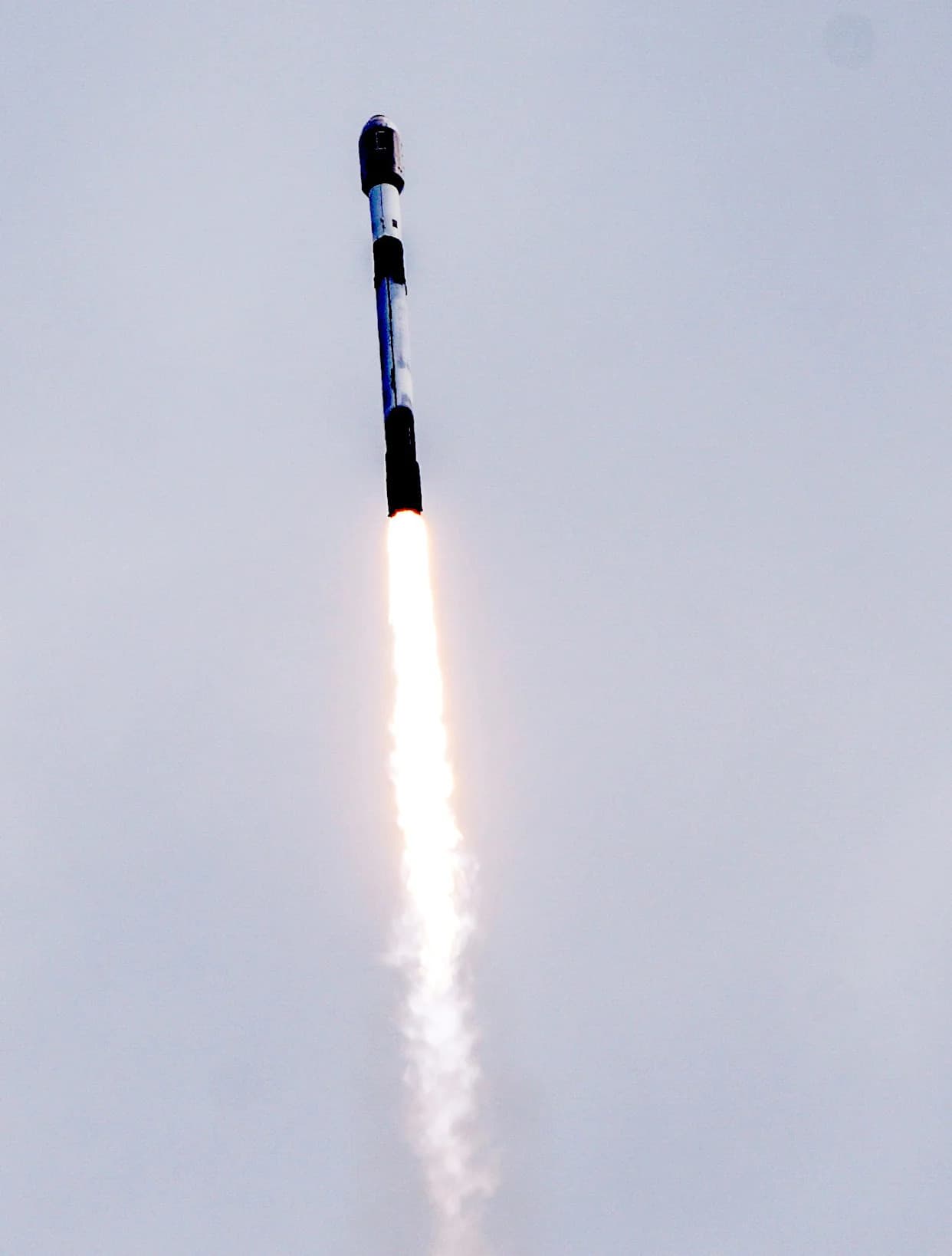
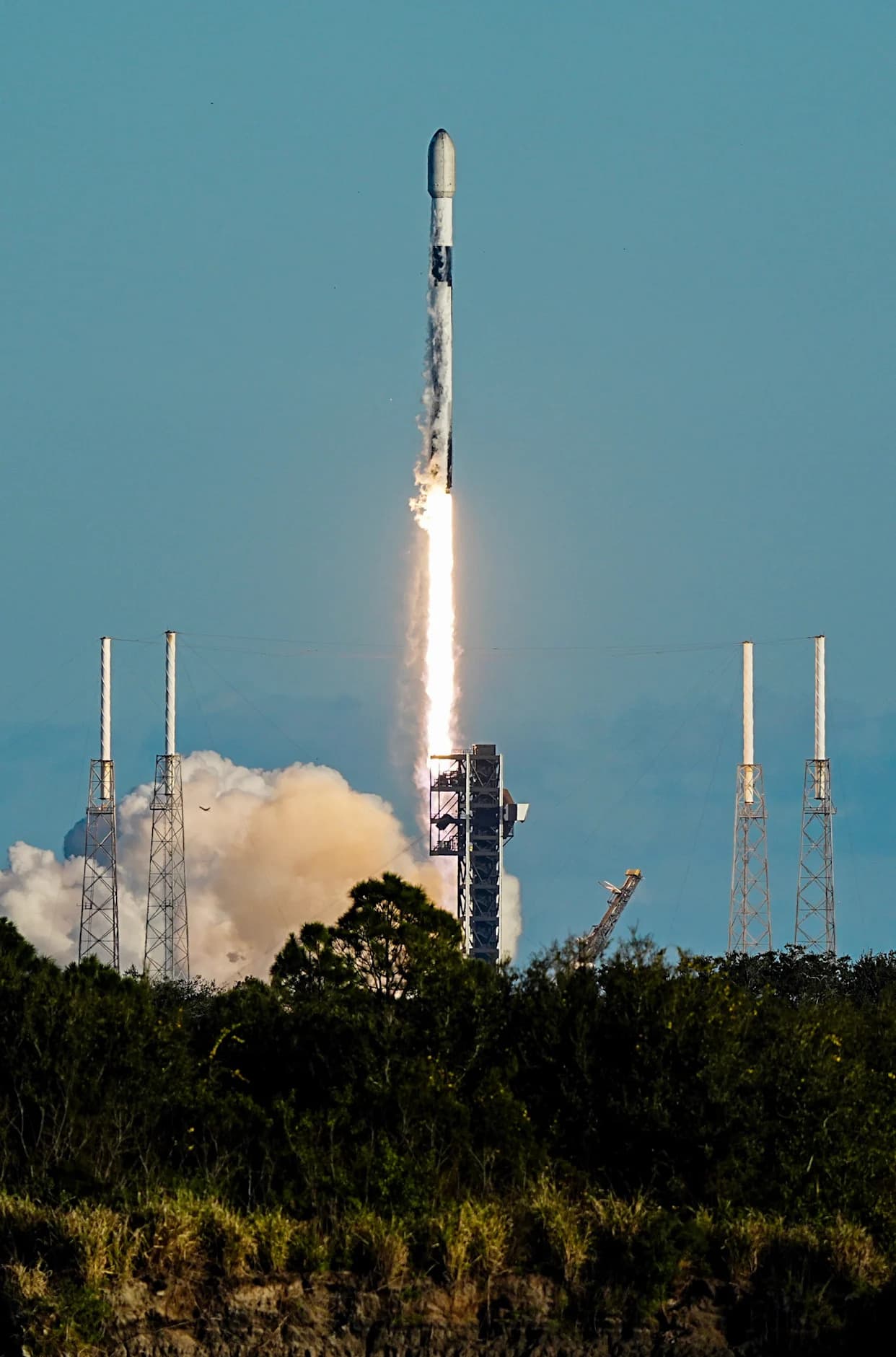
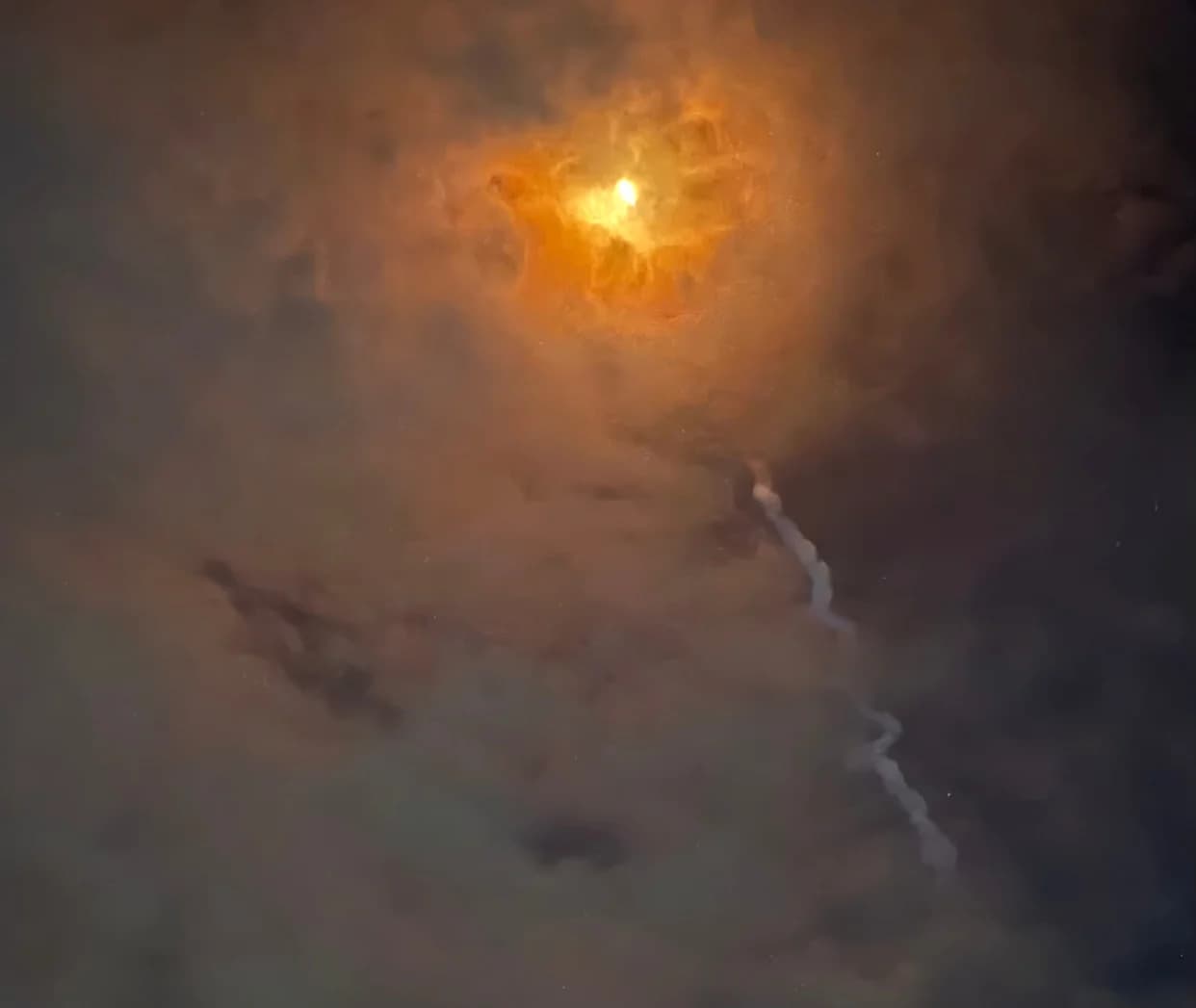
SpaceX launched a Falcon 9 from Cape Canaveral at 6:31 p.m. on Sunday, Jan. 18, a few hours after a strong cold front moved through the area. The National Weather Service recorded a 61 mph gust at a measuring station on pad 39B — the fastest in Brevard County that day. Photographers captured dramatic post‑sunset images as the rocket climbed into the darkening sky, and the flight highlights ongoing 2026 launch activity from the Cape.
Photos: SpaceX’s Falcon 9 Rockets Into Post‑Sunset Sky After Strong Cold Front Hits Cape Canaveral
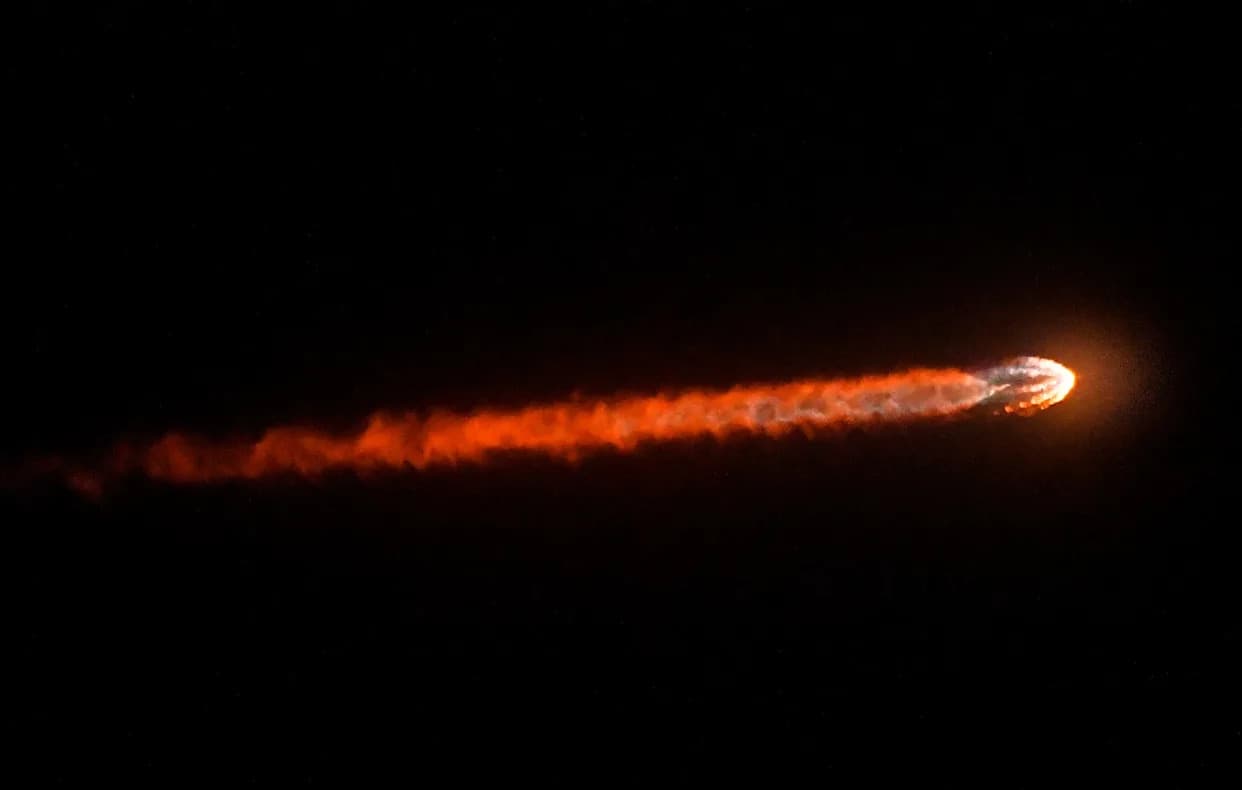
SpaceX teams launched a Falcon 9 rocket from Cape Canaveral at 6:31 p.m. on Sunday, Jan. 18, sending the booster and its payload into the dimming Florida sky just hours after a strong cold front swept the area.
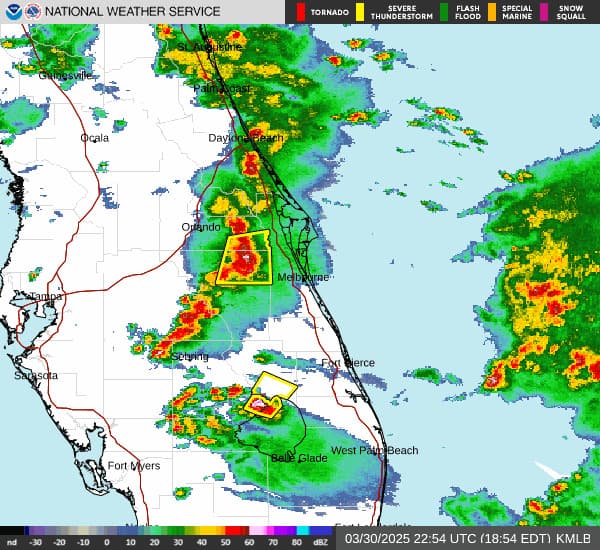
The liftoff proceeded despite blustery conditions earlier in the day at Cape Canaveral Space Force Station and NASA's Kennedy Space Center. The National Weather Service reported a peak wind gust of 61 mph at a measuring station mounted to a tower on pad 39B — the fastest gust recorded in Brevard County that afternoon.
Photographers along the coast captured striking images of the Falcon 9 as it climbed into post‑sunset darkness, the rocket's bright plume contrasting against the deepening sky. Those visuals highlight both the raw power of launch and the dramatic optics that evening flights often produce.
What This Means
This launch is one of several planned from Cape Canaveral in 2026, underscoring the spaceport's continued cadence of missions. Officials, teams and enthusiasts will be watching local forecasts closely as upcoming windows approach, since high winds and weather fronts can affect scheduling and safety decisions.
Reporter: Rick Neale, Florida Today. For more coverage of launches from Cape Canaveral and Kennedy Space Center, visit floridatoday.com/space or sign up for the weekly 321 Launch newsletter.
Help us improve.