
The Justice Department has begun seeking documents from federal contractors, including Google and Verizon, as part of a renewed effort to scrutinize corporate diversity, equity and inclusion (DEI) programs. Deputy Attorney General Todd Blanche’s May memo launched a "Civil Rights Fraud Initiative" and directs the Civil Rights and Civil Division Fraud teams to pursue matters—asking for participation from 93 U.S. Attorney offices. The DOJ is considering a novel application of the 1863 False Claims Act to DEI, a theory that has not been tested in court and could have a chilling effect on corporate diversity efforts even if it ultimately fails.
DOJ Intensifies Scrutiny Of Corporate DEI Programs Using the False Claims Act

One of President Donald Trump’s first executive orders in January explicitly targeted diversity, equity and inclusion (DEI) efforts in schools and workplaces. The Justice Department, operating with a limited corps of government lawyers, has been directed to follow up on that policy shift. According to The Wall Street Journal, the DOJ has begun requesting documents and information from companies that hold federal contracts as part of an expanded review of DEI programs.
Who Is Being Investigated
Alphabet’s Google and Verizon Communications are among the companies that reportedly received DOJ requests about their workplace programs, sources told the Journal. Other targets span industries from automotive and pharmaceuticals to defense and utilities. Neither the named companies nor the Justice Department commented to the Journal, and MS NOW has not independently verified the reporting.
What The DOJ Is Proposing
Deputy Attorney General Todd Blanche’s May memo launched a new “Civil Rights Fraud Initiative,” and directs the Civil Rights Division and the Civil Division’s Fraud Section to work together on these matters. The memo also asks for an assistant U.S. attorney from each of the country’s 93 U.S. Attorney’s offices to participate in the effort.
Blanche’s memo says the administration’s executive order — “Ending Illegal Discrimination and Restoring Merit-Based Opportunity” — bars contractors from taking federal money “while knowingly engaging in racist preferences, mandates, policies, programs, and activities,” and warns that violators could be pursued under the False Claims Act.
Using An Old Law In A New Way
The department is reportedly exploring an unusual application of the False Claims Act (FCA), a statute enacted in 1863 to combat Civil War–era fraud against the federal government. In modern practice the FCA is commonly used in healthcare and other sectors to pursue companies that allegedly overbilled or defrauded government programs. The memo and subsequent document requests suggest the DOJ may attempt to treat certain DEI programs as incompatible with federal-contract requirements and therefore subject to FCA liability.
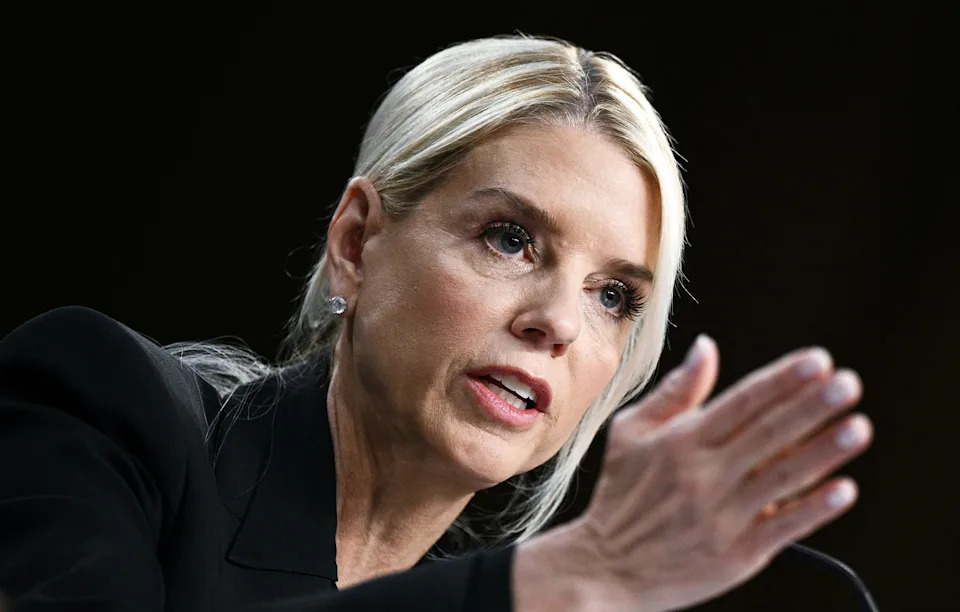
Pam Bondi on Oct. 7, 2025 on Capitol Hill in Washington, D.C.(Brendan Smialowski / AFP via Getty Images)
In past high-profile FCA matters, defendants have faced large penalties: a health-care company once run by Rick Scott paid more than $1.7 billion in 2003 to resolve government claims, and whistleblowers in that and other cases have shared sizeable awards—relators who bring successful FCA claims can receive between 15% and 25% of recoveries.
Concerns And Potential Consequences
Critics say this initiative risks politicizing the Justice Department and diverting scarce resources from other priorities. Civil liberties advocates and business leaders warn that even if the theory has not yet been tested in court, the investigations themselves could chill corporate DEI efforts—especially among smaller contractors that lack the resources to defend protracted probes.
Supporters of the memo argue it enforces a strict interpretation of federal contracting rules and ensures companies do not use government funds to implement discriminatory practices. But the approach remains untested: applying the FCA to DEI programs would be novel and could face significant legal challenges.
What To Watch Next
- Whether the DOJ files FCA cases tied to DEI policies or limits its efforts to information-gathering and civil inquiries.
- How courts respond if an FCA claim tied to DEI is brought—the legal precedents are sparse.
- Whether companies adjust or scale back DEI initiatives preemptively, especially smaller contractors sensitive to litigation risk.
The Wall Street Journal reports these developments reflect a proactive, politically driven enforcement posture by department officials. Whether that posture produces sustained litigation or leads companies to change behavior remains to be seen.


