Freestanding birth centers — independent facilities typically staffed by midwives for low-risk pregnancies — are closing amid low reimbursements, rising malpractice costs and restrictive state rules. Recent closures of both birth centers and hospital labor-and-delivery units are widening maternity care deserts, particularly in rural and minority communities. Advocates say payment parity, standby capacity funding and streamlined regulation could help preserve and expand these community-based options.
Freestanding Birth Centers Are Closing, Widening Maternity Care Gaps Nationwide
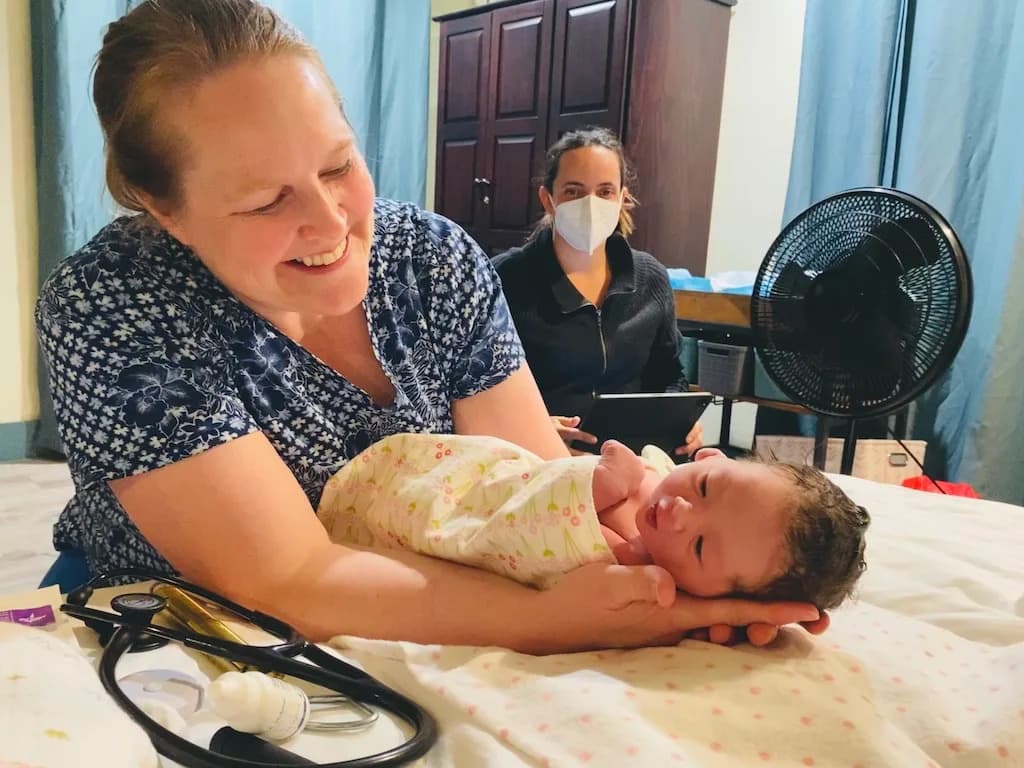
Sarah Simmons, a midwife and co-owner of Maple Street Birth Center in rural Omak, Wash., is pictured holding a newborn.
Sarah Simmons, a midwife and co-owner of Maple Street Birth Center in rural Okanogan County, Washington, holds a newborn as freestanding birth centers — which can reduce maternal health inequities — confront mounting financial and regulatory pressures. (Photo courtesy of Sarah Simmons)
Freestanding birth centers — independent facilities typically staffed by midwives and designed for low-risk pregnancies — are struggling to survive as hospital labor-and-delivery units close across the country. Owners and advocates say shrinking reimbursements, rising malpractice costs and restrictive state rules are forcing some centers to shutter even as demand grows in maternity care deserts and among communities of color.
Why Birth Centers Matter
Birth centers offer a homelike, less medicalized setting and often provide culturally responsive care for Black, Indigenous and rural communities that have been underserved by traditional hospital systems. Advocates say these centers can expand access to prenatal care, improve patient experience and help reduce stark racial disparities in maternal outcomes — Black women in the U.S. face maternal death rates roughly three times those of white women.
Regulatory and Political Barriers
Centers face complex and sometimes outdated state regulations. In several states, a certificate-of-need process lets competing hospitals challenge new facilities, effectively blocking openings. Hospitals, particularly in small communities, sometimes resist birth centers out of concern they will siphon low-volume births and threaten hospital obstetric units.
The fight has played out in multiple states. In Alabama, Dr. Heather Skanes opened the state’s first freestanding birth center in Birmingham in 2022 but was ordered to close months later after the health department said the facility was operating as an 'unlicensed hospital.' Skanes and two other clinicians sued; an Alabama court later barred the state from regulating freestanding birth centers as hospitals and the centers reopened while the state appealed.
In Georgia, changes to certificate-of-need rules in 2024 removed one barrier, but prospective operators still must secure written transfer agreements from local hospitals — an obstacle that has prevented some centers from opening. In Kentucky, a bill meant to ease certificate-of-need requirements for birth centers became law after a contentious amendment and a gubernatorial veto override.
Financial Pressures
Freestanding birth centers also face serious financial challenges. While uncomplicated births cost less at birth centers than in hospitals, insurers — including Medicaid in many states — often reimburse birth centers at lower rates and may not cover nonclinical services such as doulas and lactation support. Malpractice insurance premiums have risen, squeezing already tight margins.
“We’re volunteering our time, essentially, to keep the birth center open as a service to the community,” said Sarah Simmons of Maple Street Birth Center in Okanogan County, Washington. Her center typically receives less than a third of what the local hospital earns for the same obstetric services.
Policy proposals aimed at stabilizing maternal care include regular 'standby capacity' payments to facilities that maintain maternity services in a region, plus a separate delivery fee per birth. The Center for Healthcare Quality and Payment Reform has recommended such payments for both hospitals and birth centers, and Democratic U.S. senators proposed related legislation in 2024. State grants can help but are not a long-term solution.
Closures and Local Impact
Nationally, the number of freestanding birth centers doubled between 2012 and 2022, but the sector has seen losses recently: roughly two dozen centers closed after 2023, bringing the total to about 395, according to the American Association of Birth Centers. Hospital labor-and-delivery units are also closing — more than two dozen in 2025 alone — leaving some communities without nearby obstetric care.
Longstanding centers have been affected. Pennsylvania’s Lifecycle Wellness and Birth Center stopped offering birth services in November after 47 years, citing regulatory pressure and rising malpractice premiums. New Mexico’s longest-operating freestanding centers paused deliveries in December. In California, the loss of at least 19 centers between 2020 and 2024 prompted the legislature to streamline licensure rules in 2024.
Community and Cultural Benefits
For many Black, Indigenous and rural families, birth centers provide more than convenience; they offer culturally safe care and stronger community ties. Faith Zacherle-Tonasket, founder of xa?xa? Indigenous Birth Justice, said tribal-run centers and locally trained doulas and midwives can rebuild trust and encourage prenatal care where patients previously avoided clinical settings.
“Bringing traditional midwives that are from our own communities ... we know that those babies will be birthed with love,” Zacherle-Tonasket said.
What Might Help
Advocates point to several policy solutions to sustain and expand birth centers: enforce pay parity for comparable services, adopt standby capacity payments to preserve local maternity infrastructure, simplify licensing while protecting safety, and fund ongoing operational support rather than one-time grants. Without these changes, experts warn, more communities will lose access to in-between options between hospitals and unassisted home births.
Stateline reporters Anna Claire Vollers ([email protected]) and Nada Hassanein ([email protected]) contributed reporting.
Help us improve.