California has enacted a law that largely bans law enforcement officers from covering their faces and strips masked officers of qualified immunity, creating a minimum civil penalty of $10,000 for offenses committed while masked. The Justice Department sued to block the measure, citing an 1890 Supreme Court precedent limiting state actions against federal officers. Legal scholars note later federal cases, including a 2001 9th Circuit decision tied to Ruby Ridge litigation, could allow some state-level claims in narrow circumstances. Police unions and many agencies oppose the law, and a similar Los Angeles County ban is set to take effect in mid-January unless a court intervenes.
California Bans Most Officers From Wearing Masks and Strips Qualified Immunity — Federal Lawsuit Looms
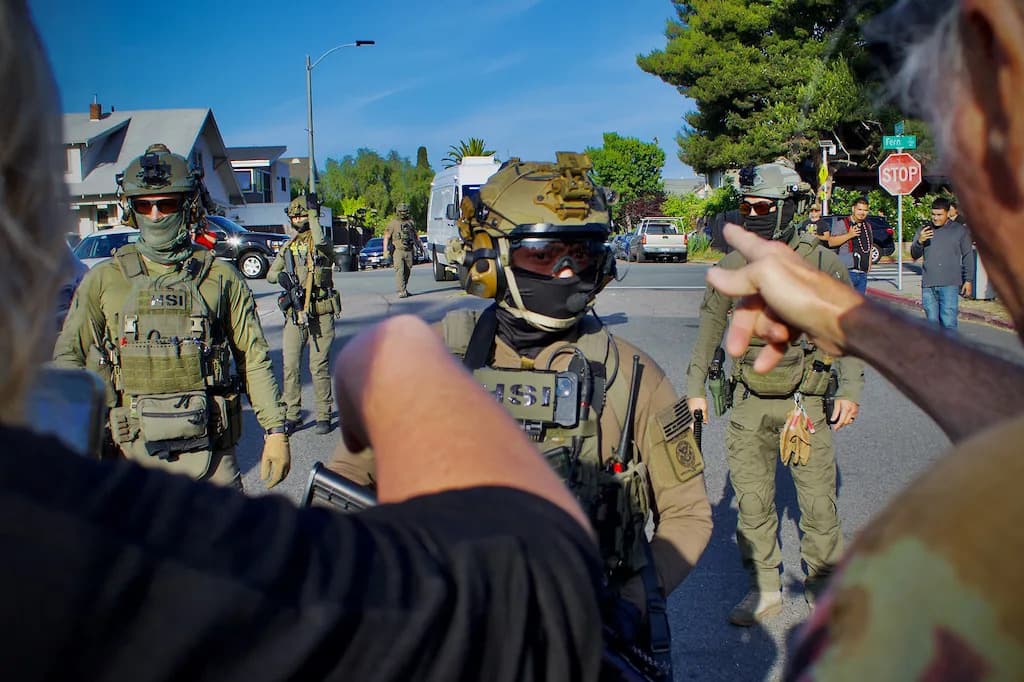
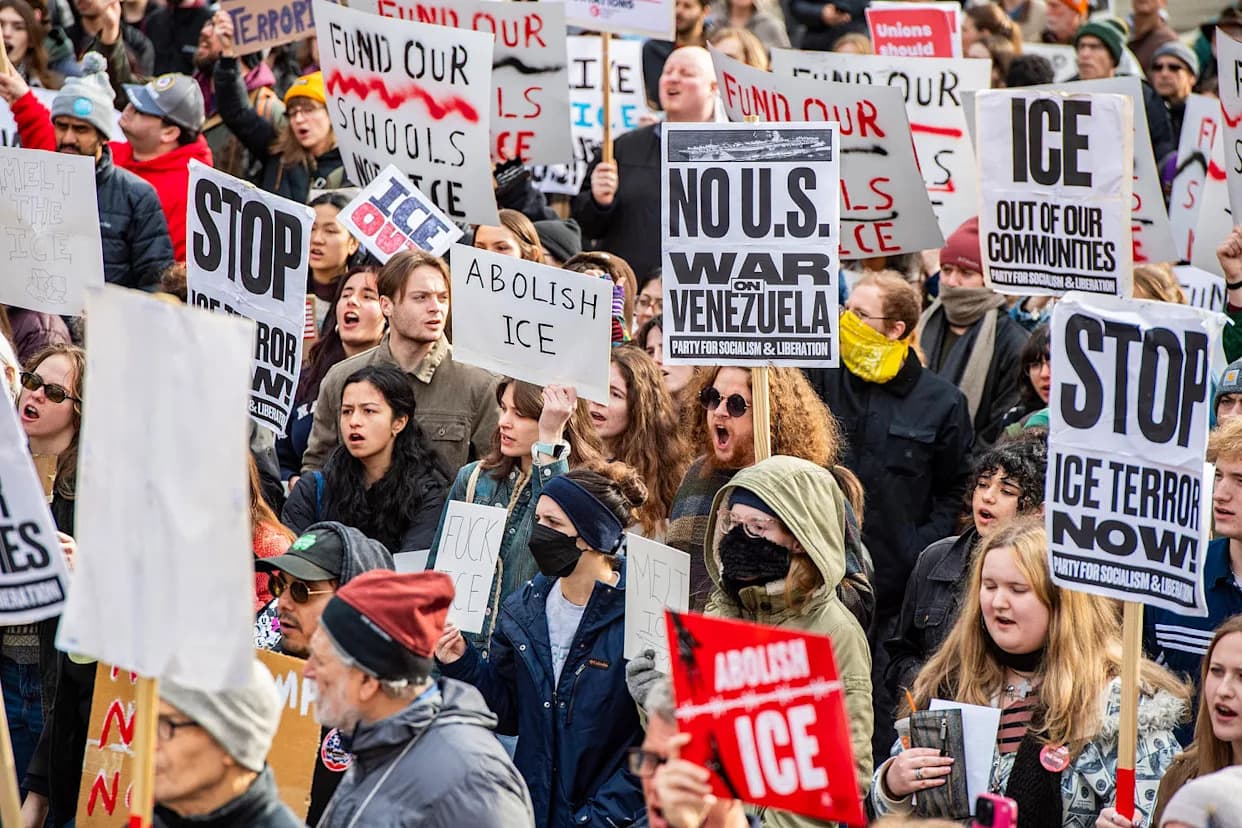
People confront immigration enforcements agents in San Diego.
Photo: Neighbors confront Immigration and Customs Enforcement officers after a May 30, 2025 immigration raid at Buono Forchetta in San Diego. (Photo courtesy of Pedro Rios)
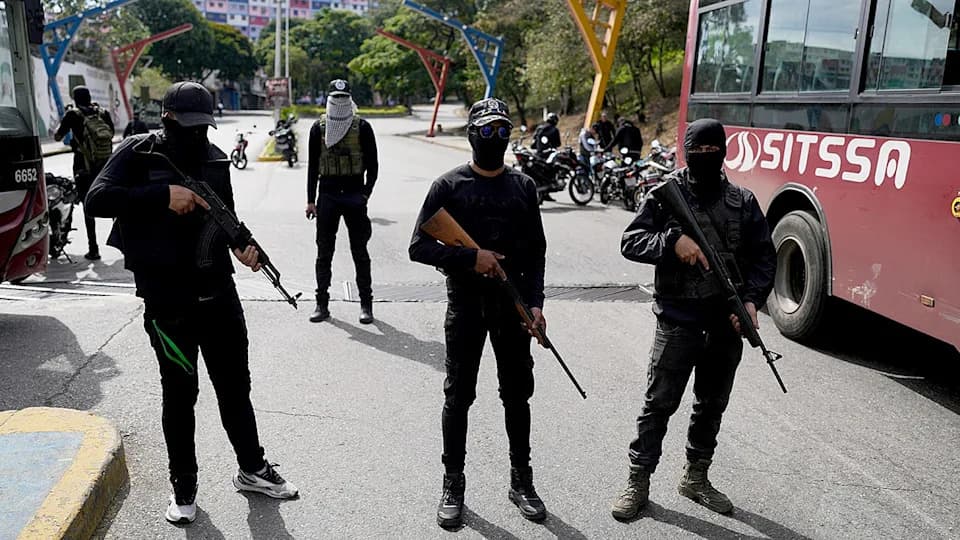
California this month enacted a law that largely prohibits law enforcement officers from covering their faces while on duty and removes a key legal protection — qualified immunity — from any officer who chooses to remain masked. The measure, challenged by the federal government, sets up a major legal clash over state power, public safety and federal immunity doctrines.
What the Law Does
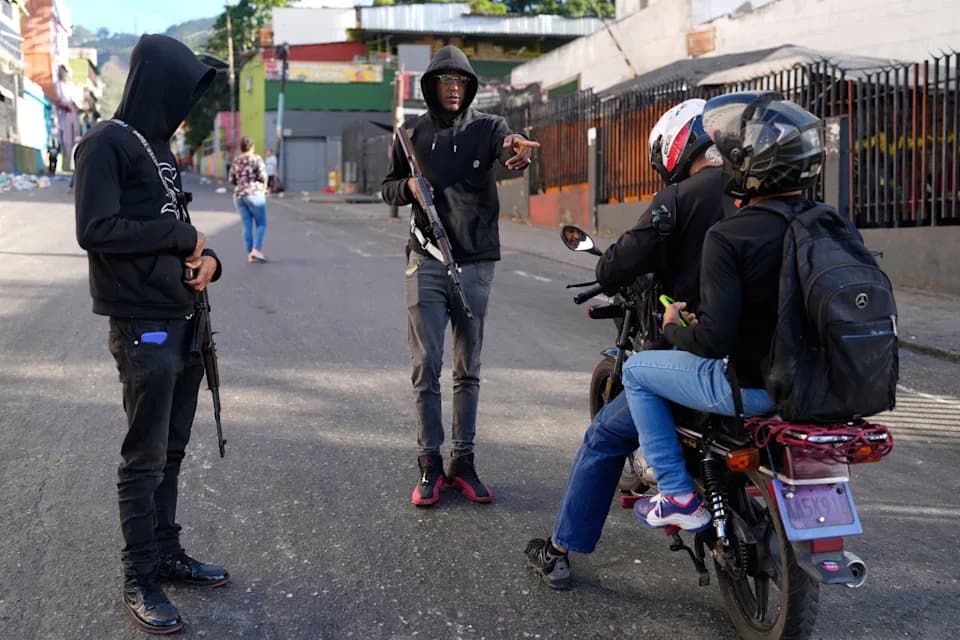
The statute bars most state and local officers from concealing their faces while performing law enforcement duties. Officers who do cover their faces for nonexempt reasons lose the ability to assert qualified immunity, the doctrine that can shield individual officers from civil liability. Without that protection, masked officers could face civil claims such as assault, battery, false imprisonment, false arrest or malicious prosecution. The law also establishes a minimum civil penalty of $10,000 for those found to have committed such offenses while wearing a face covering.
Exemptions
The law includes limited exemptions: medical-grade masks (such as N95s) required to prevent infection transmission and bona fide undercover operatives are permitted to cover their faces. Local jurisdictions may also adopt similar rules; Los Angeles County supervisors have approved a parallel ban for unincorporated areas set to take effect in mid-January unless a court intervenes.
Why Lawmakers Say It Was Needed
Assemblymember Mark Gonzalez (D-Los Angeles), a co-author of the bill, said the measure was meant to curb what lawmakers describe as anonymous federal enforcement tactics that have unsettled immigrant communities across the state.
“We initially were under the understanding that, oh, they’re only targeting folks who were not citizens. And then actually over time you learn they don’t give a crap who you are, they’re attacking you no matter what, with no due process,” Gonzalez said.
Federal Response and Legal Debate
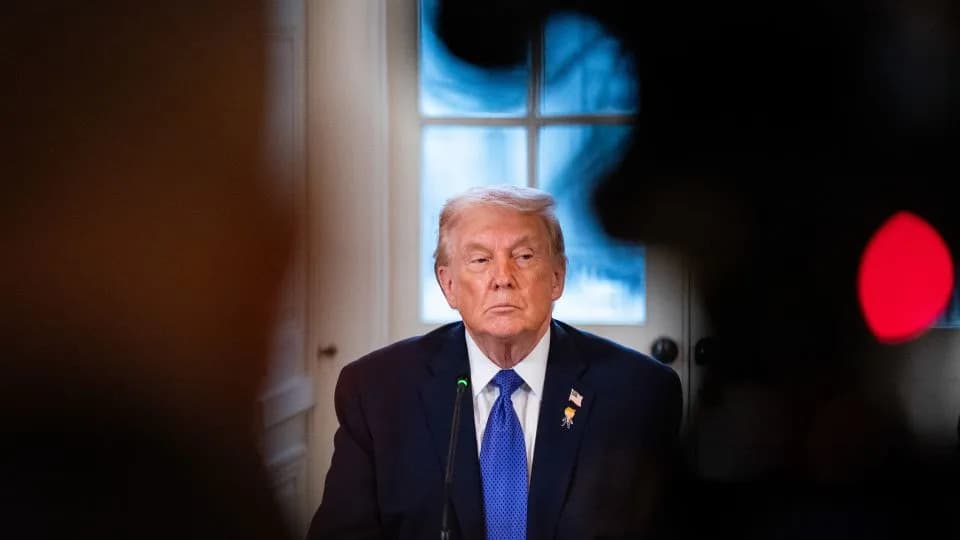
The Trump administration moved quickly to block the law and has filed a suit in the U.S. District Court for the Central District of California. The Justice Department argues that more than a century of federal-court precedent limits states from prosecuting or otherwise interfering with federal officers performing their duties, citing an 1890 Supreme Court decision that courts have interpreted to protect federal agents from state prosecution while carrying out federal responsibilities.
In a Nov. 17 brief, Justice Department lawyers warned that forcing federal officers to disclose identities would endanger them and their families. The brief noted that during Immigration and Customs Enforcement operations, agents have been threatened with doxxing, and that public websites sometimes publish personal information about federal officers to harass them and their families.
Scholarly Views and Complicating Precedent
Legal scholars caution that the constitutional questions are not wholly settled. Erwin Chemerinsky, dean of UC Berkeley School of Law, pointed to later federal appellate rulings that have allowed some claims against federal officers to proceed in state courts under narrow circumstances. He cited a 2001 9th U.S. Circuit Court of Appeals decision connected to litigation arising from the 1992 Ruby Ridge standoff as evidence that federal officers can sometimes be held accountable under state criminal or civil law when their actions are unreasonable.
“It basically says that a federal officer can be criminally prosecuted for unreasonable actions,” Chemerinsky said. “Federal officers, by virtue of being federal officers, do not get immunity from all state civil and criminal laws.”
Law Enforcement Concerns
State and local law enforcement organizations expressed strong objections to the statute. Brian Marvel, president of the Peace Officers Research Association of California, warned the measure could complicate everyday policing, strain relationships between local agencies and federal partners, and create uncertainty about officers’ legal exposure.
“I think that the state has put us in a tenuous position with this battle they’re having with the Trump administration. We don’t want to be in the middle of this fight,” Marvel said. “But unfortunately, [with] the desire for higher name recognition and elections in 2026, they decided to create things that are much more political and not geared toward legitimate public safety issues.”
Marvel also cautioned that the law could give immigrant communities a false sense of security that federal enforcement will cease in California.
What Comes Next
The court will now weigh whether to block the state law while the constitutional challenges proceed. The case will center on the tension between state attempts to regulate public-safety conduct and longstanding federal immunity principles. If the courts allow the law to stand, it could produce practical changes in how local and federal agencies coordinate enforcement; if blocked, it would reinforce federal immunity limits on state actions.
Bottom line: California’s effort to force greater officer transparency and accountability by targeting masks raises urgent questions about federalism, officer safety and the reach of qualified immunity — and it will be decided in the courts.
Help us improve.