
Russia says a large drone raid targeted President Putin’s Valdai residence and has released a map and footage it calls evidence. Ukraine denies
Russia Repeats Claim Of Massive Drone Strike On Putin Residence, But Offers No Verifiable Proof

Satellite imagery from August 2023 shows Vladimir Putin's residential complex in Roshchino, Novgorod region. - 2025 Planet Labs PBC/Reuters/File
Russia has again asserted that Ukraine carried out a large-scale drone attack on Monday aimed at one of President Vladimir Putin’s official residences near Valdai in the Novgorod region. Moscow’s defence ministry published a map and video footage it said showed drone wreckage and flight paths, but independent verification of the material is lacking and many outside observers remain sceptical.
What Moscow Says
The Russian defence ministry said 91 drones were launched from northern Ukraine toward the Valdai presidential compound and claimed most were intercepted before reaching the site. The ministry released a map showing alleged flight routes and a video of a masked soldier next to fragments described as drone wreckage; officials said the devices carried high-explosive warheads intended to cause civilian harm. The ministry also posted a short interview with a man who said he was awoken by the sound of explosions.
Questions And Skepticism
Ukrainian officials have flatly denied the attack. President Volodymyr Zelensky called the report "a complete fabrication," and the Ukrainian foreign ministry described Moscow’s footage as "laughable." Independent analysts, several Western governments and media outlets have also flagged gaps and inconsistencies in the Russian account.
Observers noted the absence of corroborating social media footage or contemporaneous local official statements—unusual for an incident of this scale, especially given the claimed intercepts occurred far from Ukraine’s border. The Washington-based Institute for the Study of War (ISW) said the circumstances described by Moscow did not match established patterns for verified Ukrainian strikes into Russia.
Independent Russian outlet Agentstvo reported that the head of the Valdai district held a live broadcast Monday evening without mentioning any attack, and that no social-media reports of strikes were found from the nearby town of Valdai (population roughly 14,000).
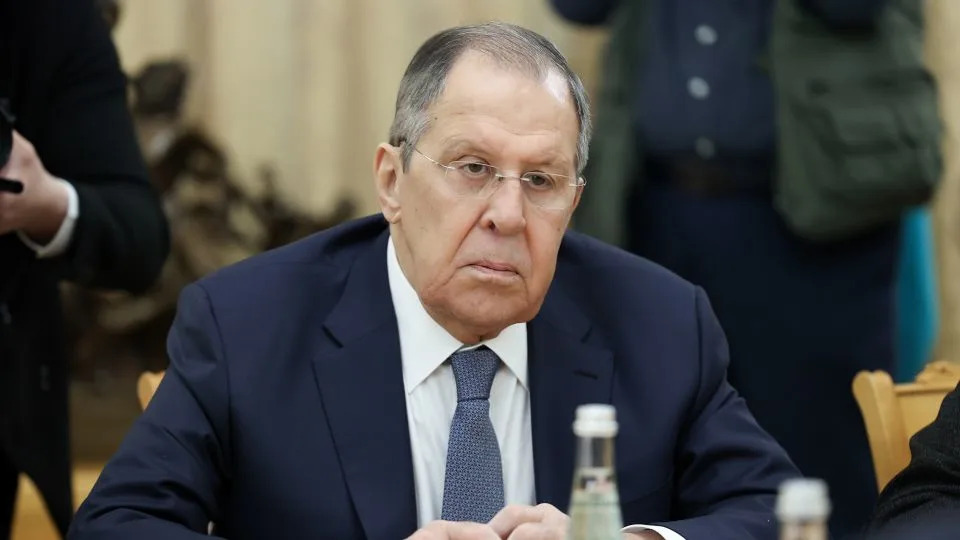
Russian Foreign Minister Sergey Lavrov attends a meeting in Moscow on December 24. - Russian Foreign Ministry/Anadolu/Getty Images
Political Context And Reactions
Kremlin spokesman Dmitry Peskov suggested the alleged strike was intended to undermine ongoing peace efforts between Russia and Ukraine. Russian state media said President Putin informed Donald Trump about the incident during a call on Monday, and that Russia was reviewing its stance on negotiations as a result. Trump told reporters he was upset by the report but also acknowledged the possibility the attack might not have occurred.
European Union foreign policy chief Kaja Kallas called the episode "a deliberate distraction," and several Western officials said Moscow had provided no independently verifiable evidence. A source close to French President Emmanuel Macron said there was no solid evidence to corroborate Russia’s claims after cross-checking with partners.
Diplomacy Continues Amid Uncertainty
Despite the allegations, US, Ukrainian and European officials continued diplomatic contacts aimed at advancing peace negotiations. Participants in a Wednesday call reportedly included US-side figures such as Senator Marco Rubio, special envoy Steve Witkoff and Jared Kushner; Ukraine’s delegation included National Security Secretary Rustem Umerov and other national security advisers from the United Kingdom, Germany and France. The talks reportedly focused on strengthening security guarantees, deconfliction mechanisms and a "prosperity package" for Ukraine’s post-war recovery.
In a New Year’s Eve address, Zelensky said a peace agreement was "90 percent ready," but warned the remaining issues would determine the fate of Ukraine and Europe. French President Emmanuel Macron said allies would make "concrete commitments" to protect Ukraine at an international leaders’ meeting planned for January 6.
What Is Still Unknown
Key unanswered questions include the provenance and dating of the imagery and videos published by Moscow, how Russian authorities determined the drones’ intended target, and why there is little corroborating open-source evidence. US intelligence officials have said they will investigate the claim. Until independent verification is available, many governments and analysts say the assertion should be treated with caution.
Bottom line: Moscow has presented material alleging a large drone raid toward the Valdai presidential residence, but independent verification is absent and multiple observers—Ukrainian officials, Western governments and independent analysts—have raised serious doubts.


