
Algeria’s National Assembly voted 340 of 407 to pass a law declaring French colonization (1830–1962) a crime and demanding restitution of archives, property and maps of nuclear tests (1960–1966). The law also calls for repatriation of some resistance fighters’ remains and criminalizes public praise of colonialism. France condemned the measure as "hostile," while Algerian lawmakers framed it as a moral and historic reckoning. The legislation contains five chapters and 27 articles and rules that colonial-era crimes have no statute of limitations.
Algeria Declares French Colonization a Crime and Demands Restitution, Archives and Nuclear-Test Maps

Parliament members vote on a bill seeking to criminalize France's colonisation, considering it a "state crime," and demanding that France issue an official apology and take legal responsibility for its colonial past in addition to compensations, Wednesday, Dec. 24, 2025 at her National Assembly in Algiers. (AP Photo/Fateh Guidoum)(ASSOCIATED PRESS)
Algiers — Algeria’s National Assembly voted overwhelmingly to declare France’s 130-year colonization a crime and approved a law demanding restitution of archives, property and other measures to redress colonial-era injustices.
In a ceremony heavy with symbolism, 340 of the 407 deputies present voted late Wednesday to adopt the law. The move follows a recent collective African resolution calling for recognition and reparations for colonial crimes.
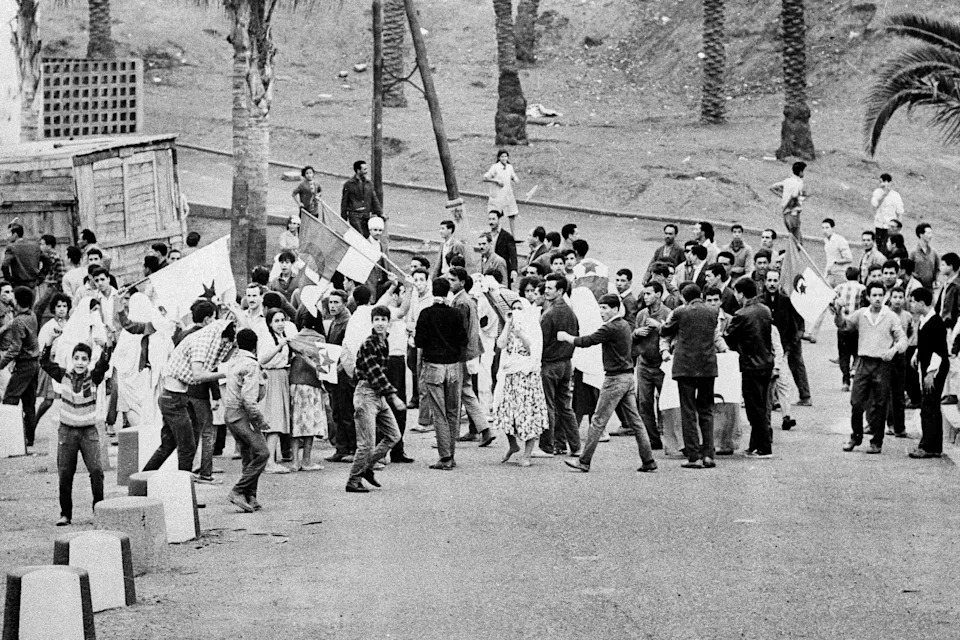
FILE - Young Muslims gather around the green and white FLN rebel flags in Diar el Mahcoul, a suburb of Algiers, Algeria, ignoring French orders to stay at home, Oct. 31, 1961. (AP Photo/H. Babout, File)(ASSOCIATED PRESS)
What the Law Requires
The legislation covers the period from the landing of King Charles X’s forces at Sidi Ferruch in 1830 through July 5, 1962, the date Algeria formally gained independence. Its provisions call for:
- Restitution of Algerian archives and property transferred to France during the colonial era.
- Provision to Algiers of detailed maps of French nuclear tests conducted on Algerian territory from 1960 to 1966.
- Repatriation of the remains of some Algerian resistance fighters taken to France.
- Criminal penalties, including prison terms, for publicly celebrating French colonialism, attacking symbols of the Algerian resistance, or making "remarks with colonial connotations."
- A declaration that colonial-era crimes are not subject to any statute of limitations.
Reaction And Context
The French Foreign Ministry called the measure "a manifestly hostile initiative," saying it undermines bilateral efforts to heal historical wounds even as Paris continues work — under President Emmanuel Macron — to confront colonial-era grievances. Macron in 2017 described aspects of France’s conduct in Algeria as amounting to a crime against humanity, though he stopped short of a formal apology.

The Algerian flag flies outside the National Assembly as Parliament members vote on a bill seeking to criminalize France's colonisation, considering it a "state crime," and demanding that France issue an official apology and take legal responsibility for its colonial past in addition to compensations, Wednesday, Dec. 24, 2025 at her National Assembly in Algiers. (AP Photo/Fateh Guidoum)(ASSOCIATED PRESS)
Observers note the enormous human and economic costs of colonialism in Algeria. During French rule nearly a million European settlers held disproportionate political, economic and social privileges, while many Algerians were conscripted into French service. The war of independence cost hundreds of thousands of lives and was marked by documented abuses including torture, disappearances and the destruction of villages.
Scene In Parliament
Huge Algerian flags draped the chamber as National Assembly Speaker Mohamed Boughali opened the session. He declared, "Today, December 24, 2025, is a historic day, to be written in letters of gold in the national narrative," and lawmakers punctuated his remarks by intoning an excerpt of the national anthem. Supporters cheered and invoked religious and patriotic slogans when the law was adopted.
Mohamed Arezki Ferrad, a former lawmaker who introduced the bill in 2001, called the vote the culmination of a long struggle to honor those who resisted colonization. The adopted law contains five chapters and 27 articles.
Significance: The law is primarily symbolic and intended to press moral and diplomatic claims against France; experts say it is unlikely to compel immediate compliance from Paris but does formalize Algerian demands and historical reckoning.


