
Rain returned to Tehran for the first time in months, but the showers fall far short of solving a severe water crisis. Reservoirs such as Latyan Dam are below 10% capacity and autumn precipitation is only about 5% of normal, leaving Iran in its sixth consecutive year of drought. Experts cite decades of water-intensive agriculture, over-extraction of groundwater and climate warming as key drivers that make severe droughts more frequent.
First Autumn Rain Brings Little Relief as Iran Faces Worsening Water Crisis
03:04 PM, 12/10/2025

This satellite picture from Planet Labs PBC shows Latyan Dam outside of Tehran, Iran, Nov. 19, 2025. (Planet Labs PBC via AP)(ASSOCIATED PRESS)
TEHRAN — Rain fell in Tehran on Wednesday for the first time in months, offering a brief respite amid what meteorologists describe as the driest autumn in more than half a century. Officials say the light showers are not nearly enough to reverse a deepening water emergency that has depleted reservoirs and strained daily life in the capital.
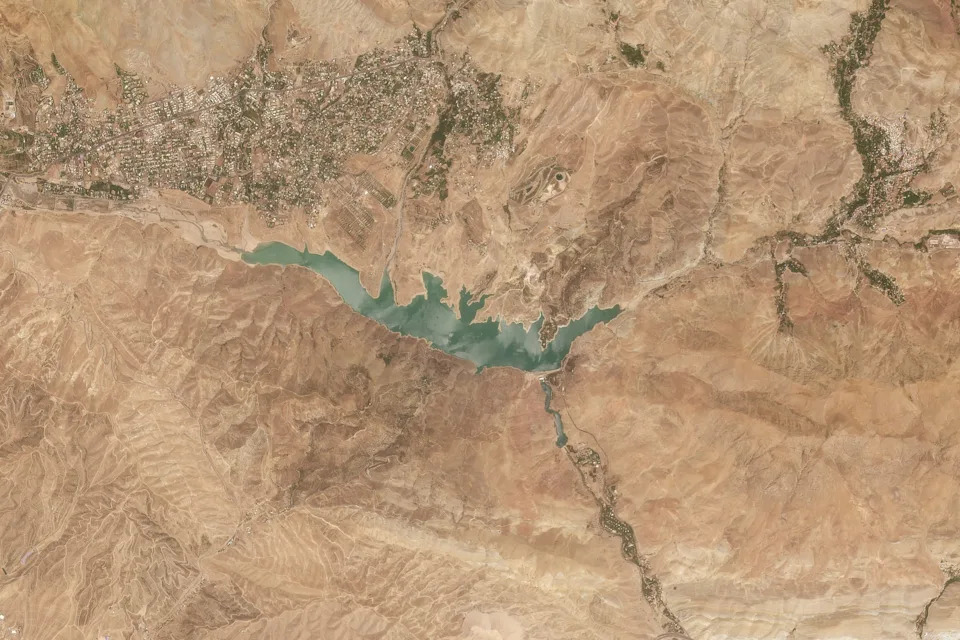
This satellite picture from Planet Labs PBC shows Latyan Dam outside of Tehran, Iran, May 23, 2025. (Planet Labs PBC via AP)(ASSOCIATED PRESS)
First Autumn Rain, But Reservoirs Remain Critically Low
Social media footage and satellite imagery analyzed by news agencies show many reservoirs sharply depleted. The Latyan Dam, one of five primary reservoirs serving Tehran, is reportedly under 10% capacity as Iran enters its sixth consecutive year of drought. Officials in the Iran Meteorological Organization say autumn precipitation is roughly 5% of a normal season, and warn that even normal winter and spring rains would still leave an estimated 20% shortfall.
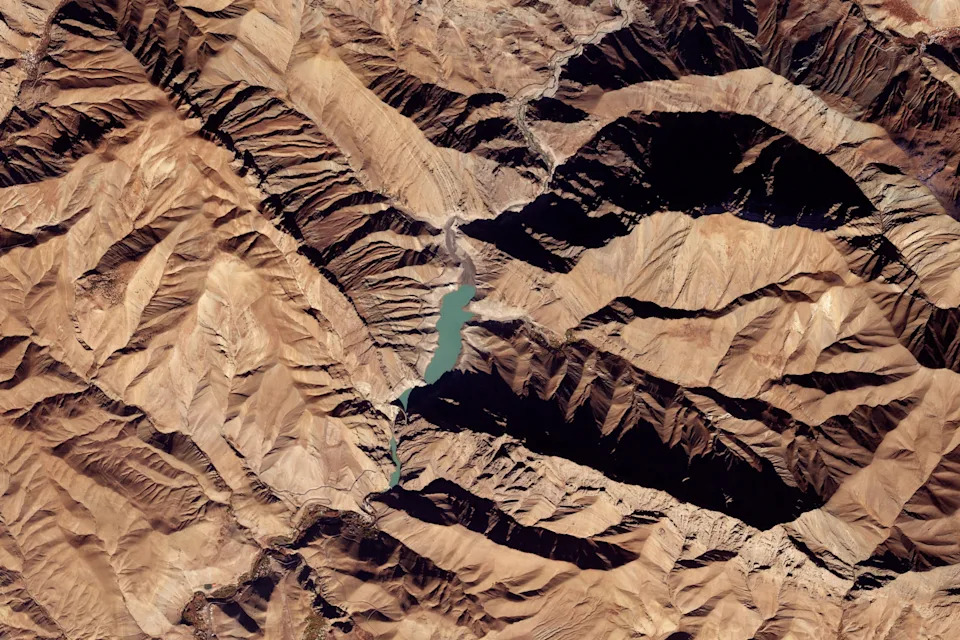
This satellite picture from Planet Labs PBC shows Amir Kabir Dam outside of Tehran, Iran, Nov. 19, 2025. (Planet Labs PBC via AP)(ASSOCIATED PRESS)
Why Iran Is Especially Vulnerable
Geography makes much of Iran naturally dry: the Alborz and Zagros mountain ranges create rain-shadow effects that limit moisture from the Caspian Sea and Persian Gulf. But experts point to water management choices that have amplified the problem. Agriculture consumes an estimated 90% of Iran’s water supply, and decades of policies—including incentives from the post-1979 era to expand domestic food production and generous water policies—helped promote irrigation of marginal lands, planting of water-intensive crops and over-extraction of groundwater.
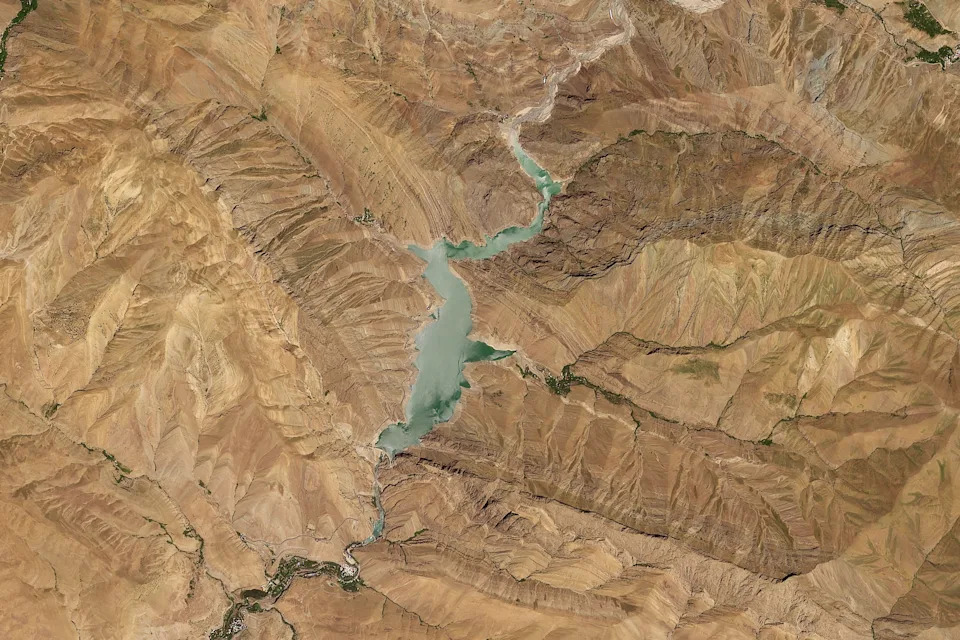
This satellite picture from Planet Labs PBC shows Amir Kabir Dam outside of Tehran, Iran, May 20, 2025. (Planet Labs PBC via AP)(ASSOCIATED PRESS)
Human, Political and Economic Costs
The shortage has become a political and social issue. In Tehran, billboards and public campaigns urge residents to conserve water, and some neighborhoods face hours-long interruptions in service. The crisis has provoked localized protests in the past, and leaders warn of broader instability if shortages continue. President Masoud Pezeshkian has even said officials may need to consider relocating parts of the government if dams around the capital are not replenished by the end of December—a drastic and costly measure at a time of economic strain and international sanctions.
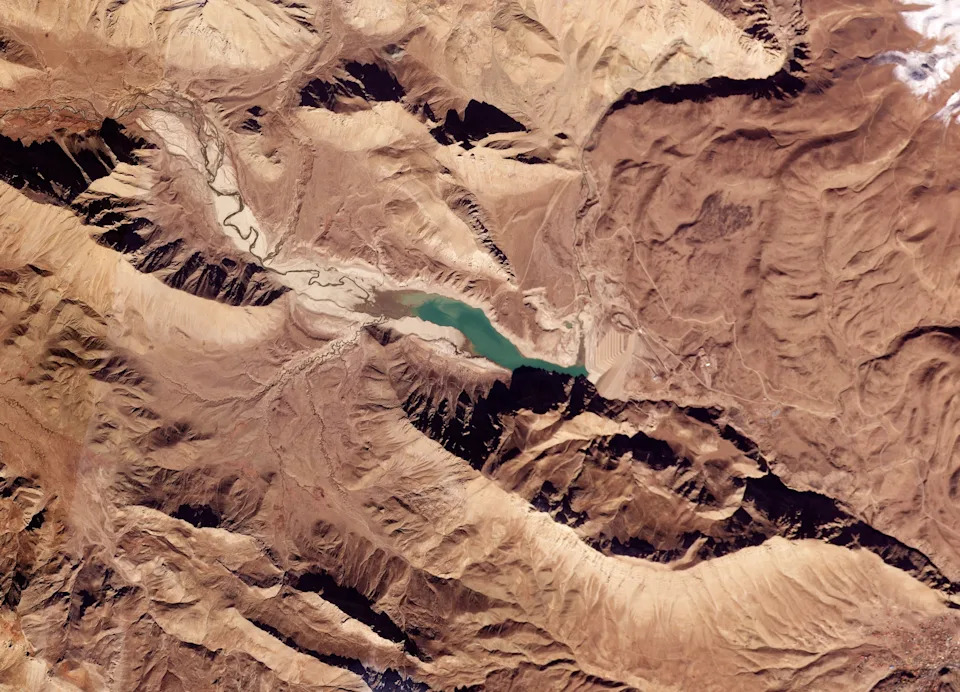
This satellite picture from Planet Labs PBC shows Lar Dam outside of Tehran, Iran, Nov. 18, 2025. (Planet Labs PBC via AP)(ASSOCIATED PRESS)
"The water crisis in Iran has, in recent years, escalated from a recurring drought issue into a profound political and security problem that has the regime leadership concerned," said the Soufan Center.
The Role of Climate Change
Climate scientists warn that warming has made severe droughts more frequent and intense. World Weather Attribution said that with global temperatures about 1.3°C higher due to fossil fuel emissions, an event of this severity could occur roughly every 10 years, compared with once every 50 to 100 years without that warming. The group also notes that rising temperatures increase evaporation and reduce snowpack in critical mountain ranges, compounding water stress.
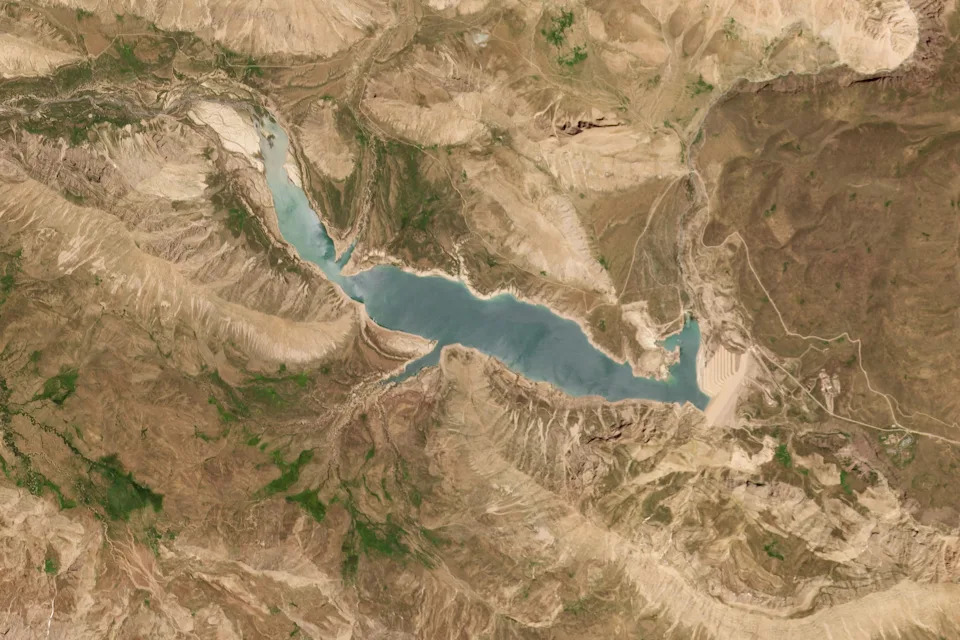
This satellite picture from Planet Labs PBC shows Lar Dam outside of Tehran, Iran, May 20, 2025. (Planet Labs PBC via AP)(ASSOCIATED PRESS)
Near-Term Outlook
Officials and analysts say meaningful relief requires both higher-than-normal precipitation and long-term policy changes—from more efficient irrigation and crop choices to stricter groundwater limits and urban conservation measures. For now, the recent rain is welcome but insufficient to solve a crisis shaped by climate change, decades of water-intensive policies and growing demand in a populous capital.
Sources: Iran Meteorological Organization, World Weather Attribution, state and independent media reports, satellite imagery analyses.
Similar Articles

Tehran’s Dams Run Dry: Iran Faces Severe Water Crisis and Possible Rationing
Iran is in its sixth consecutive year of drought, and Tehran faces acute shortages: 19 dams are below 5% capacity and the fiv...

Tehran’s Water Crisis: Capital on the Brink of 'Day Zero' — A Warning for Arid Cities
Tehran is facing an acute water emergency : reservoirs have dropped to critical levels, with one dry and another below 8% cap...

Iran Launches Cloud-Seeding Flights as Country Records Driest Autumn in 50 Years
Iran has initiated cloud-seeding flights as the country records its driest autumn in 50 years, with precipitation down about ...

Plummeting Reservoirs Trigger Energy Emergency in Kyrgyzstan and Tajikistan
Kyrgyzstan and Tajikistan are in an energy emergency after reservoir levels feeding major hydropower plants fell sharply: Nur...

Tehran Choked by Smog as Authorities Burn High‑Sulphur Fuel to Avert Blackouts
Tehran and several Iranian cities are facing severe smog after power plants began burning mazut, a high‑sulphur petroleum res...

Climate Change Strains Asia’s Water and Power Systems — Reports Warn Of $4T Need And Rising Utility Losses
The Asian Development Bank and climate researchers warn that climate change is straining Asia's water and power systems, leav...

Iran’s rial plunges to a record 1.2 million per dollar as sanctions tighten
Iran’s rial tumbled to a record 1.2 million per U.S. dollar amid renewed sanctions and stalled nuclear talks with Washington....

Iran Introduces Third Gasoline Price Tier — New Band Takes Effect Dec. 6
What’s new: From Dec. 6 Iran will add a third gasoline price tier: 60 liters at 15,000 rials/liter, a 100-liter mid-tier at 3...

Nearly 1,000 Dead in Indonesian Floods as ADB Warns Water Crisis Threatens Billions
Nearly 1,000 people have died and almost one million have been displaced after torrential rains caused devastating floods and...

Iran Says It Is Not Enriching Uranium at Any Site After June Strikes — Foreign Minister Signals Openness to Talks
Iran's foreign minister, Abbas Araghchi, said Tehran is not enriching uranium at any facility following Israeli and U.S. stri...

Dry Wells, Lost Classrooms: Maharashtra Drought Forces Girls to Choose Between Water and Education
In drought-affected districts of Maharashtra, 17-year-old Ramati Mangla walks kilometres each day to fetch water and often re...

Farmers Turn to 'Water Batteries' and Smart Storage as Drought Hits England
Farmers in England are increasingly using landscape-scale water storage—nicknamed "water batteries"—to capture rain in ponds,...

Drying Rio Grande–Bravo Basin Threatens Water Security for 15 Million People
The Rio Grande–Bravo basin, which serves about 15 million people and nearly 2 million acres of cropland, is facing an escalat...

AI and Satellites Map Irrigation in Ghana — A New Tool to Boost Food and Water Security
Researchers at the University of Manchester are using AI and satellite imagery to map irrigation across Ghana, producing time...

Cyclone Montha Devastates Jharkhand Crops: Flooded Paddy, Rotting Harvests and Delayed Planting
Heavy rains and damaging winds from Cyclone Montha have left paddy and vegetable crops across Jharkhand waterlogged or flatte...