Summary: President Trump ends his first year back in office with a modest approval rebound to about 45% in the Decision Desk HQ aggregate, but multiple national surveys show weaker support, particularly on economic performance. Polling indicates voters increasingly rate his handling of inflation and affordability poorly, while immigration and border security remain relative strengths despite some erosion. These trends—economic frustration and slipping support among some base and independent voters—could shape political dynamics heading into 2026.
Trump After One Year Back: Slight Approval Rebound, But Economic Worries Loom
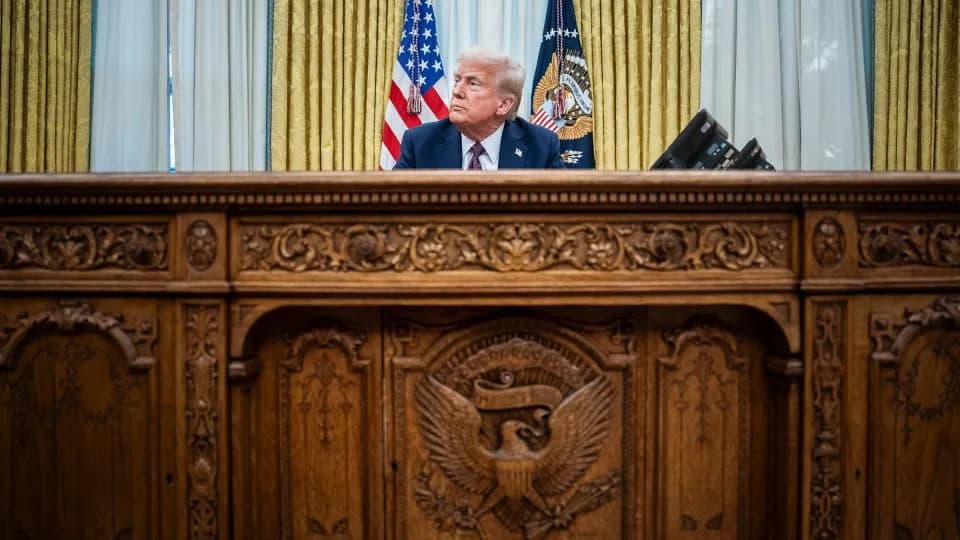
President Donald Trump closes the first year of his second term with a modest recovery in overall approval, but persistent economic concerns threaten to drag down his standing as he heads into 2026. Decision Desk HQ (DDHQ) shows a rebound from a second-term low during the government shutdown, yet other national surveys report weaker measures of public confidence—especially on the economy.
Where the Numbers Stand
DDHQ’s polling aggregate recorded a drop to about 41% approval amid a record-setting government shutdown, followed by a recovery to roughly 45% in the most recent update, with 52% disapproving. Several other polls in early December show similar weakness: Emerson College put approval at 41%, Reuters/Ipsos at 39%, and an early-December Associated Press/NORC survey recorded 36%.
“Roughly a year in, he’s right in the middle. He’s right where, basically, he’s been all year, which is unremarkable. It’s remarkable because it’s unremarkable,”
— Scott Tranter, Director of Data Science, Decision Desk HQ
Trends Through the Year
Trump began the year with stronger post‑inauguration momentum. Approval slipped in spring as the administration escalated immigration enforcement and imposed steep tariffs that unsettled markets. DDHQ’s aggregate shows a rebound from about 44% in late April to 48% in June, then mid‑40s through the summer. The fall shutdown precipitated a dip to roughly 41%, and ratings climbed back to about 45% after the shutdown ended in mid‑November.
Economy: The Biggest Liability
The economy has emerged as Trump’s principal vulnerability. Multiple polls show voters giving weak grades for his handling of inflation and affordability. In the Emerson College poll, 36% of respondents gave him a failing grade on the economy while 22% awarded an A. A Harvard CAPS‑Harris poll found nearly six in ten voters saying Trump is losing the battle against inflation, and a Quinnipiac survey reported 57% say Trump is more responsible than his predecessor for current economic conditions.
Other indicators reinforce this concern: a Fox News poll found over 70% of respondents rated economic conditions negatively, and many voters said the administration is focused on the wrong priorities. Trump continues to argue the economy is strong—calling it an "A-plus" in interviews and asserting prices are falling—but public perceptions tell a more mixed story.
Immigration: Relative Strength, But Some Erosion
Immigration and border security remain relative strengths for Trump. A Fox News poll showed his best approval on border security (51%), and a Harvard CAPS/Harris survey found strong support for deporting illegal immigrants who committed crimes (80%). Still, support has softened: AP‑NORC found border security approval fell from 49% in March to 38% in December, and a Pew Research survey found 53% of adults say the administration is doing "too much" on deportations.
Political Implications
As Republicans contend with off‑year election losses and prepare to defend seats in 2026, economic frustration and some erosion among parts of the MAGA base could shape the party’s outlook. Party leaders have privately expressed concern about affordability messaging, and independents have shown signs of drifting on economic evaluations.
Bottom line: Approval ratings sit near the mid‑40s in aggregate, with the economy the largest political liability and immigration remaining a bright spot that has softened somewhat. These dynamics will be key to watch going into next year.
Sources: Decision Desk HQ aggregate, Emerson College Polling, Reuters/Ipsos, Associated Press/NORC, Gallup, Harvard CAPS/Harris, Fox News, Quinnipiac, Pew Research.
Help us improve.