
Researchers discovered tiny mud‑lined bee brood chambers preserved inside fossilized tooth sockets from a limestone cave on Hispaniola — the first known case of bees nesting in bone cavities. CT scans show smooth, compacted cells with a waxy lining consistent with bee construction, and the deposits date to roughly 20,000 years ago. Some cavities record up to six generations reusing the same hole, suggesting communal or repeatedly reused nests. The trace fossil is named Osnidum almontei, though no body fossils were recovered to identify the species.
Ancient Bees Found Nesting in Fossilized Tooth Sockets — First Evidence of Cave Bone‑Nesting

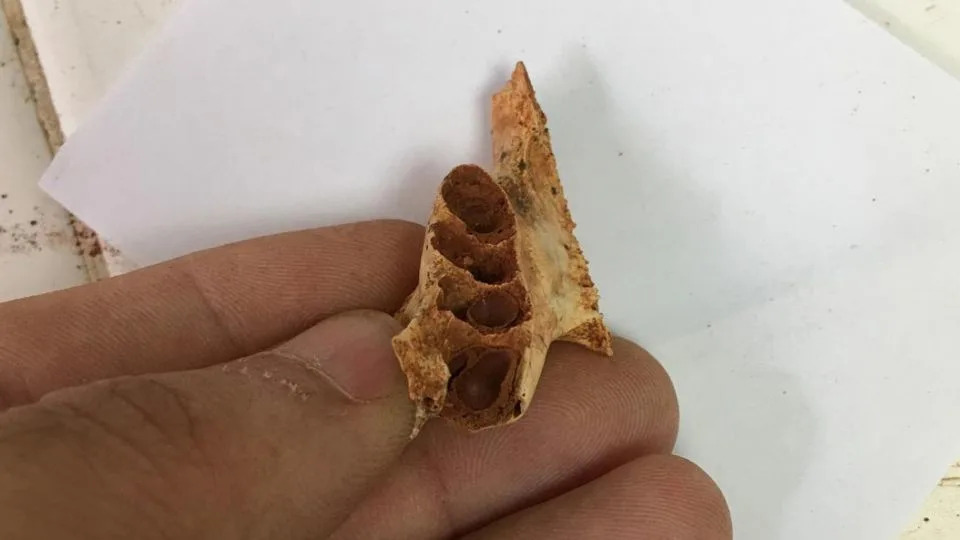
For the first time, bees were recorded using bones to nest and lay eggs in a Caribbean cave. - Courtesy of Lazaro Viñola López
Contrary to the common image of bees living in large hanging hives, most bee species are solitary and nest in soil, decaying wood or plant stems. Now researchers have documented a surprising exception: tiny mud‑lined bee brood chambers preserved inside fossilized tooth sockets from a limestone cave on Hispaniola — the first recorded instance of bees nesting in bone cavities.
A hoard of fossilized bones was home to tiny ancient bee nests built within empty tooth sockets. - Courtesy of Lazaro Viñola López
Discovery and Evidence
Lead author Lázaro Viñola‑López, a postdoctoral researcher at the Field Museum of Natural History in Chicago, and colleagues found the traces while surveying a fossil‑rich cave in the summer of 2022. Fine, soillike linings inside tooth sockets prompted the team to perform CT scans, which revealed smooth, compacted mud cells with a waxy inner coating — features consistent with bee nest construction rather than the fibrous, saliva‑based nests of many wasps.
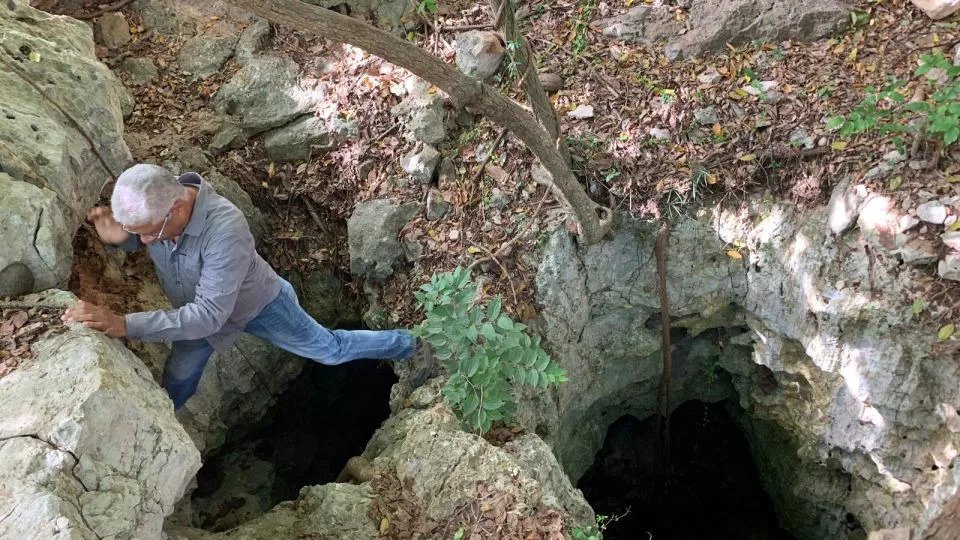
Paleontologist Juan Almonte Milan first found the cave on the island of Hispaniola. - Courtesy of Lázaro Viñola-López
"It was very surprising, because you never find invertebrates there — you find snails, but you don’t find insects," Viñola‑López said. "Finding evidence of ancient bees in those cave deposits was very exciting — the first time we have that in the Caribbean."
Age, Context And Preservation
Dating suggests the fossils containing the nests are roughly 20,000 years old, filling a gap in the Caribbean bee fossil record — previously known bee fossils from the region were preserved in amber and dated to about 20 million years ago. The cave holds layered deposits from more than 50 species. The authors infer that barn owls nested there for generations and deposited bones of prey, while some large animals may have fallen through an ~8‑meter entrance drop and been preserved in the sheltered, humid cave environment.
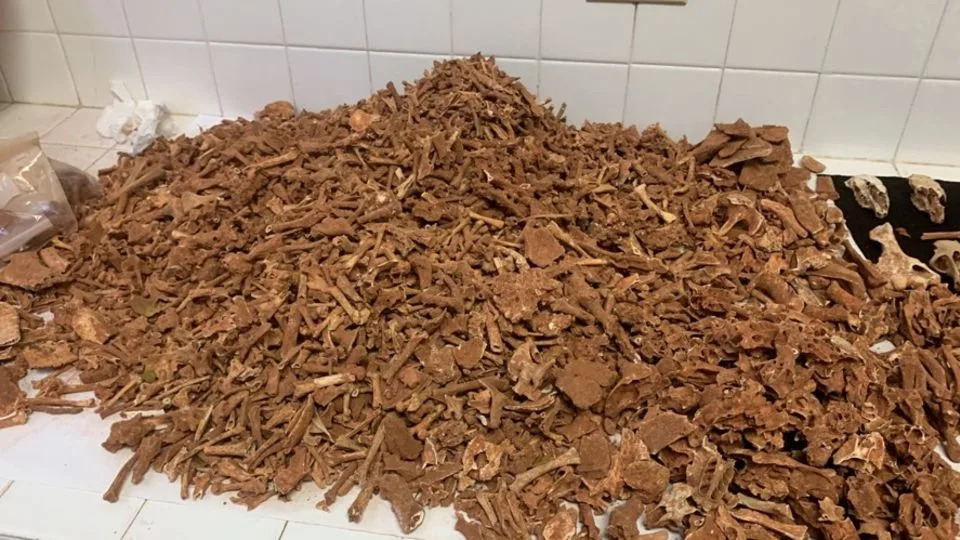
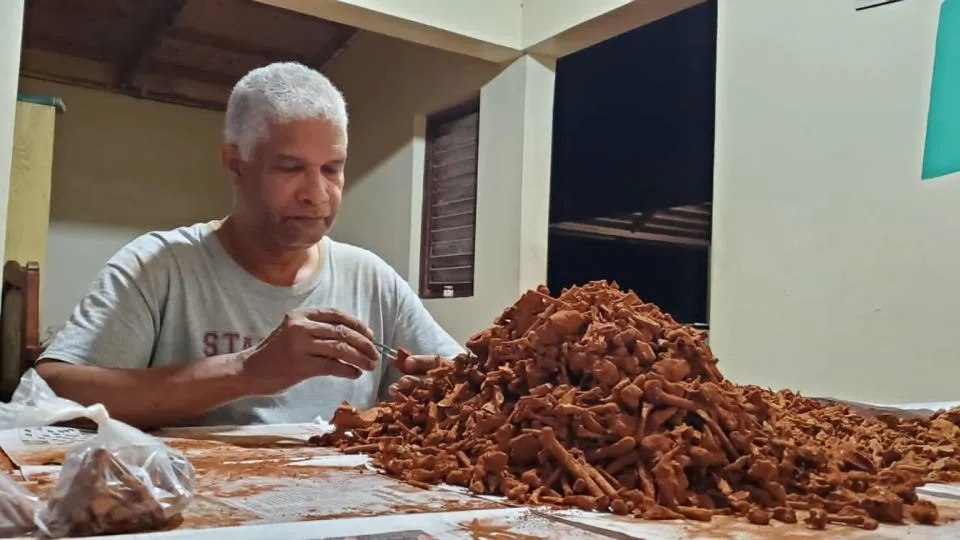
The research team collected fossils of different species of vertebrates. - Courtesy of Lázaro Viñola-López
Behavioral Insights
Some tooth‑socket cavities contained evidence of repeated use: in single cavities the team identified as many as six successive generations of brood cells. That pattern suggests either communal nesting or frequent reuse of favored holes. Because the bodies of insects were not preserved, the researchers could not recover whole bee specimens and therefore cannot yet identify the nest‑makers to species. The trace fossil has been named Osnidum almontei, honoring Juan Almonte Milan, who first discovered the cave.
The bee nests have been classified as Osnidum almontei, named after Juan Almonte Milan. - Courtesy of Lázaro Viñola-López
Expert Perspectives And Significance
Stephen Hasiotis, a trace‑fossil specialist at the University of Kansas, described the record as an example of “hidden biodiversity”: although no body fossils were found, the ichnofossils are diagnostic of soil‑nesting bees and indicate a stable, humid microenvironment that would protect nests from flooding and predators. Anthony Martin of Emory University emphasized the discovery’s broader evolutionary lesson: insects and bees have repeatedly adapted their behaviors over hundreds of millions of years, and this find highlights unexpected nesting flexibility.
Next Steps
Viñola‑López said the team plans to return to Hispaniola to search for living bees that might exhibit similar behavior and to survey other caves and islands for comparable traces. Further fieldwork and improved sampling could reveal whether bone‑nesting was once widespread, whether the nest‑makers persist today, and what ecological pressures favored this unusual nesting choice.
Study: Published in Royal Society Open Science. Reporting: Taylor Nicioli.


