
A Washington, D.C. homeowner reclaimed her rowhouse after a nearly 10-month legal fight with a short-term guest who declined to leave following a 32-day Airbnb reservation. The guest, Shadija Romero, initially paid $100 per night on the platform but later paid the owner directly and was reportedly facing eviction elsewhere over about $50,000 in unpaid rent. After notices, a signed (but allegedly ignored) voluntary move-out agreement and court proceedings, an associate judge ordered repossession on Dec. 11 and the homeowner regained possession.
D.C. Homeowner Wins After 10-Month Standoff With Short-Term Guest Who Refused to Leave

ABC 7 News - WJLA/YoutubeA sheet drapes over a sign installed on a Washington D.C. area rowhouse.
A Washington, D.C. homeowner has regained possession of her rowhouse after a nearly 10-month dispute with a short-term guest who refused to vacate the property.
What happened: According to reporting from The Washington Post, ABC 7 News and PEOPLE, Rochanne Douglas rented her D.C. rowhouse to Shadija Romero via Airbnb in late February 2025 for a 32-day stay. Romero paid $100 per night through Airbnb for that initial reservation and later said she had been displaced by a fire at her previous apartment.
Extended Stay, Off-Platform Payments
When the original reservation ended on March 29, Douglas says Romero requested extra time to allow repairs at her former residence. The two reportedly agreed that Romero would stay longer, but Douglas says Romero began paying her directly instead of through Airbnb. Court records cited by PEOPLE indicate Romero was simultaneously facing eviction at another address over roughly $50,000 in unpaid rent.
Lorenzo Di Cola/NurPhoto via GettyThe Airbnb app page
Escalation And Legal Steps
Douglas alleges Romero asserted residency and began denying the homeowner access after the initial 30 days. Douglas told ABC 7, "I never gave her any tenancy. I never gave her a lease." Under D.C.'s Tenant Bill of Rights, a written lease is not required to establish residency, and landlords must follow local procedures to evict occupants who fail to pay.
Douglas says she began serving formal notices to vacate in August and followed with additional notices in September and October. In October, Douglas offered Romero a "Voluntary Move-Out and Release Agreement": if Romero left by Nov. 15 and waived any claim of tenancy, Douglas would forgo charging rent for October and November and pay $2,500 to help with relocation. Romero signed the agreement but, Douglas contends, did not comply.
During the dispute, Douglas reports that utilities were cut off, locks were changed, and police visited the property multiple times but indicated they could not remove the occupant without a court order. Douglas posted a large red sign on her home reading "Public Notice Unauthorized Occupant," which Romero later partially covered with a sheet, according to accounts.
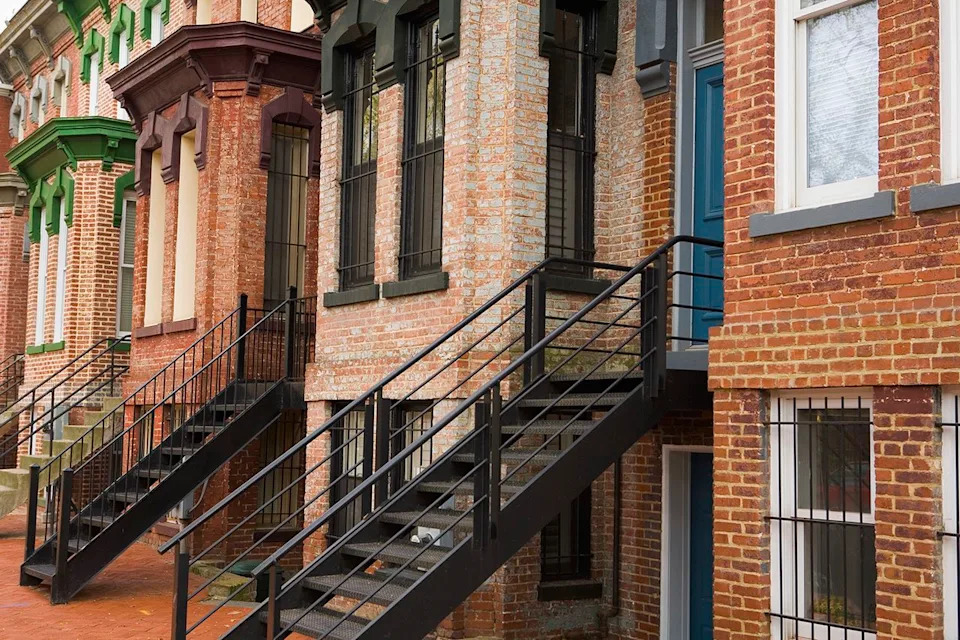
GettyWashington D.C. rowhouses
Court Ruling And Aftermath
On Dec. 11, Associate Judge Carl E. Ross ruled that by signing the voluntary move-out agreement Romero had relinquished any claim to tenancy, and Douglas was entitled to immediate possession of the property. That evening Douglas recruited friends and family to help remove Romero’s belongings; Romero later loaded items into a U-Haul, The Washington Post reported. Romero represented herself in court and did not provide a comment to PEOPLE.
An Airbnb spokesperson told PEOPLE that the later arrangement between Douglas and Romero occurred off-platform and that Airbnb could not assist with disputes or protections when bookings and payments are handled outside the platform.
Douglas’s attorneys, Kamal Nawash and Liz Altayib, said the case highlights flaws in D.C.’s landlord-tenant laws. "D.C. laws are unfair to landlords," they said in a joint statement, arguing the current process can allow occupants to remain rent-free for extended periods while owners incur substantial legal costs.
Bottom line: The judge’s order ended a lengthy, costly dispute and underscored the legal risks owners face when short-term stays extend into contested occupancy without clear, on-platform payment and documentation.


