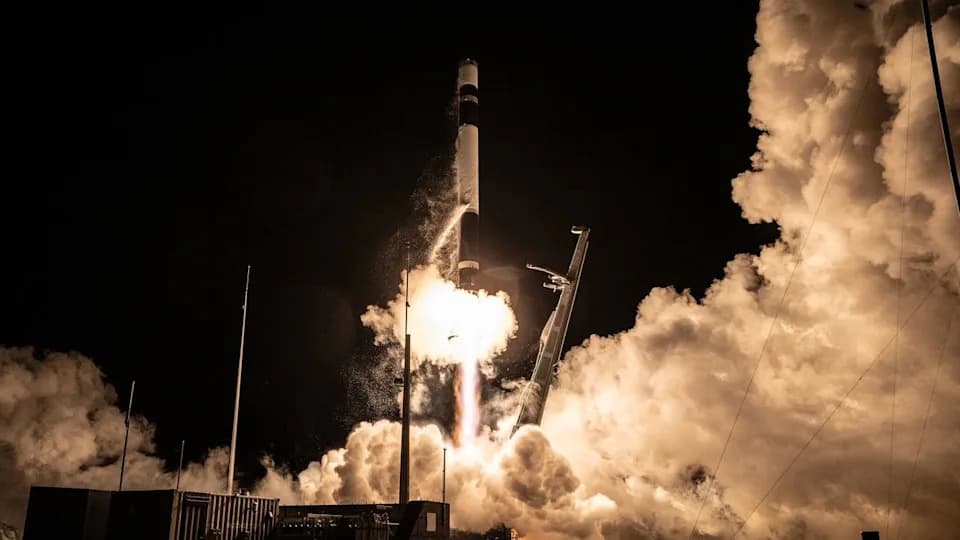
Rocket Lab is targeting a midnight launch window on Thursday, Dec. 18 for an Electron rocket from NASA’s Wallops Flight Facility. The 59-foot Electron will carry four experimental DiskSats for the U.S. Space Force to about 341 miles (low-Earth orbit), with deployment expected roughly an hour after liftoff. The Wallops Visitor Center is not hosting public viewing for this mission, but shoreline locations from Chincoteague and Assateague to Virginia Beach, Ocean City (MD) and Delaware Seashore State Park offer good sightlines. Rocket Lab will stream the launch about 30 minutes before liftoff on its website and social channels.
Electron Liftoff Tonight: How and Where to Watch Rocket Lab’s Dec. 18 Launch From Wallops

An overhead photo depicts Rocket Lab's side-by-side launch complexes located at the Wallops Flight Facility in Virginia.
Rocket Lab is targeting a midnight launch window on Thursday, Dec. 18, for an Electron rocket departing Launch Complex 2 at the Mid-Atlantic Regional Spaceport inside NASA's Wallops Flight Facility on Wallops Island, Va. A Federal Aviation Administration operations-plan advisory indicates a backup opportunity the following day if the attempt is delayed.
Mission Overview
The 59-foot Electron — Rocket Lab’s small-launch workhorse — can carry about 661 pounds (300 kg) to orbit. This mission will carry four experimental, flat, disk-shaped satellites called DiskSats for the U.S. Space Force, targeting low-Earth orbit near 341 miles (approximately 550 km). Rocket Lab expects payload deployment roughly an hour after liftoff.
Where The Rocket Will Launch From
The vehicle will lift off from Launch Complex 2 at the Mid-Atlantic Regional Spaceport on Wallops Island. Wallops is located east of the Delmarva Peninsula — roughly 100 miles northeast of Norfolk and about a five-hour drive east of Staunton, Virginia.
Public Viewing And Local Vantage Points
NASA’s Wallops Visitor Center — about four miles from the launch range and usually one of the clearest public viewing sites — is not hosting a public viewing for this mission. When the Visitor Center does open for launches, guests watch from bleachers or an adjacent open field.
If you still want to watch in person, coastal shorelines and nearby towns offer many good sightlines. Popular recommended viewing spots include:
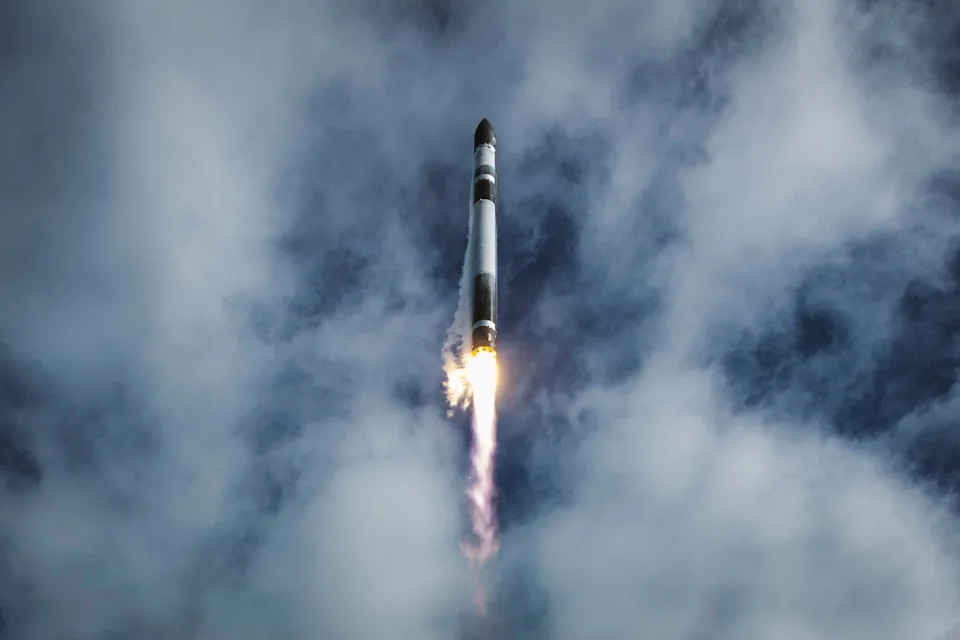
Rocket Lab's Electron rocket launches on its 70th mission Aug. 23.
- Chincoteague Island (about 15 miles east of Wallops) — Queen's Sound Landing, Curtis Merritt Harbor, Robert Reed Waterfront Park, Museum of Chincoteague Island, and the Chincoteague National Wildlife Refuge.
- Assateague Island National Seashore — undeveloped beaches and refuge areas with ocean-backed views; note entrances on both the Virginia and Maryland sides.
- Virginia Beach — roughly 70 miles south; can be good when the rocket follows a southerly coastal trajectory.
- Ocean City, Maryland and Delaware Seashore State Park — coastal vantage points 30–65 miles north of Wallops recommended for day or night launches, weather permitting.
Watch The Webcast
Rocket Lab will stream the mission live beginning about 30 minutes before liftoff on its website and social channels (including Facebook and X). If you can’t travel to the coast, the webcast is the easiest way to catch the launch in real time.
About Rocket Lab And Neutron
Founded in 2006 and based in Long Beach, California, Rocket Lab operates multiple launch pads across three sites, including launch complexes at Wallops and sites in New Zealand. Rocket Lab recently brought Launch Complex 3 at Wallops online to support its larger Neutron rocket. Neutron — roughly 141 feet tall — is designed for medium-lift missions and is scheduled for a maiden flight in early 2026. The vehicle is intended to expand Rocket Lab’s capabilities beyond small-satellite launches and already has commercial and U.S. Department of Defense contracts.
About Wallops Flight Facility
Established in 1945 and managed by NASA’s Goddard Space Flight Center, Wallops supports science, military and commercial missions and hosts sounding rockets, small-satellite launches and high-altitude balloon flights. It is a partner of the Virginia Spaceport Authority and the Mid-Atlantic Regional Spaceport.
Tips For Attendees
- Check local access rules, road closures and parking restrictions before you go.
- Arrive early for the best viewing spots; expect traffic and limited parking near popular vantage points.
- Bring warm clothing, blankets and a flashlight for late-night viewing; follow all posted safety guidance.
For the latest timing and any last-minute changes, monitor Rocket Lab’s official announcements and livestream feed.
Reporter: Eric Lagatta, Space Connect / USA TODAY Network. Originally published by Staunton News Leader.
Help us improve.