
Texas officials have identified Helicococcus summervillei (pasture mealybug) in more than 20 counties, marking the pest’s first recorded presence in North America. The species, linked in Australia to widespread "pasture dieback," is already causing significant losses, especially in Victoria County. There are currently no U.S.-labeled insecticides for control, and authorities urge producers to report suspect sightings to 1-800-TELL-TDA as agencies coordinate an emergency response.
New Pasture Mealybug Detected in Texas — Over 20 Counties Affected, Officials Warn

Invasive pest never before seen in North America threatens Texas food supply, officials warn
Texas agriculture officials have issued an urgent alert after confirming the presence of Helicococcus summervillei, commonly called the pasture mealybug, which has not previously been recorded in North America. The insect is spreading rapidly across more than 20 Texas counties and is already causing visible pasture damage that threatens grazing lands, hay production and livestock capacity.
First described in Australia in 1928, the pasture mealybug has been linked there to large-scale "pasture dieback" — a progressive weakening and death of grasses after the insect feeds at soil level and within plant tissues. Researchers suspect the species may have been present in Texas since before 2022.
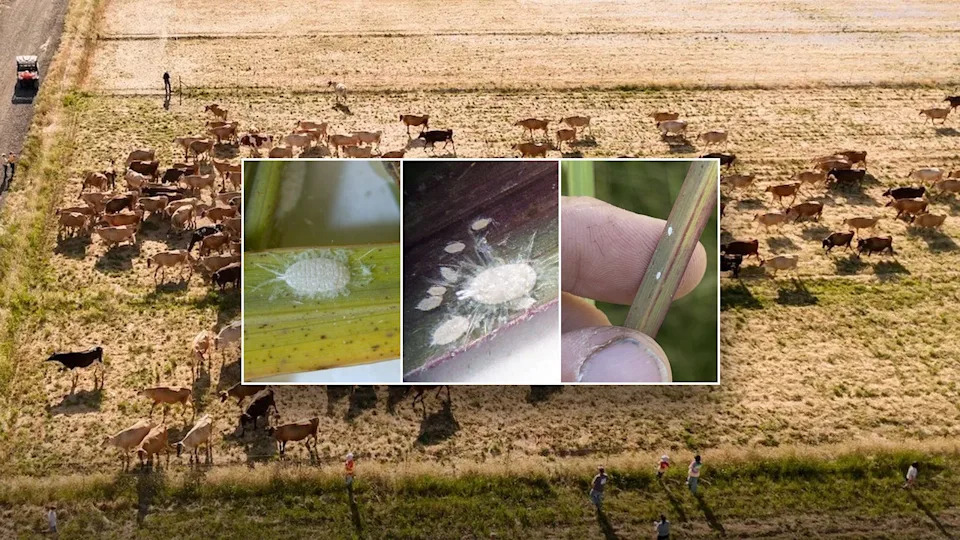
Texas ranchers face growing concern as a newly detected invasive pest, shown in the inset images, spreads across grazing land and threatens key crops relied on for cattle feed.
Where It’s Found
State and extension experts have documented infections in at least the following 20 counties (with more possible):
- Brazoria
- Galveston
- Wharton
- Matagorda
- Colorado
- Austin
- Washington
- Cameron
- Hidalgo
- Willacy
- Refugio
- Calhoun
- Victoria
- Goliad
- Dewitt
- Lavaca
- Fayette
- Jackson
- Burleson
- Brazos
- Robertson
Impact And Susceptible Plants
AgriLife entomologists report the most significant pasture losses so far are in Victoria County. Grasses most at risk include:
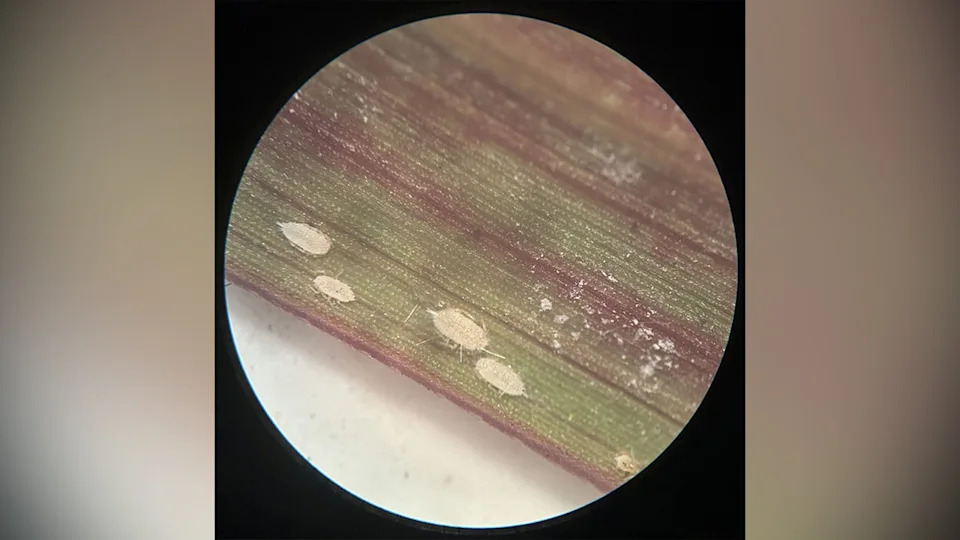
Microscope view shows pasture mealybugs feeding on a grass blade — the newly detected pest now threatening Texas hay and livestock operations.
- Bermudagrass
- Bahia grass
- Johnsongrass
- Haygrazer (sorghum–sudangrass)
- St. Augustine grass
- Bluestem varieties and other tropical/subtropical grasses
Signs To Watch For
Damage can be hard to detect early because the insects feed low on the plant and beneath surface debris. Watch for:
- Yellowing within a week of infestation
- Purpling or reddening of leaves
- Stunted growth despite adequate moisture
- Weakened root systems
- Patchy areas of thinning or dead grass
- Small white fuzzy clusters (the insects) on grass or plant debris
What Officials Are Doing
The Texas Department of Agriculture (TDA) is coordinating with Texas A&M AgriLife Extension Service and the USDA Animal and Plant Health Inspection Service (APHIS) to map the infestation and develop emergency response strategies. Officials emphasize that ongoing field reports are essential to limit the spread and reduce economic losses to livestock and hay producers.
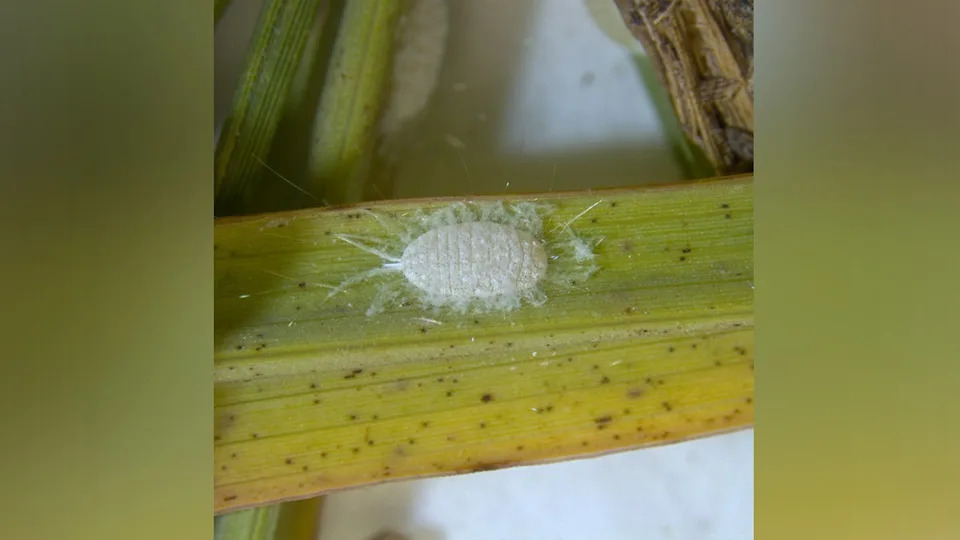
The wax-covered pasture mealybug, shown here on a damaged blade of grass, is causing dieback and threatening Texas grazing lands.
Important: There are currently no insecticides labeled in the United States specifically for control of this pest. Producers who suspect infestation should avoid unapproved chemical treatments and instead report sightings immediately.
How To Report
Producers and land managers who see symptoms or clusters resembling mealybugs should contact the Texas Department of Agriculture at 1-800-TELL-TDA. Early reporting will help authorities map the outbreak and coordinate containment and research efforts.
"We need every producer’s eyes on the ground," Texas Agriculture Commissioner Sid Miller said. "If the pasture mealybug spreads across Texas grazing lands like it has in eastern Australia, it could cost Texas agriculture dearly in lost productivity and reduced livestock capacity."
TDA, AgriLife Extension and USDA APHIS are continuing joint investigations and developing response strategies to safeguard Texas livestock and hay industries.


